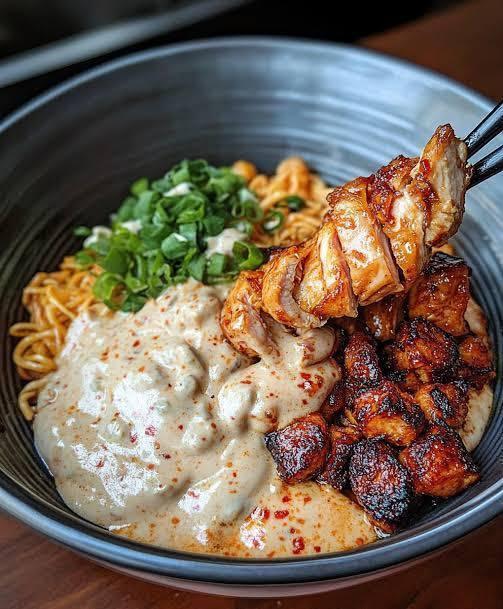
This High-Protein Chicken Ramen is a nutritious twist on traditional ramen, designed to deliver plenty of protein while maintaining the comforting flavors of a classic noodle bowl. Tender chicken breast, protein-rich eggs, vegetables, and a savory homemade broth come together with ramen noodles for a balanced meal that is filling, flavorful, and healthier than takeout versions.
Unlike many restaurant-style ramen bowls that can be high in sodium and fat, this recipe uses lean chicken, fresh vegetables, and a homemade broth while still achieving a rich umami flavor.
Yield
Join Our Free Facebook Group
Ready, set, go! Get delicious new recipes, time-saving tips and reader favorites in your feed — completely free.
Join the Group
×
Preparation Time
Join Our Free Facebook Group
Ready, set, go! Get delicious new recipes, time-saving tips and reader favorites in your feed — completely free.
Join the Group
×
Cooking Time
Join Our Free Facebook Group
Ready, set, go! Get delicious new recipes, time-saving tips and reader favorites in your feed — completely free.
Join the Group
×
Total Time
Join Our Free Facebook Group
Ready, set, go! Get delicious new recipes, time-saving tips and reader favorites in your feed — completely free.
Join the Group
×
Nutrition Highlights (Approximate Per Serving)
Join Our Free Facebook Group
Ready, set, go! Get delicious new recipes, time-saving tips and reader favorites in your feed — completely free.
Join the Group
×
Protein: 35–45 g
Carbohydrates: 40–45 g
Fat: 10–15 g
Calories: 450–550
Protein content varies depending on the noodles and toppings used.
Ingredients
Join Our Free Facebook Group
Ready, set, go! Get delicious new recipes, time-saving tips and reader favorites in your feed — completely free.
Join the Group
×
For the Chicken
Join Our Free Facebook Group
Ready, set, go! Get delicious new recipes, time-saving tips and reader favorites in your feed — completely free.
Join the Group
×
500 g (1 lb) boneless, skinless chicken breast
1 tablespoon olive oil
1 teaspoon salt
½ teaspoon black pepper
1 teaspoon garlic powder
1 teaspoon paprika
Why Chicken Breast?
Join Our Free Facebook Group
Ready, set, go! Get delicious new recipes, time-saving tips and reader favorites in your feed — completely free.
Join the Group
×
Chicken breast is lean and high in protein, making it ideal for a healthier ramen bowl.
For the Broth
Join Our Free Facebook Group
Ready, set, go! Get delicious new recipes, time-saving tips and reader favorites in your feed — completely free.
Join the Group
×
1 tablespoon sesame oil
1 medium onion, sliced
4 cloves garlic, minced
1 tablespoon fresh ginger, grated
6 cups (1.4 L) low-sodium chicken broth
2 tablespoons low-sodium soy sauce
1 tablespoon rice vinegar
1 tablespoon white miso paste
1 teaspoon chili flakes (optional)
Flavor Notes
Join Our Free Facebook Group
Ready, set, go! Get delicious new recipes, time-saving tips and reader favorites in your feed — completely free.
Join the Group
×
The combination of garlic, ginger, soy sauce, and miso creates a rich umami base without requiring excessive salt.
For the Noodles
Join Our Free Facebook Group
Ready, set, go! Get delicious new recipes, time-saving tips and reader favorites in your feed — completely free.
Join the Group
×
Healthier Options
Join Our Free Facebook Group
Ready, set, go! Get delicious new recipes, time-saving tips and reader favorites in your feed — completely free.
Join the Group
×
Whole-wheat ramen
High-protein noodles
Brown rice ramen
Protein-enriched wheat noodles
For the Vegetables
Join Our Free Facebook Group
Ready, set, go! Get delicious new recipes, time-saving tips and reader favorites in your feed — completely free.
Join the Group
×
1 cup mushrooms, sliced
1 cup broccoli florets
1 cup baby spinach
1 medium carrot, julienned
1 cup shelled edamame
Why Edamame?
Join Our Free Facebook Group
Ready, set, go! Get delicious new recipes, time-saving tips and reader favorites in your feed — completely free.
Join the Group
×
Edamame significantly increases protein content while adding fiber and nutrients.
Protein-Rich Toppings
Join Our Free Facebook Group
Ready, set, go! Get delicious new recipes, time-saving tips and reader favorites in your feed — completely free.
Join the Group
×
4 large eggs
2 green onions, sliced
1 tablespoon sesame seeds
Equipment
Join Our Free Facebook Group
Ready, set, go! Get delicious new recipes, time-saving tips and reader favorites in your feed — completely free.
Join the Group
×
Large soup pot
Medium saucepan
Cutting board
Sharp knife
Tongs
Measuring cups and spoons
Step 1: Prepare the Chicken
Join Our Free Facebook Group
Ready, set, go! Get delicious new recipes, time-saving tips and reader favorites in your feed — completely free.
Join the Group
×
Pat chicken dry using paper towels.
Season both sides with:
Salt
Pepper
Garlic powder
Paprika
Allow to rest at room temperature for 10 minutes.
Why Rest?
Join Our Free Facebook Group
Ready, set, go! Get delicious new recipes, time-saving tips and reader favorites in your feed — completely free.
Join the Group
×
This helps the seasoning adhere and promotes even cooking.
Step 2: Cook the Chicken
Join Our Free Facebook Group
Ready, set, go! Get delicious new recipes, time-saving tips and reader favorites in your feed — completely free.
Join the Group
×
Heat olive oil in a skillet over medium-high heat.
Add chicken breasts.
Cook for:
5–6 minutes on the first side
5–6 minutes on the second side
until golden brown and cooked through.
The internal temperature should reach:
75°C (165°F)
Transfer to a plate and allow to rest.
Important
Join Our Free Facebook Group
Ready, set, go! Get delicious new recipes, time-saving tips and reader favorites in your feed — completely free.
Join the Group
×
Resting keeps the chicken juicy by allowing the juices to redistribute.
Step 3: Make Soft-Boiled Eggs
Join Our Free Facebook Group
Ready, set, go! Get delicious new recipes, time-saving tips and reader favorites in your feed — completely free.
Join the Group
×
Bring a saucepan of water to a gentle boil.
Carefully add eggs.
Cook for:
7 minutes
Immediately transfer to an ice bath.
Cool for 5 minutes.
Peel carefully.
Result
Join Our Free Facebook Group
Ready, set, go! Get delicious new recipes, time-saving tips and reader favorites in your feed — completely free.
Join the Group
×
The yolks should remain slightly jammy and creamy.
Step 4: Build the Broth Base
Join Our Free Facebook Group
Ready, set, go! Get delicious new recipes, time-saving tips and reader favorites in your feed — completely free.
Join the Group
×
Heat sesame oil in a large soup pot over medium heat.
Add:
Cook for 4–5 minutes.
Stir frequently.
What Happens?
Join Our Free Facebook Group
Ready, set, go! Get delicious new recipes, time-saving tips and reader favorites in your feed — completely free.
Join the Group
×
The aromatics release their natural oils and create the flavor foundation of the broth.
Step 5: Add Liquid Ingredients
Join Our Free Facebook Group
Ready, set, go! Get delicious new recipes, time-saving tips and reader favorites in your feed — completely free.
Join the Group
×
Pour in:
Chicken broth
Soy sauce
Rice vinegar
Whisk in the miso paste until dissolved.
Add chili flakes if using.
Bring to a gentle simmer.
Why Simmer?
Join Our Free Facebook Group
Ready, set, go! Get delicious new recipes, time-saving tips and reader favorites in your feed — completely free.
Join the Group
×
Simmering extracts flavors without making the broth cloudy.
Step 6: Cook the Vegetables
Join Our Free Facebook Group
Ready, set, go! Get delicious new recipes, time-saving tips and reader favorites in your feed — completely free.
Join the Group
×
Add:
Mushrooms
Broccoli
Carrots
Simmer for 5–6 minutes.
Then add:
Cook for 2 more minutes.
Finally add:
Cook for 30–60 seconds until wilted.
Vegetable Texture
Join Our Free Facebook Group
Ready, set, go! Get delicious new recipes, time-saving tips and reader favorites in your feed — completely free.
Join the Group
×
The vegetables should remain vibrant and slightly crisp.
Step 7: Cook the Noodles
Join Our Free Facebook Group
Ready, set, go! Get delicious new recipes, time-saving tips and reader favorites in your feed — completely free.
Join the Group
×
Bring a separate pot of water to a boil.
Cook ramen noodles according to package directions.
Usually:
3–5 minutes
Drain immediately.
Important
Join Our Free Facebook Group
Ready, set, go! Get delicious new recipes, time-saving tips and reader favorites in your feed — completely free.
Join the Group
×
Do not cook noodles directly in the broth.
This prevents excess starch from clouding the soup.
Step 8: Slice the Chicken
Join Our Free Facebook Group
Ready, set, go! Get delicious new recipes, time-saving tips and reader favorites in your feed — completely free.
Join the Group
×
After resting for 5–10 minutes:
Slice chicken into thin strips or bite-sized pieces.
Why Slice After Resting?
Join Our Free Facebook Group
Ready, set, go! Get delicious new recipes, time-saving tips and reader favorites in your feed — completely free.
Join the Group
×
This helps retain moisture and creates attractive presentation.
Step 9: Assemble the Bowls
Join Our Free Facebook Group
Ready, set, go! Get delicious new recipes, time-saving tips and reader favorites in your feed — completely free.
Join the Group
×
Divide noodles among four serving bowls.
Ladle hot broth and vegetables over the noodles.
Arrange sliced chicken on top.
Add one halved soft-boiled egg to each bowl.
Step 10: Garnish
Join Our Free Facebook Group
Ready, set, go! Get delicious new recipes, time-saving tips and reader favorites in your feed — completely free.
Join the Group
×
Top each bowl with:
Sliced green onions
Sesame seeds
Optional additions:
Extra chili oil
Fresh cilantro
Lime wedges
Nori strips
Serving Suggestions
Join Our Free Facebook Group
Ready, set, go! Get delicious new recipes, time-saving tips and reader favorites in your feed — completely free.
Join the Group
×
Serve immediately while hot.
Pair with:
Asian cucumber salad
Steamed vegetables
Light pickled vegetables
Optional High-Protein Upgrades
Join Our Free Facebook Group
Ready, set, go! Get delicious new recipes, time-saving tips and reader favorites in your feed — completely free.
Join the Group
×
Extra Chicken
Join Our Free Facebook Group
Ready, set, go! Get delicious new recipes, time-saving tips and reader favorites in your feed — completely free.
Join the Group
×
Increase chicken to:
750 g (1.5 lb)
for even more protein.
Add Tofu
Join Our Free Facebook Group
Ready, set, go! Get delicious new recipes, time-saving tips and reader favorites in your feed — completely free.
Join the Group
×
Add 200 g firm tofu cubes to the broth.
This can add approximately 20–25 g additional protein.
Extra Egg Whites
Join Our Free Facebook Group
Ready, set, go! Get delicious new recipes, time-saving tips and reader favorites in your feed — completely free.
Join the Group
×
Whisk 4 egg whites into the simmering broth for additional lean protein.
Cottage Cheese Boost
Join Our Free Facebook Group
Ready, set, go! Get delicious new recipes, time-saving tips and reader favorites in your feed — completely free.
Join the Group
×
Blend 2–3 tablespoons cottage cheese into a small amount of warm broth before stirring it back into the pot for extra creaminess and protein.
Storage
Join Our Free Facebook Group
Ready, set, go! Get delicious new recipes, time-saving tips and reader favorites in your feed — completely free.
Join the Group
×
Refrigerator
Join Our Free Facebook Group
Ready, set, go! Get delicious new recipes, time-saving tips and reader favorites in your feed — completely free.
Join the Group
×
Store broth, chicken, and noodles separately for up to 4 days.
Why Store Separately?
Join Our Free Facebook Group
Ready, set, go! Get delicious new recipes, time-saving tips and reader favorites in your feed — completely free.
Join the Group
×
Noodles absorb liquid and become soft if left in the broth.