
This Apple Cider Pulled Pork is tender, juicy, and packed with cozy sweet-and-savory flavor. A simple spice rub seasons the pork before slow cooking it with apple cider, onion, garlic, and a touch of maple syrup. As it cooks, the pork becomes incredibly tender and pulls apart easily with a fork.
The apple cider adds gentle sweetness and fruity depth while savory spices balance the flavor. It’s a comforting high-protein dinner that’s especially delicious tucked into soft buns, served over mashed potatoes, or paired with roasted vegetables and a crisp slaw.
Best of all, most of the cooking is hands-off, making this an excellent recipe for weekends, family dinners, gatherings, and meal prep.
Short Description
Tender pulled pork slow-cooked with apple cider, garlic, onion, and warm spices.
A juicy, flavorful high-protein comfort food that’s easy to prepare.
Perfect for sandwiches, family dinners, meal prep, and casual gatherings.
Can This Apple Cider Pulled Pork Support Weight Loss Goals?
Apple cider pulled pork can fit into a weight-conscious eating pattern when portions and serving choices are considered. Pork provides protein that can make a meal satisfying, while the apple cider and maple syrup add sweetness and carbohydrates.
For a lighter meal, choose a leaner pork cut, trim visible excess fat, control the amount of sauce, and serve the pork with vegetables or a fresh slaw. If using buns, a smaller portion or an open-faced serving can also help manage the overall calorie intake.
Does Apple Cider Pulled Pork Fit a High-Protein Lifestyle?
Yes, apple cider pulled pork fits well into a high-protein lifestyle because pork is the primary ingredient and provides substantial protein per serving. Apple cider, onion, garlic, and maple syrup add flavor while contributing relatively small amounts of carbohydrate to the meat itself. The net carbs are higher when the pork is served with a sweet barbecue sauce or bun. For a more protein-focused, lower-carb meal, serve the pulled pork with roasted vegetables, cabbage slaw, or cauliflower mash.
Why This Recipe Is Special
- Tender and juicy: Slow cooking transforms the pork into fork-tender strands.
- Apple cider flavor: Cider adds subtle fruitiness and natural sweetness to the savory pork.
- High-protein: Pork makes this a satisfying protein-rich main course.
- Hands-off cooking: Once assembled, the slow cooker does most of the work.
- Versatile serving options: Enjoy it in sandwiches, bowls, tacos, wraps, or alongside vegetables.
My Personal Experience
- The pork became incredibly tender.
After slow cooking, it was soft enough to pull apart easily with a fork. - It shredded without much effort.
The long, gentle cooking time produced strands of pork that separated naturally. - The texture stayed satisfying.
Instead of becoming tough, the pork developed the tender consistency expected from good pulled pork. - The slow-cooking method worked beautifully.
The pork had plenty of time to absorb the apple cider, aromatics, and spices as it cooked.
Perfect For
Apple cider pulled pork is ideal for weeknight dinners, Sunday lunches, family gatherings, game-day meals, backyard parties, sandwiches, meal prep, and holiday-season cooking.
It’s especially convenient when you’re feeding several people because a single pork roast can produce multiple servings. Serve it with coleslaw, roasted vegetables, baked potatoes, cornbread, or soft buns.
Why You’ll Love This Recipe
- Falls apart easily
Slow cooking gives the pork plenty of time to become tender enough to shred with minimal effort. - Sweet and savory flavor
Apple cider balances the savory spices and pork with a gentle fruity sweetness. - Great for meal prep
The shredded pork reheats well and can be used in several different meals throughout the week. - Minimal hands-on cooking
Most of the cooking happens slowly without requiring constant attention. - So many ways to serve it
Use it for sandwiches, tacos, bowls, wraps, salads, or hearty vegetable plates.
Common Mistakes to Avoid
- Choosing a very lean cut: Extremely lean pork can become dry during long cooking. Pork shoulder works particularly well because its marbling keeps the meat moist.
- Adding too much liquid: The pork releases its own juices, so excessive cider can dilute the finished flavor.
- Shredding too early: Wait until the pork is fully tender before pulling it apart.
- Skipping the resting period: Letting the cooked pork rest briefly before shredding helps retain moisture and makes handling easier.
Required Equipment
- 6-quart slow cooker — provides gentle, even cooking for tender pulled pork.
- Large skillet — allows you to sear the pork and develop deeper flavor before slow cooking.
- Two large forks — make shredding the tender pork quick and easy.
- Sharp knife — helps trim excess fat and cut the pork into manageable pieces.
- Measuring spoons — keep the spice rub balanced and consistent.
Storage Instructions
Allow the pulled pork to cool slightly before transferring it to shallow airtight containers. Refrigerate for up to 4 days.
For longer storage, place cooled pulled pork with some of its cooking juices into freezer-safe containers or bags. Removing excess air helps protect the meat from freezer burn. Freeze for up to 3 months for best quality.
Thaw frozen pork overnight in the refrigerator. Reheat gently in a saucepan or skillet over medium-low heat, adding a little reserved cooking liquid, apple cider, or water if needed. It can also be reheated in the microwave in short intervals.
Keeping some cooking juices with the pork helps it remain moist and protein-friendly when reheated.
Recipe Details
Preparation Time: 20 minutes
Cooking Time: 8 hours
Total Time: Approximately 8 hours 20 minutes
Servings: 8
Best Season: Fall & winter
Total Calories: Approximately 365 calories per serving
Ingredients
For the Pork
- 3½ lb (1.6 kg) boneless pork shoulder — trimmed of excessive surface fat
- 1 tablespoon olive oil
- 2 teaspoons smoked paprika
- 1½ teaspoons garlic powder
- 1 teaspoon onion powder
- 1 teaspoon dried thyme
- 1 teaspoon ground black pepper
- 1 teaspoon salt
- ½ teaspoon ground cinnamon — optional, but complements the apple cider
For the Apple Cider Cooking Liquid
- 1½ cups (360 ml) apple cider
- 1 medium yellow onion — sliced
- 4 cloves garlic — minced
- 2 tablespoons apple cider vinegar
- 2 tablespoons maple syrup
- 1 tablespoon Dijon mustard
- 2 bay leaves
- ½ teaspoon red pepper flakes — optional
Ingredient notes: Use unsweetened apple cider or fresh apple cider rather than apple juice when possible for a deeper apple flavor. Pork shoulder is preferred because its natural marbling helps keep the meat tender during slow cooking.
Directions
- Prepare the pork.
Pat the pork shoulder dry with paper towels. Trim only excessive surface fat, leaving some marbling intact for flavor and moisture. - Make the spice rub.
In a small bowl, combine smoked paprika, garlic powder, onion powder, thyme, black pepper, salt, and optional cinnamon. - Season generously.
Rub the spice mixture evenly over every side of the pork. Let it sit for 10–15 minutes while you prepare the remaining ingredients. - Sear the pork.
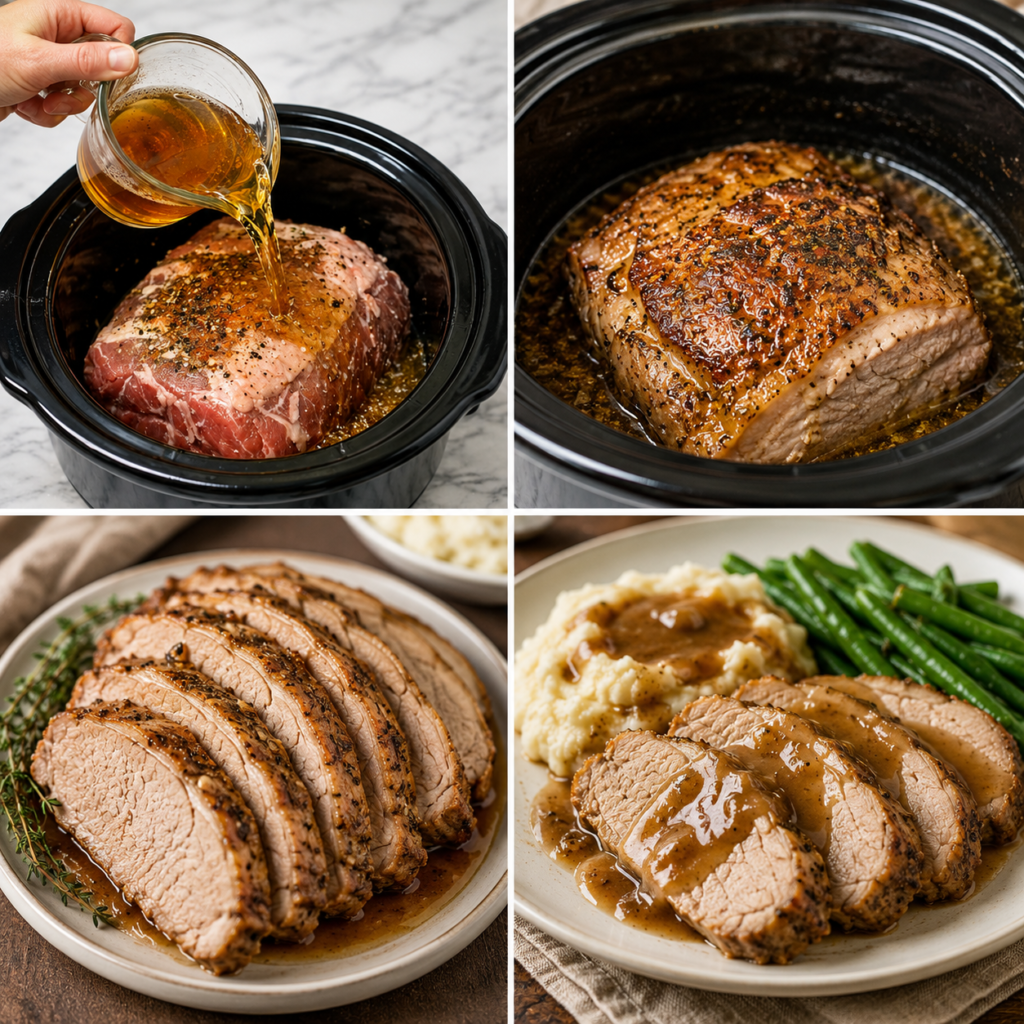
Heat olive oil in a large skillet over medium-high heat. Sear the pork for approximately 2–3 minutes per side, until each major surface develops a browned crust. This step adds deeper savory flavor. - Prepare the slow cooker.
Place the sliced onion and minced garlic in the bottom of a 6-quart slow cooker. Add the bay leaves. - Add the pork.
Place the seared pork shoulder on top of the onions. - Mix the cider liquid.
In a bowl, whisk together the apple cider, apple cider vinegar, maple syrup, Dijon mustard, and optional red pepper flakes. - Add the liquid.
Pour the apple cider mixture around the pork rather than directly over the top. The liquid should come partway up the meat but should not completely submerge it. - Slow cook.
Cover and cook on LOW for approximately 8 hours. Avoid opening the lid frequently because this releases heat and can extend the cooking time. - Check for tenderness.
The pork is ready when it is very tender and a fork slides easily into the thickest part. It should pull apart into strands without resistance. - Rest the pork.
Carefully transfer the pork to a large dish and let it rest for 10–15 minutes. - Shred the pork.
Use two forks to pull the pork apart into bite-sized strands. Discard any large pieces of excess fat and the bay leaves. - Reduce the cooking liquid if desired.
Strain some of the cooking liquid and simmer it in a saucepan over medium heat for 5–8 minutes until slightly reduced. Toss the shredded pork with a moderate amount of the liquid to keep it juicy. - High-protein cooking tip:
Keep the pork as the main component of the meal and choose vegetable-based sides or a moderate bun portion. This allows you to enjoy the protein-rich pork without making the meal unnecessarily heavy. - Serve.
Serve the pulled pork warm with crunchy slaw, roasted vegetables, baked potatoes, or whole-grain buns.
Nutrition Facts (Per Serving – Pork Mixture Only, Approximate)
- Calories: 365 kcal
- Fat: 20 g
- Cholesterol: 125 mg
- Sodium: 620 mg
- Potassium: 610 mg
- Total Carbohydrates: 12 g
- Fiber: 1 g
- Net Carbs: 11 g
- Sugars: 9 g
- Protein: 39 g
- Calcium: 35 mg
Nutrition values are approximate and can vary depending on the pork cut, amount of fat trimmed, apple cider, maple syrup, and portion size. Buns, sauces, and side dishes are not included.
Notes
- Storage: Refrigerate cooked pulled pork for up to 4 days.
- Freezing: Freeze with a little cooking liquid for up to 3 months for best quality.
- Reheating: Warm gently over medium-low heat with a splash of reserved cooking liquid.
- Allergy notes: The basic recipe is free from common dairy and egg ingredients. Check Dijon mustard labels if you need to avoid specific allergens.
- Lower-carb option: Reduce or replace the maple syrup and serve the pork with non-starchy vegetables instead of buns or potatoes.
- Flavor boost: Add orange zest, extra smoked paprika, fresh thyme, or a small amount of hot sauce.
- Sauce option: Toss the finished pork with a small amount of your favorite barbecue sauce for a richer, sweeter finish.
- Meal-prep idea: Divide the shredded pork into individual containers and pair with roasted vegetables, slaw, or cauliflower rice.
- Best texture: Keep some of the cooking juices with the shredded pork so it stays moist during storage and reheating.
Frequently Asked Questions
1. What cut of pork is best for pulled pork?
Boneless pork shoulder is an excellent choice because its marbling helps produce tender, juicy shredded meat during slow cooking.
2. Can I make apple cider pulled pork in a slow cooker?
Yes, slow cooking on LOW for about 8 hours allows the pork to become tender enough to pull apart easily.
3. Can I use apple juice instead of apple cider?
Yes, although apple cider generally provides a deeper and less watery apple flavor.
4. How do I know when the pork is ready to shred?
It is ready when a fork slides easily into the meat and the pork pulls apart with little resistance.
5. Can I freeze apple cider pulled pork?
Yes, cooled pulled pork can be frozen with some cooking liquid for up to 3 months.
6. What should I serve with apple cider pulled pork?
Coleslaw, roasted vegetables, baked potatoes, cauliflower mash, rice, or soft buns all pair well with the sweet-savory pork