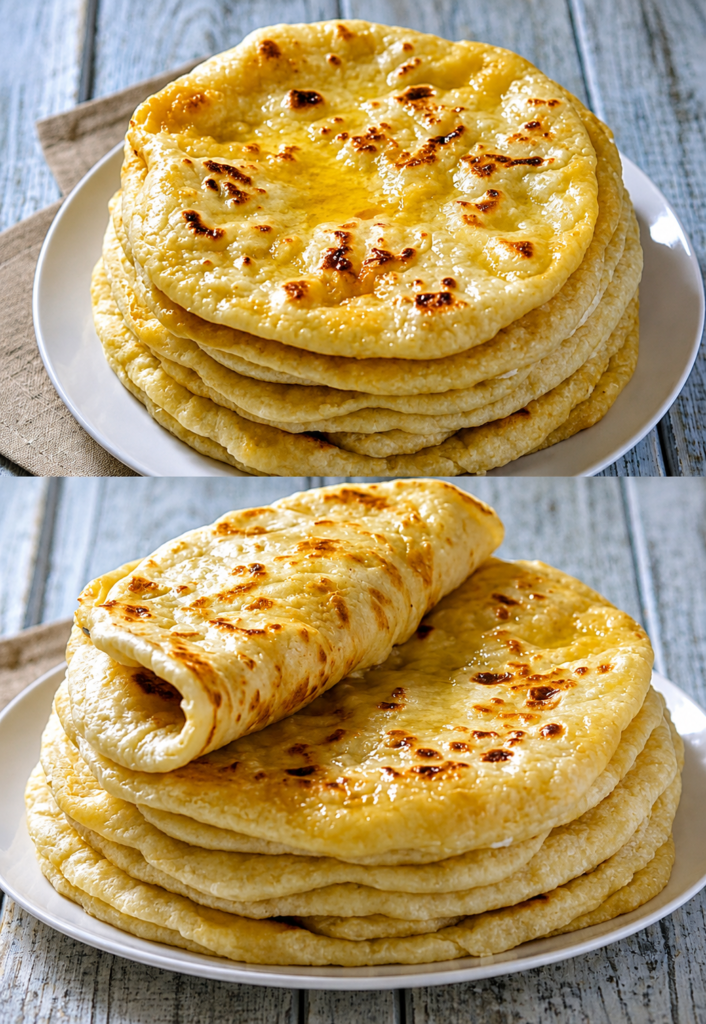

Bazlama is a wonderfully soft and pillowy Turkish yogurt flatbread traditionally cooked on a hot stovetop rather than baked in an oven. The yogurt gives the dough a tender texture and subtle tang, while cooking it in a dry skillet creates beautifully golden spots on the outside.
Warm, fluffy, and comforting, homemade bazlama is perfect for scooping up dips, serving alongside soups and stews, or simply tearing apart and enjoying with butter, cheese, or olive oil. Best of all, this traditional flatbread requires simple ingredients and everyday kitchen equipment.
Can This Bazlama Support Weight Loss Goals?
Bazlama can fit into a balanced eating pattern when enjoyed in a sensible portion. Yogurt contributes some protein, while the flour provides carbohydrates for energy. Because traditional bazlama is still a flour-based bread, portion size and what you serve alongside it matter if you’re managing overall calorie intake.
Does Bazlama Fit a High-Protein Lifestyle?
Traditional bazlama is not particularly high in protein, although yogurt adds some protein to the dough. Its carbohydrate content mainly comes from all-purpose flour, so it is not a low-carb flatbread. For a higher-protein meal, pair bazlama with eggs, Greek yogurt, grilled chicken, beans, cheese, or another protein-rich filling.
Why This Recipe Is Special
- Traditional Turkish preparation: Cooked directly on a stovetop skillet rather than baked.
- Soft and pillowy: Yogurt helps create a tender, supple crumb.
- Simple ingredients: Flour, yogurt, yeast, water, salt, and a little oil are all you need.
- No special oven required: A heavy skillet or griddle works beautifully.
- Versatile: Serve it for breakfast, lunch, dinner, or alongside dips and soups.
My Personal Experience
- I love watching the dough puff on the skillet.
Those little air pockets are a great visual cue that the bazlama is cooking properly. - The yogurt gives the bread such a tender texture.
Even after cooling, the flatbread stays softer than many basic skillet breads. - Fresh off the pan is when bazlama really shines.
A little butter brushed over the warm surface makes the bread incredibly comforting. - It is perfect for sharing.
The large, rustic rounds are easy to tear apart and serve alongside a family-style meal.
Perfect For
Bazlama is ideal for Turkish breakfasts, weekend brunches, family dinners, weeknight meals, picnics, mezze platters, soups, stews, and bread baskets. Use it as a wrap, dip it into hummus, or serve it warm alongside grilled meats and vegetables.
Why You’ll Love This Recipe
- Soft and fluffy inside
The yogurt-enriched dough creates a wonderfully tender interior. - Beautifully golden outside
A hot skillet develops characteristic toasted patches without requiring an oven. - Easy stovetop cooking
You can make fresh bread even when you don’t want to heat the oven. - Great with savory dishes
Bazlama pairs especially well with cheese, eggs, olives, soups, dips, and grilled foods. - Freezer-friendly
Extra flatbreads can be cooled, wrapped, and frozen for another meal.
Common Mistakes to Avoid
- Adding too much flour: A stiff dough produces dense bazlama. The dough should be soft and slightly tacky.
- Skipping the resting time: Insufficient proofing can result in flat, heavy bread.
- Cooking over excessive heat: Very high heat can burn the surface before the center cooks.
- Rolling the dough too thin: Bazlama should remain relatively thick so it can develop its characteristic pillowy interior.
Required Equipment
- Large mixing bowl — provides plenty of room for kneading and rising.
- Kitchen scale — gives consistent flour measurements and reliable dough texture.
- Rolling pin — shapes each portion into an evenly thick round.
- Heavy-bottomed skillet or griddle — distributes heat evenly for golden, fully cooked flatbread.
- Clean kitchen towel — keeps the dough portions covered while they rest.
- Wire rack or clean towel — prevents freshly cooked bread from becoming soggy underneath.
Storage Instructions
Allow the bazlama to cool completely before storing. Keep it in an airtight container or sealed food bag at room temperature for up to 2 days.
For longer storage, wrap individual flatbreads in parchment or plastic wrap and place them in a freezer-safe bag. Freeze for up to 3 months. Thaw at room temperature, then warm in a dry skillet for 1–2 minutes per side.
Recipe Details
Preparation Time: 25 minutes
Rising Time: 1 hour 15 minutes
Cooking Time: 20 minutes
Total Time: 2 hours
Servings: 8 flatbreads
Best Season: All-season
Calories: Approximately 240 calories per flatbread
Short 3-Line Description
Bazlama is a traditional Turkish yogurt flatbread with a soft, pillowy center and golden stovetop crust.
The simple yeast dough cooks beautifully in a skillet without an oven.
Serve it warm with breakfast, dips, soups, stews, or your favorite Turkish dishes.
📝 Ingredients
- 4 cups (500 g) all-purpose flour
- 1 cup (240 g) plain full-fat yogurt, room temperature
- ¾ cup (180 ml) warm water, approximately 100–110°F (38–43°C)
- 2¼ tsp (7 g) instant yeast
- 1 tsp granulated sugar
- 1½ tsp salt
- 2 tbsp (30 ml) olive oil
- Extra flour, for shaping as needed
Ingredient note: The yogurt should be plain and unsweetened. If using Greek yogurt, loosen it with a little water because very thick yogurt can make the dough too firm.
Directions
- Activate the yeast.
Combine the warm water, yeast, and sugar in a small bowl. Let it stand for 5–10 minutes until lightly foamy. If using instant yeast, this step can be shortened, but it also provides a useful check that the yeast is active. - Mix the dough.
Add the flour and salt to a large bowl. Make a well in the center and add the yogurt, olive oil, and yeast mixture. Stir until a shaggy dough forms. - Knead.
Transfer the dough to a lightly floured surface and knead for 8–10 minutes. The dough should become smooth, elastic, and soft, with slight tackiness but without sticking heavily to your hands. High-protein cooking tip: Although traditional bazlama isn’t high-protein, don’t compensate by adding extra flour or protein powder; either can make the bread noticeably dense. - First rise.
Place the dough in a lightly oiled bowl and cover it with a clean towel or plastic wrap. Leave it in a warm, draft-free place for approximately 60 minutes, or until doubled in size. - Divide the dough.
Gently deflate the risen dough and divide it into 8 equal portions. Shape each piece into a smooth ball. Cover and rest for another 10–15 minutes so the gluten relaxes. - Shape the bazlama.
Roll each ball into a round approximately 6–7 inches (15–18 cm) across and about ¼ inch (6–7 mm) thick. Keep the rounds reasonably thick; this is essential for the characteristic pillowy texture. - Heat the skillet.
Place a heavy skillet or griddle over medium heat for several minutes. The pan should be hot but not smoking. Cook the bazlama without adding oil. - Cook the first side.
Place one dough round in the dry skillet. Cook for approximately 2–3 minutes, until the bottom develops golden-brown spots and bubbles begin appearing on the surface. - Flip and cook.
Turn the bazlama over and cook for another 2–3 minutes. You should see additional golden spots, and the bread should puff noticeably. Adjust the heat to medium-low if the outside is browning too quickly. - Finish cooking.
Continue flipping every 30–60 seconds if necessary until the center is fully cooked and the bread feels light and inflated. Total cooking time is generally 4–6 minutes per flatbread. - Keep the bread soft.
Transfer each cooked bazlama to a clean kitchen towel and cover it immediately. Stacking the warm breads helps retain their steam and keeps the crust supple. - Serve warm.
Brush with a little melted butter or olive oil if desired and serve immediately.
Nutrition Facts — Per Flatbread, Approximate
Values vary according to the exact flour, yogurt, and portion sizes used.
- Calories: ~240 kcal
- Fat: ~5 g
- Cholesterol: ~5 mg
- Sodium: ~460 mg
- Potassium: ~130 mg
- Total Carbohydrates: ~40 g
- Fiber: ~2 g
- Net Carbs: ~38 g
- Sugars: ~2 g
- Protein: ~8 g
- Calcium: ~55 mg
Notes
- Storage: Keep at room temperature for up to 2 days or freeze for up to 3 months.
- Reheating: Warm in a dry skillet over medium-low heat for 1–2 minutes per side, or heat briefly in a toaster oven.
- Allergy note: This recipe contains wheat/gluten and dairy.
- Flavor boost: Brush freshly cooked bazlama with melted butter mixed with garlic, parsley, or a pinch of dried mint.
- Softer bread: Keep cooked pieces covered with a clean towel while preparing the remaining flatbreads.
- For serving: Cut or tear warm bazlama and serve with hummus, labneh, cheese, eggs, olives, grilled meats, soups, or Turkish-style dips.
Frequently Asked Questions
1. Why isn’t my bazlama puffing up?
The dough may have been rolled too thin, under-proofed, or cooked on a skillet that wasn’t sufficiently hot.
2. Can I make bazlama without yeast?
Yes, but yeast provides the characteristic airy and pillowy texture, so a yeast-free version will be noticeably different.
3. Can I use whole-wheat flour?
Yes, but replacing all the flour with whole-wheat flour will produce a denser, heartier flatbread.
4. Can I use Greek yogurt?
Yes, but thin very thick Greek yogurt with a little water so the dough remains soft and supple.
5. Why is my bazlama hard after cooling?
Overcooking or using too much flour can dry the bread; keep the dough soft and cook only until the center is done.
6. Can I freeze homemade bazlama?
Yes, cool the flatbreads completely, wrap them individually, and freeze them for up to 3 months.