
Description
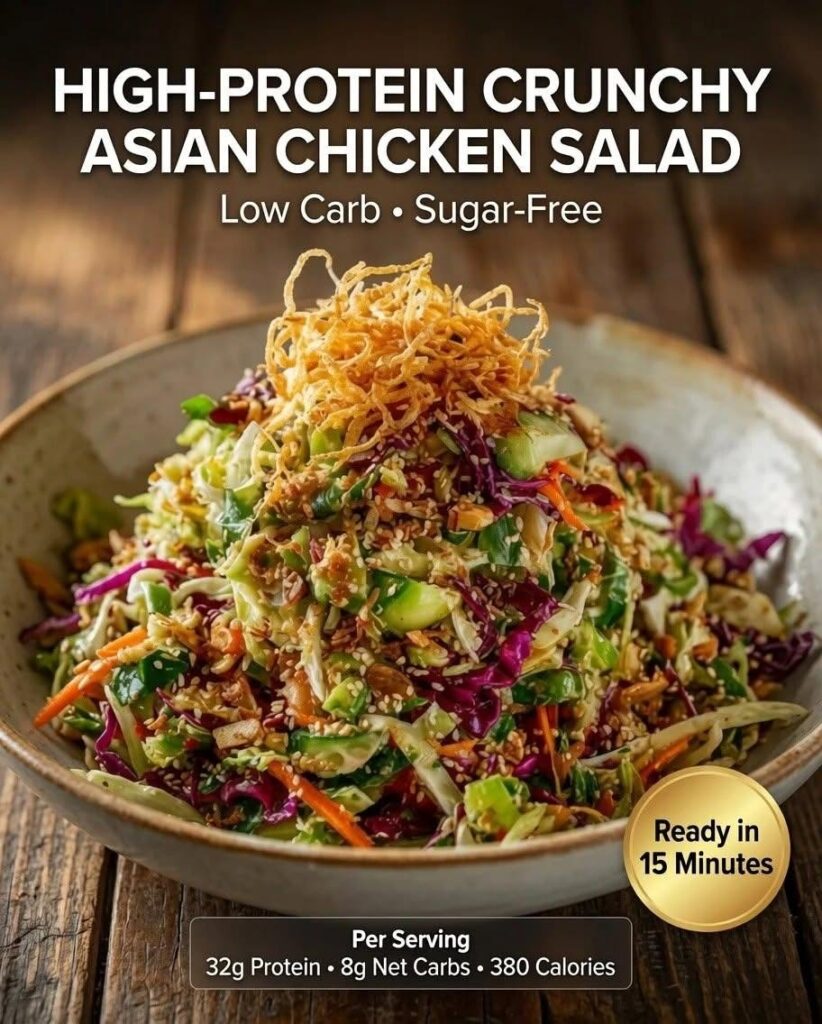
This High-Protein Crunchy Asian Chicken Salad is colorful, fresh, and packed with satisfying texture. Tender seasoned chicken is tossed with crisp cabbage, carrots, cucumber, bell pepper, and crunchy toppings, then finished with a tangy sesame-ginger dressing.
It’s a flavorful high-protein salad that feels much more exciting than an ordinary bowl of greens. The combination of juicy chicken, crunchy vegetables, creamy peanut butter, sesame, lime, and ginger creates a delicious balance of savory, tangy, slightly sweet, and nutty flavors.
Perfect for lunch, meal prep, or a light dinner, this Asian-inspired salad delivers plenty of crunch while keeping the protein front and center.
Can This High-Protein Crunchy Asian Chicken Salad Support Weight Loss Goals?
Yes, it can fit into a balanced weight-loss-focused eating pattern when portion sizes and overall calorie intake are considered. Lean chicken provides substantial protein, while the large amount of crunchy vegetables adds volume and fiber.
The dressing contains calorie-dense ingredients such as peanut butter and sesame oil, so measuring those ingredients can help keep portions predictable. For a lighter dressing, use less peanut butter and add extra lime juice or water.
Does This High-Protein Crunchy Asian Chicken Salad Fit a High-Protein Lifestyle?
Absolutely. Chicken breast provides the majority of the protein, while Greek yogurt can be used in the dressing for an additional protein boost. Cabbage, cucumber, carrots, and peppers add fiber and crunch without contributing many net carbs. The salad remains moderate in carbohydrates because of the vegetables and small amount of honey. For even more protein, increase the chicken or add shelled edamame.
Why This Recipe Is Special
- High-protein: Lean chicken provides a substantial protein foundation.
- Seriously crunchy: Cabbage, carrots, cucumber, and peppers create layers of texture.
- Bold Asian-inspired dressing: Ginger, lime, sesame, soy sauce, and peanut butter create big flavor.
- Meal-prep friendly: Keep the dressing separate until serving for maximum crunch.
- Balanced and colorful: A variety of vegetables makes every serving vibrant and satisfying.
My Personal Experience
- The crunch is what makes this salad special.
Fresh cabbage, carrots, cucumber, and peppers stay crisp and make every bite interesting. - The chicken makes it genuinely satisfying.
Using plenty of tender chicken turns a simple vegetable salad into a substantial high-protein meal. - The dressing brings everything together.
Creamy peanut butter, tangy lime, ginger, and sesame create a rich dressing that coats the vegetables beautifully. - Keeping the dressing separate makes meal prep easier.
The vegetables stay crisp for longer when the dressing is added just before eating.
Perfect For
This salad is perfect for high-protein lunches, meal prep, quick dinners, healthy work lunches, summer meals, post-workout meals, and light weeknight dinners.
For meal prep, divide the chicken and vegetables into containers and store the dressing separately. Add crunchy toppings immediately before serving.
Why You’ll Love This Recipe
- Packed with crunch: Multiple fresh vegetables give the salad a satisfying texture.
- Protein-rich: A generous serving of chicken makes it filling.
- Fresh and flavorful: Lime, ginger, sesame, and herbs keep the salad bright.
- Easy to meal prep: Components can be prepared several days ahead.
- Better than boring salads: The bold dressing and crunchy toppings make it feel like a complete meal.
Common Mistakes to Avoid
- Adding the dressing too early — It can soften the cabbage and other crunchy vegetables.
- Overcooking the chicken — Dry chicken can make the salad less enjoyable, so cook just until done.
- Cutting vegetables unevenly — Similar-sized pieces make the salad easier to eat and distribute the dressing more evenly.
- Using too much dressing — The sesame-peanut dressing is flavorful and rich, so start with a moderate amount.
Required Equipment
- Large skillet or grill pan — Cooks the chicken with flavorful browned edges.
- Large salad bowl — Provides enough room to toss the vegetables without spilling.
- Sharp chef’s knife — Makes thin, even vegetable slices easier.
- Small whisk — Creates a smooth, emulsified dressing.
- Measuring cups and spoons — Keep the dressing’s sweet, salty, and acidic flavors balanced.
Storage Instructions
For meal prep, store the cooked chicken, chopped vegetables, dressing, and crunchy toppings separately in airtight containers.
The cooked chicken can be refrigerated for 3–4 days, while prepared vegetables are best used within 3–4 days for maximum freshness. Keep the dressing refrigerated for up to 4 days.
Do not dress the entire salad if you plan to store leftovers. Add the dressing immediately before serving to preserve the cabbage and vegetable crunch.
Freezing the assembled salad is not recommended because the fresh vegetables will lose their crisp texture.
Recipe Details
- Preparation Time: 15 minutes
- Cooking Time: 12 minutes
- Total Time: 27 minutes
- Servings: 4
- Best Season: Summer
- Total Calories: Approximately 430 calories per serving
📝 Ingredients
Chicken
- 1½ lb (680 g) boneless, skinless chicken breast
- 1 tablespoon olive oil
- 1 tablespoon low-sodium soy sauce
- 1 teaspoon sesame oil
- 1 teaspoon grated fresh ginger
- 2 cloves garlic, minced
- ½ teaspoon black pepper
- ½ teaspoon paprika
Crunchy Salad
- 4 cups (300 g) shredded green cabbage
- 1 cup (100 g) shredded red cabbage
- 1 medium carrot, julienned
- 1 medium cucumber, thinly sliced
- 1 red bell pepper, thinly sliced
- ½ cup (50 g) shelled edamame
- 3 green onions, thinly sliced
- ¼ cup (15 g) fresh cilantro, chopped
High-Protein Sesame-Peanut Dressing
- ¼ cup (60 g) plain Greek yogurt
- 2 tablespoons natural peanut butter
- 1 tablespoon low-sodium soy sauce
- 1 tablespoon fresh lime juice
- 1 teaspoon sesame oil
- 1 teaspoon honey
- 1 teaspoon freshly grated ginger
- 1 small garlic clove, finely grated
- 1–2 tablespoons warm water, as needed
Optional Crunchy Toppings
- 2 tablespoons chopped roasted peanuts
- 1 tablespoon sesame seeds
- 2 tablespoons crispy wonton strips
Ingredient note: For a lower-carb version, omit the honey and use a suitable no-sugar sweetener if desired. For a nut-free salad, replace peanut butter with sunflower seed butter and omit the peanuts.
Directions
- Prepare the chicken.
Pat the chicken breasts dry. If they are very thick, gently pound them to an even thickness so they cook uniformly. - Season the chicken.
Combine olive oil, soy sauce, sesame oil, ginger, garlic, black pepper, and paprika. Rub the mixture evenly over the chicken. - Heat the skillet.
Place a large skillet over medium-high heat and allow it to heat for about 2 minutes. - Cook the chicken.
Add the chicken and cook for approximately 5–6 minutes per side, depending on thickness. The outside should be golden and the center should reach 165°F (74°C). - Rest the chicken.
Transfer the chicken to a cutting board and let it rest for 5 minutes. This helps retain moisture when sliced. - Prepare the vegetables.
While the chicken rests, combine green cabbage, red cabbage, carrot, cucumber, bell pepper, edamame, green onions, and cilantro in a large bowl. - Make the dressing.
Whisk Greek yogurt, peanut butter, soy sauce, lime juice, sesame oil, honey, ginger, and garlic in a small bowl. - Adjust the consistency.
Gradually whisk in 1–2 tablespoons of warm water until the dressing becomes smooth and pourable. - Slice the chicken.
Cut the rested chicken into thin strips or bite-sized pieces. The chicken should remain juicy and fully cooked in the center. - Assemble the salad.
Add the chicken to the vegetables and toss gently. - Dress the salad.
Drizzle over the desired amount of dressing and toss until the ingredients are lightly coated. For meal prep, keep the dressing separate. - Add crunch.
Sprinkle with chopped peanuts, sesame seeds, or crispy wonton strips immediately before serving. - Serve.
Serve immediately with extra lime wedges and fresh cilantro if desired.
High-protein cooking tip: Use approximately 5–6 oz (140–170 g) cooked chicken per serving. This keeps chicken as the primary protein source while the Greek yogurt and edamame provide additional protein.
Nutrition Facts — Per Serving (Approximate)
Estimates are based on the listed ingredients, including the Greek-yogurt peanut dressing and peanuts. Actual values vary according to chicken size, peanut butter, yogurt, and toppings.
- Calories: ~430 kcal
- Fats: ~19 g
- Cholesterol: ~110 mg
- Sodium: ~680 mg
- Potassium: ~850 mg
- Total Carbohydrates: ~18 g
- Fiber: ~6 g
- Net Carbs: ~12 g
- Sugars: ~8 g
- Protein: ~49 g
- Calcium: ~110 mg
Notes
- Storage: Keep salad components separate and refrigerate for 3–4 days.
- Reheating: The chicken can be gently reheated before adding it to the cold salad, or it can be enjoyed chilled.
- Allergy notes: Contains soy, peanuts, dairy, and sesame. Use appropriate substitutions for allergies.
- Flavor boosts: Add lime zest, chili flakes, sriracha, fresh mint, cilantro, or extra ginger.
- Protein boost: Increase chicken or add additional edamame or Greek yogurt dressing.
- Lower-carb option: Skip the honey and crispy wonton strips and use a low-carb sweetener if desired.
- Crunch tip: Add peanuts, sesame seeds, and crispy toppings immediately before eating.
Frequently Asked Questions
1. Can I use rotisserie chicken?
Yes, shredded rotisserie chicken is a convenient substitute, although the seasoning and nutrition will vary.
2. Can I make this salad ahead of time?
Yes, prepare the chicken and vegetables ahead but store the dressing separately to preserve the crunch.
3. Can I make the dressing without peanut butter?
Yes, use sunflower seed butter or tahini for a nut-free alternative.
4. What can I use instead of chicken?
Cooked shrimp, lean beef, turkey, tofu, or extra edamame can be used depending on your preferred protein.
5. Is this salad low-carb?
It is relatively low in carbohydrates compared with grain-based salads, but the exact net carbs depend on the dressing and toppings.
6. How can I make the salad even crunchier?
Add toasted peanuts, sesame seeds, crispy wonton strips, or finely sliced radishes just before serving.