

Description
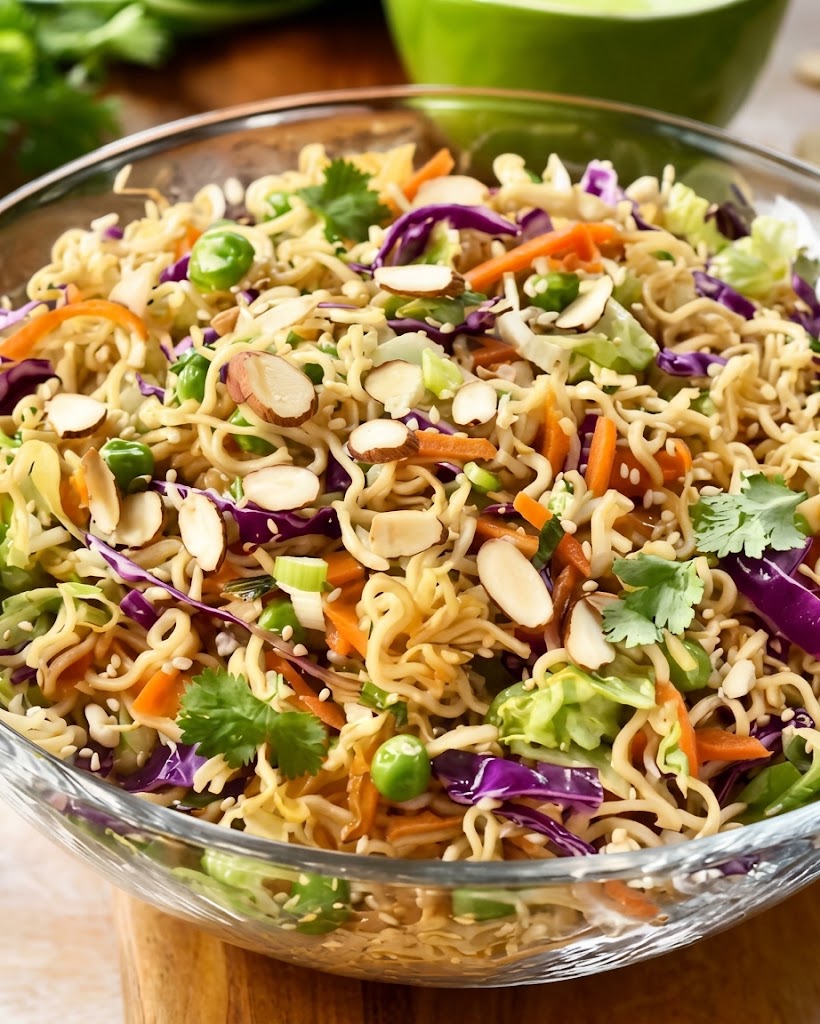
This Crunchy Asian Ramen Noodle Salad combines tender chicken, crisp vegetables, chewy ramen-style noodles, and a bright sesame-soy dressing in every colorful bite.
The mix of cabbage, peppers, carrots, edamame, and almonds creates an irresistible contrast of fresh, crunchy, and savory textures.
It is a satisfying high-protein, low-carb-friendly meal that works beautifully for quick lunches, meal prep, or light summer dinners.
Can This Crunchy Asian Ramen Noodle Salad Support Weight Loss Goals?
Yes, it can fit into a weight-conscious eating pattern when portions and overall daily intake are appropriate. The recipe uses lean chicken and edamame to provide substantial protein, which can make the meal more filling and satisfying. Using shirataki-style ramen keeps the carbohydrate contribution relatively low while vegetables add volume, fiber, and crunch without making the salad overly heavy.
Does Crunchy Asian Ramen Noodle Salad Fit a High-Protein Lifestyle?
Yes, this salad is designed with protein-forward ingredients such as chicken and edamame.
Using shirataki ramen keeps the net carbs comparatively low while allowing the vegetables and toppings to provide plenty of texture.
The sesame-peanut dressing adds satisfying fats and flavor without relying on large amounts of noodles.
With approximately 35 g protein per serving, it can comfortably fit many high-protein meal plans.
Why This Recipe Is Special
- High-protein: Lean chicken and edamame make the salad substantially more protein-rich than a traditional noodle salad.
- Low-carb-friendly: Shirataki-style ramen noodles significantly reduce the carbohydrate load.
- Crunchy and colorful: Cabbage, carrots, peppers, and almonds give every bite multiple textures.
- Quick and comforting: The savory sesame-soy dressing delivers familiar Asian-inspired comfort without requiring complicated cooking.
- Meal-prep friendly: The components can be prepared ahead and combined when ready to eat.
My Personal Experience
- The crunch is my favorite part.
The combination of shredded cabbage and toasted almonds stays pleasantly crisp against the soft noodles and chicken. - The dressing brings everything together.
Sesame oil, soy sauce, peanut butter, and rice vinegar create a balanced sweet-savory-tangy flavor that coats the ingredients without overwhelming them. - It feels like comfort food without being overly heavy.
The warm, savory flavors of ramen-inspired ingredients make the salad satisfying while the vegetables keep it fresh. - It works especially well for meal prep.
Keeping the dressing separate until serving helps preserve the vegetables’ crunch and keeps the salad tasting freshly assembled.
Perfect For
This salad is ideal for busy weeknights, summer lunches, office meals, meal prep, picnics, and light dinners. It can also work well in a low-carb or high-protein meal plan when the serving size fits your individual nutritional targets. For snacks, serve a smaller portion; it is better suited as a substantial meal or side than as a dessert.
Why You’ll Love This Recipe
- Big Asian-inspired flavor
The sesame, soy, peanut, ginger, and rice vinegar dressing makes simple ingredients taste vibrant and satisfying. - Loaded with texture
Crisp cabbage, fresh peppers, carrots, edamame, almonds, and chewy ramen-style noodles make every bite interesting. - Protein-forward
Chicken and edamame provide a strong protein base, making this much more substantial than a typical vegetable noodle salad. - Easy to customize
You can adjust the spice, vegetables, protein, or dressing sweetness according to your preferences. - Great for warm weather
It is refreshing enough for summer while still delivering the savory satisfaction of a noodle-based meal.
Common Mistakes to Avoid
- Skipping the noodle rinsing step: Shirataki noodles can have a noticeable aroma straight from the package, so rinse them thoroughly before cooking.
- Overcooking the vegetables: Keep the cabbage, peppers, and carrots raw or only lightly cooked so the finished salad remains crunchy.
- Adding dressing too early: For meal prep, dressing the entire salad hours ahead can soften the vegetables and almonds.
- Using too much dressing: The sesame-peanut dressing is flavorful and rich, so add it gradually and toss until everything is lightly coated.
Required Equipment
- Large mixing bowl — gives you enough room to toss the salad without crushing the vegetables.
- Small saucepan or skillet — cooks the chicken evenly and safely.
- Colander — makes rinsing and draining the ramen noodles quick and easy.
- Small mixing bowl — allows the dressing ingredients to blend smoothly.
- Whisk — creates a creamy, well-emulsified dressing.
- Sharp chef’s knife — makes thin, even vegetable slices for better crunch.
- Cutting board — provides a stable surface for efficient preparation.
Storage Instructions
Store leftover salad in an airtight glass or BPA-free food-safe container in the refrigerator for up to 3 days. For the best texture, keep the dressing and almonds separate and combine them just before serving.
The prepared chicken, noodles, and vegetables can be portioned into individual meal-prep containers. Keep refrigerated at 4°C/40°F or below and do not leave the finished salad at room temperature for extended periods.
Freezing the fully assembled salad is not recommended, because the raw vegetables and dressing can become watery and lose their crunch after thawing. If necessary, freeze only the cooked chicken separately for up to about 2 months, then prepare fresh vegetables and dressing when serving.
Recipe Details
- Preparation Time: 20 minutes
- Cooking Time: 12 minutes
- Total Time: 32 minutes
- Servings: 4
- Best Season: Summer, but suitable for all seasons
- Total Calories: Approximately 460 calories per serving
📝 Ingredients
For the Salad
- 400 g boneless, skinless chicken breast, cut into bite-size pieces
- 2 packs shirataki/konjac ramen-style noodles, about 400 g total, drained and rinsed
- 100 g shelled edamame, cooked and cooled
- 150 g green or red cabbage, finely shredded
- 80 g carrot, julienned or grated
- 100 g red bell pepper, thinly sliced
- 2 green onions, thinly sliced
- 30 g sliced almonds, lightly toasted
- 1 tablespoon sesame seeds, optional
Note: Shirataki noodles are very low in digestible carbohydrates. If using conventional ramen noodles instead, the calories and carbohydrate values will be substantially higher.
For the Asian Dressing
- 2 tablespoons low-sodium soy sauce
- 1 tablespoon toasted sesame oil
- 1 tablespoon natural peanut butter
- 1 tablespoon rice vinegar
- 1 teaspoon fresh grated ginger
- 1 small garlic clove, finely grated or minced
- 1 teaspoon honey, optional
- 1–2 teaspoons water, as needed to thin
- ¼ teaspoon red pepper flakes, optional
Note: For a stricter low-carb version, replace the honey with a small amount of a suitable zero-sugar sweetener.
Directions
- Prepare the noodles.
Drain and rinse the shirataki noodles thoroughly under cold running water for 1–2 minutes. This helps remove their characteristic aroma. - Dry the noodles for better texture.
Heat a large non-stick skillet over medium heat. Add the rinsed noodles without oil and cook for 3–5 minutes, tossing frequently, until excess moisture evaporates and the noodles feel less wet. - Cook the chicken.
Heat the same skillet over medium-high heat and lightly coat it with cooking spray or a small amount of oil. Add the chicken and cook for approximately 6–8 minutes, turning occasionally, until browned on the outside and fully cooked through. The chicken should reach 74°C/165°F internally. - Prepare the dressing.
In a small bowl, whisk together soy sauce, sesame oil, peanut butter, rice vinegar, ginger, garlic, honey, and red pepper flakes. Add water 1 teaspoon at a time until the dressing becomes smooth and pourable. - Build the salad.
Add the noodles, cooked chicken, edamame, cabbage, carrot, bell pepper, and green onions to a large bowl. - Add the dressing gradually.
Pour in about three-quarters of the dressing and toss gently for 30–60 seconds. Add more dressing only if needed. The vegetables should remain crisp rather than become saturated. - Finish with crunch.
Sprinkle the toasted almonds and sesame seeds over the top immediately before serving. The almonds should remain visibly crisp and fragrant. - High-protein cooking tip:
Divide the salad into four equal portions and make sure each contains a similar amount of chicken and edamame. This keeps the protein distribution consistent across servings. - Serve.
Serve immediately for maximum crunch, or refrigerate for 20–30 minutes if you prefer the flavors to meld slightly before eating.
Nutrition Facts — Per Serving, Approximate
Values are estimates and can vary depending on the exact brands and ingredients used.
- Calories: ~460 kcal
- Fat: ~20 g
- Cholesterol: ~90 mg
- Sodium: ~700 mg
- Potassium: ~700 mg
- Total Carbohydrates: ~18 g
- Fiber: ~7 g
- Net Carbs: ~11 g
- Sugars: ~6 g
- Protein: ~35 g
- Calcium: ~90 mg
Notes
- Storage: Keep leftovers refrigerated in an airtight container for up to 3 days; store almonds and dressing separately when possible.
- Reheating: This recipe is best served cold or slightly chilled. If you prefer warm chicken, reheat only the chicken separately and add it to the salad just before eating.
- Allergy notes: Contains soy, peanuts, and tree nuts. For peanut-free preparation, use sunflower-seed butter; for nut-free preparation, omit the almonds.
- Gluten-free: Use certified gluten-free tamari or coconut aminos instead of regular soy sauce.
- Flavor boost: Add chili crisp, sriracha, extra ginger, lime juice, cilantro, or a sprinkle of toasted sesame seeds.
- Lower-carb option: Omit the honey and use a suitable zero-sugar sweetener if desired.
- Extra-protein option: Increase the chicken by 50–100 g or add additional edamame.
Frequently Asked Questions
1. Can I use regular ramen noodles?
Yes, but regular ramen will substantially increase the calories and carbohydrates compared with shirataki ramen-style noodles.
2. Can I make this salad ahead of time?
Yes, but keep the dressing and almonds separate until serving to maintain the best crunch.
3. Can I replace the chicken?
Absolutely—cooked shrimp, turkey, tofu, or another preferred protein can be substituted.
4. Is this salad keto-friendly?
It can fit some low-carb approaches because it uses shirataki noodles and has approximately 11 g estimated net carbs per serving, but strict keto plans vary in their individual carbohydrate limits.
5. How can I make it spicier?
Add extra red pepper flakes, sriracha, chili crisp, or thinly sliced fresh chili peppers.
6. Can I make it peanut-free?
Yes; replace the peanut butter with sunflower-seed butter or simply omit it and slightly increase the sesame-based dressing.