
- Limoncello is an alcoholic, sugar-containing beverage and is therefore not a weight-loss-focused food or drink. A small serving can fit into an overall balanced eating pattern, but both alcohol and added sugar contribute calories without providing much protein or fiber. If you’re watching calories, keep portions modest and account for the drink as part of your overall intake.Does Homemade Limoncello Fit a High-Protein Lifestyle?Limoncello is not a high-protein food or beverage because its main ingredients are alcohol, lemon zest, water, and sugar. It contains essentially no meaningful protein or fiber, and its net carbohydrates come primarily from the added sugar. It can occasionally accompany a high-protein meal plan, but it shouldn’t be considered a protein source or a low-carb beverage.Why This Recipe Is Special
- Bright lemon flavor: Fresh lemon zest creates a vibrant citrus aroma.
- Homemade quality: You control the sweetness and intensity.
- Make-ahead friendly: The flavor develops beautifully during infusion.
- Versatile: Enjoy it chilled, use it in cocktails, or add it to desserts.
- Beautiful presentation: Its golden color makes it especially appealing for entertaining.
- Use only the yellow zest.
The white pith underneath is bitter and can make the finished limoncello unpleasantly harsh. - Choose unwaxed lemons when possible.
Since you’re infusing the peel, clean, good-quality lemons provide the freshest flavor. - Give the zest enough infusion time.
The alcohol needs time to extract the lemon oils, which are responsible for limoncello’s intense aroma. - Adjust sweetness gradually.
Add the cooled syrup slowly and taste as you go so you can make the final drink as sweet or bright as you prefer.
- Intensely aromatic: Lemon oils from the zest create a much deeper flavor than ordinary lemon juice.
- Simple ingredients: You only need lemons, alcohol, sugar, and water.
- Customizable sweetness: Adjust the syrup to your preferred balance.
- Great for entertaining: Serve it chilled in small glasses after dinner.
- Long-lasting: Properly stored, homemade limoncello can keep for an extended period.
- Including too much white pith — It can introduce significant bitterness.
- Using lemon juice in the infusion — Traditional limoncello gets its flavor primarily from the zest and lemon oils.
- Adding hot syrup directly to the alcohol — Allow the syrup to cool completely before combining.
- Skipping filtration — Small pieces of zest can remain suspended and affect the finished texture.
- Vegetable peeler or microplane — Removes thin lemon zest while minimizing bitter pith.
- Large glass jar with lid — Provides an ideal container for the infusion.
- Fine-mesh strainer — Removes the lemon zest after infusion.
- Cheesecloth or coffee filter — Produces a clearer, smoother liqueur.
- Saucepan — Makes the sugar syrup evenly.
- Funnel — Makes transferring the finished limoncello into bottles much easier.
- Clean glass bottles — Provide airtight storage and attractive presentation.
- Preparation Time: 20 minutes
- Infusion Time: 7–14 days
- Cooking Time: 5 minutes
- Total Time: Approximately 1–2 weeks
- Servings: About 16 servings
- Best Season: Summer
- Calories: Approximately 150 calories per 2-oz serving
✨ Lemon zest is infused into alcohol and blended with homemade simple syrup for a beautifully balanced finish.
🥂 Serve it well chilled as an elegant after-dinner drink or use it in desserts and cocktails.📝 Ingredients- 10–12 unwaxed lemons
- 750 ml vodka or neutral grain spirit
- 2 cups (400 g) granulated sugar
- 2 cups (480 ml) water
- Wash the lemons: Scrub the lemons thoroughly under cool running water and dry them completely.
- Peel the lemons: Using a vegetable peeler or fine zester, remove only the bright yellow outer peel. Avoid the white pith as much as possible.
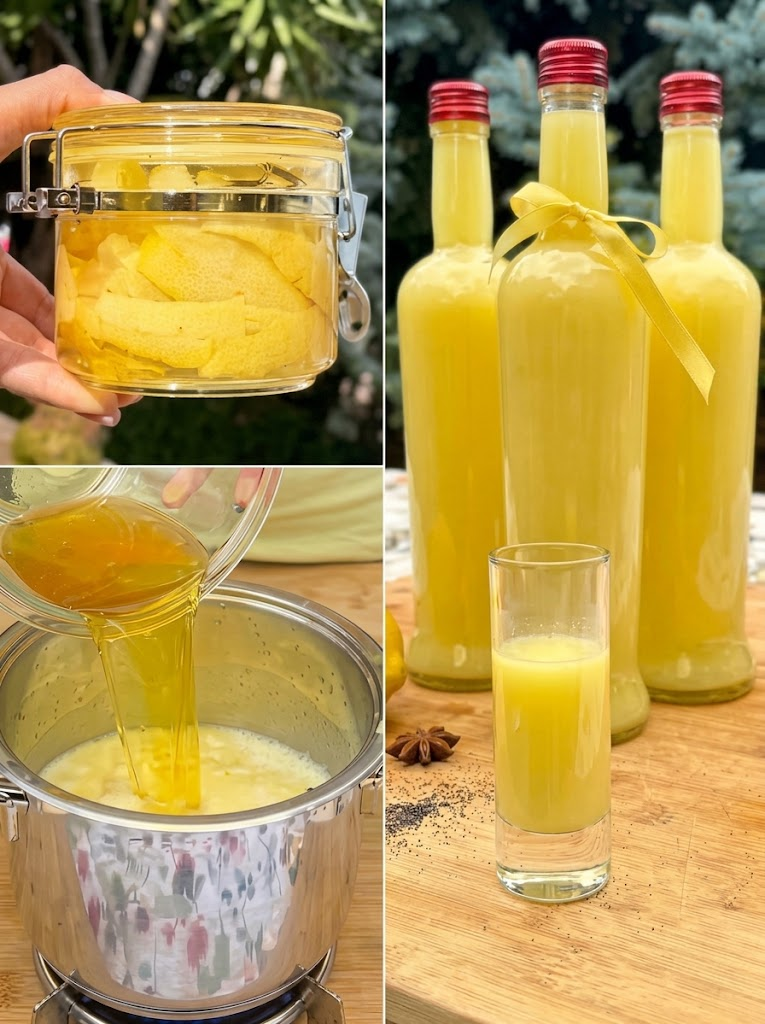
- Start the infusion: Place the lemon zest in a large clean glass jar and pour in the vodka. Seal tightly.
- Infuse: Store the jar in a cool, dark place for 7–14 days. Gently shake the jar once every day or two. The liquid should gradually become intensely lemon-scented and golden.
- Make the syrup: When the infusion is ready, combine sugar and water in a saucepan over medium heat. Stir for 3–5 minutes, just until the sugar has completely dissolved. Do not vigorously boil.
- Cool completely: Remove the syrup from the heat and allow it to cool to room temperature. This is important before combining it with the alcohol.
- Strain the infusion: Pour the lemon-infused alcohol through a fine-mesh strainer lined with cheesecloth or a coffee filter. Strain until the liquid is clear of zest particles.
- Combine: Slowly add the cooled syrup to the infused alcohol. Stir gently until evenly mixed.
- Taste: Taste a small amount and adjust with additional cooled syrup if you prefer a sweeter limoncello.
- Bottle: Use a clean funnel to transfer the limoncello into clean glass bottles. Seal tightly.
- Rest: Refrigerate for at least 24–48 hours before serving. Resting allows the flavors to mellow and blend.
- Serve: Serve well chilled in small glasses. Limoncello can also be stored in the freezer for an especially cold, refreshing serving.
- Storage: Keep tightly sealed in the refrigerator for several weeks or freeze for longer storage. Because alcohol concentration and sugar content vary, storage life can differ between homemade batches.
- Freezing: Limoncello generally remains pourable when frozen because of its alcohol content.
- Serving: Serve very cold in small chilled glasses.
- Alcohol safety: This is an alcoholic beverage intended for adults of legal drinking age. Never serve it to minors, pregnant people, or anyone who should avoid alcohol.
- Allergy notes: Naturally free from dairy, eggs, and gluten when made with suitable ingredients.
- Flavor boost: Add a small amount of extra lemon zest during infusion for a more intense citrus aroma.
- Sweetness: For a brighter, sharper limoncello, use less syrup; for a sweeter, smoother version, add more.
- Clarity: A second filtration through a coffee filter can produce a cleaner-looking finished liqueur.
A 7–14 day infusion generally provides a strong lemon aroma, although some traditional recipes use longer infusion periods.2. Should I use lemon juice?
No, traditional limoncello relies primarily on lemon zest and the aromatic oils extracted from it.3. Why is my limoncello bitter?
The most common cause is leaving too much white pith attached to the lemon peel.4. Can I make limoncello sweeter?
Yes, simply add more cooled simple syrup gradually until you reach your preferred sweetness.5. Should limoncello be refrigerated?
Yes, refrigeration is a convenient way to keep it cold and ready to serve.6. Can I use limoncello in desserts?
Absolutely—it works particularly well in lemon cakes, frostings, tiramisu-style desserts, sorbets, and fruit-based desserts.
Posted inRecipes Weight Watcher
Homemade Limoncello
Posted by
 No Comments
No Comments
Post navigation
Previous Post
 Caprese Garlic Bread Toasts
Next Post
Healthy Zucchini Oatmeal Patties