
Description
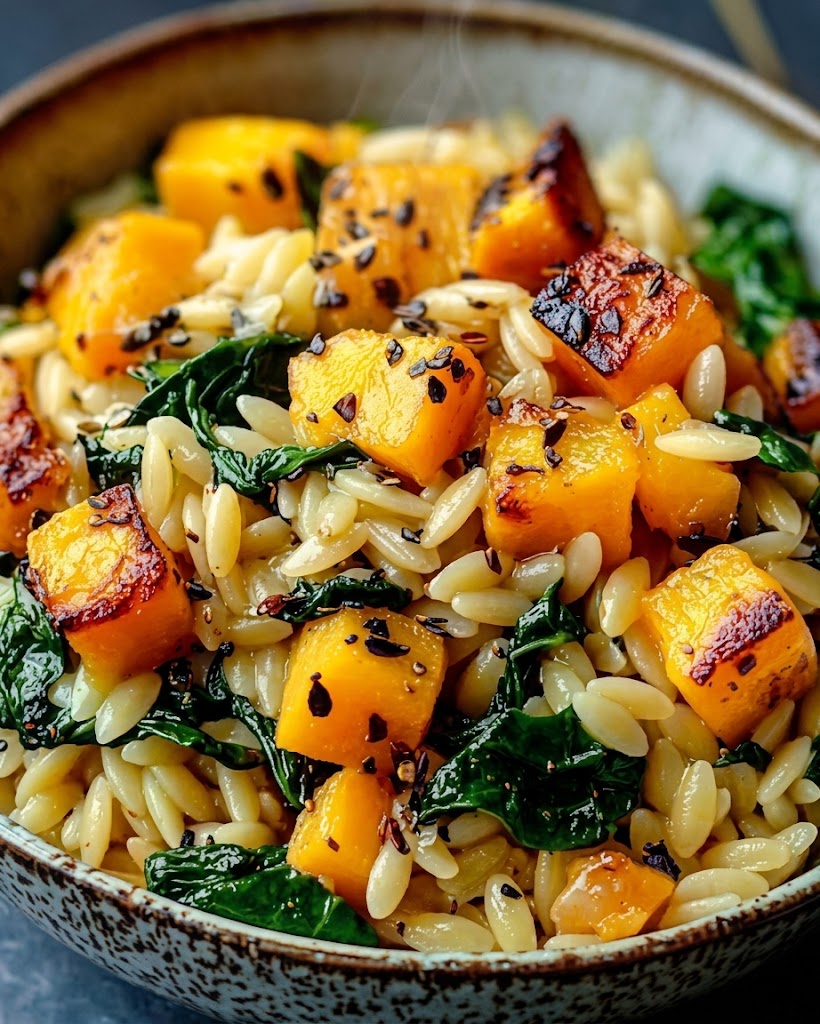
Orzo with Roasted Butternut Squash and Spinach is a comforting, colorful pasta dish that brings together sweet caramelized butternut squash, tender orzo, fresh spinach, and savory Parmesan in one delicious bowl. Roasting the squash gives it beautifully browned edges and a naturally sweet flavor, while the spinach adds freshness and color. It is simple enough for a weeknight dinner but elegant enough to serve as a side dish or meatless main course.
The combination of creamy-tender orzo and roasted vegetables makes every bite satisfying without feeling overly heavy. Add chickpeas, white beans, grilled chicken, or extra Parmesan if you want to turn it into a more substantial highprotein meal.
Why You’ll Love This Recipe
- Sweet and savory: Roasted butternut squash develops deep caramelized edges that pair beautifully with salty Parmesan.
- Comforting but fresh: Creamy-feeling orzo is balanced by fresh spinach and roasted vegetables.
- Easy weeknight meal: Most of the cooking happens with minimal hands-on work.
- Naturally colorful: Orange squash and vibrant green spinach make this dish especially inviting.
- Easy to customize: Add chicken, chickpeas, beans, feta, or toasted nuts to change it up.
Can This Orzo with Roasted Butternut Squash and Spinach Support Weight Loss Goals?
This recipe can fit into a balanced weight-conscious eating pattern when served in an appropriate portion. Butternut squash and spinach provide vegetables and fiber, while orzo supplies carbohydrates for energy. To make the meal more filling, pair it with a lean protein such as grilled chicken or turkey, or stir in chickpeas or white beans. Keeping an eye on the amount of oil, Parmesan, and orzo used can also help manage the overall calorie density without sacrificing flavor.
Does Orzo with Roasted Butternut Squash and Spinach Fit a highprotein Lifestyle?
Traditional orzo is primarily a carbohydrate source, so this dish by itself isn’t especially high in protein. However, it can easily become highprotein-friendly by adding grilled chicken, shrimp, chickpeas, white beans, or extra Greek-style yogurt-based sauce. Spinach contributes a small amount of protein along with micronutrients, while Parmesan adds additional protein and savory flavor. For a lower-carb version, reduce the orzo slightly and increase the amount of spinach, squash, and protein-rich additions. Net carbs will vary depending on the portion of orzo and any additions used.
Why This Recipe Is Special
- Roasted squash makes the difference: High-heat roasting concentrates the squash’s natural sweetness and creates delicious browned edges.
- One comforting bowl: Orzo absorbs the flavorful dressing and vegetable juices for a cohesive dish.
- Perfect seasonal flavor: Butternut squash gives this recipe a cozy fall and winter feel.
- Flexible enough for meal prep: It works well as a make-ahead lunch or dinner.
- Simple ingredients: Everyday ingredients come together to create a restaurant-style presentation.
Ingredients
For the Roasted Butternut Squash
- 3 cups peeled and cubed butternut squash
- 1½ tablespoons olive oil
- ½ teaspoon garlic powder
- ½ teaspoon dried thyme
- ¼ teaspoon salt
- ¼ teaspoon black pepper
For the Orzo
- 1½ cups dry orzo
- 3 cups vegetable or chicken broth
- 2 tablespoons olive oil or butter
- 3 cloves garlic, minced
- 4 cups fresh spinach
- ½ cup freshly grated Parmesan cheese
- 1 tablespoon fresh lemon juice
- ½ teaspoon Italian seasoning
- Salt and black pepper, to taste
Optional Add-Ins
- Grilled chicken breast
- Cooked chickpeas
- White beans
- Feta cheese
- Toasted walnuts or pecans
- Red pepper flakes
- Fresh parsley
- Lemon zest
How to Make Orzo with Roasted Butternut Squash and Spinach
Step 1: Prepare the Squash
Preheat your oven to 425°F (220°C).
Place the cubed butternut squash on a large baking sheet. Drizzle with olive oil and sprinkle with garlic powder, thyme, salt, and black pepper.
Toss thoroughly so every piece is lightly coated.
Spread the squash into a single layer, leaving space between the pieces so they roast rather than steam.
Step 2: Roast the Butternut Squash
Roast for approximately 25–30 minutes, turning the squash halfway through cooking.
The squash should be tender in the center with golden-brown, caramelized edges.
For extra browning, give it another few minutes in the oven while keeping a close eye on it.
Step 3: Cook the Orzo
While the squash roasts, heat the olive oil or butter in a large skillet or saucepan over medium heat.
Add the minced garlic and cook for about 30 seconds, just until fragrant.
Add the dry orzo and stir for 1–2 minutes. Lightly toasting the orzo helps give it a deeper flavor.
Pour in the broth and bring the mixture to a gentle simmer.
Step 4: Simmer Until Tender
Cook the orzo according to the package directions, stirring occasionally so it doesn’t stick to the bottom.
The orzo should become tender while still retaining a pleasant bite.
If it becomes too thick before the orzo is fully cooked, add a small splash of additional broth or water.
Step 5: Add the Spinach
Once the orzo is nearly finished, add the fresh spinach.
Stir gently and allow the spinach to wilt into the warm orzo, which should take about 1–2 minutes.
Don’t overcook it—the goal is tender, vibrant spinach rather than dull, mushy greens.
Step 6: Add Parmesan and Lemon
Remove the pan from the heat.
Stir in the Parmesan cheese, lemon juice, Italian seasoning, and a little black pepper.
Taste and adjust the salt as needed.
The lemon is especially important because its brightness balances the sweetness of the butternut squash and richness of the Parmesan.
Step 7: Combine Everything
Gently fold the roasted butternut squash into the orzo.
Reserve a few golden squash cubes for the top if you’re serving the dish immediately.
Finish with extra Parmesan, fresh parsley, lemon zest, or a sprinkle of red pepper flakes if desired.
High-Protein Additions
If you want to make this a more substantial highprotein meal, try one of these additions:
Grilled Chicken
Add sliced grilled chicken breast for a simple protein boost that pairs naturally with the roasted squash.
Chickpeas
Stir in cooked chickpeas for a plant-based option with protein and fiber.
White Beans
Cannellini or great northern beans work particularly well because their creamy texture complements the orzo.
Shrimp
Garlic-seasoned shrimp can turn this vegetarian-style pasta into a lighter seafood dinner.
Extra Parmesan
A little additional Parmesan adds savory flavor and some extra protein, although it won’t provide as much protein as chicken, seafood, or legumes.
Low-Carb Modification
Traditional orzo is pasta made from wheat, so it isn’t a low-carb food.
For a lower-carb interpretation, use a smaller portion of orzo and increase the spinach and roasted vegetables. You can also replace part or all of the orzo with cauliflower rice or a suitable low-carb pasta alternative.
For the best texture, keep some orzo rather than eliminating it completely if you want to preserve the classic character of this dish.
My Personal Experience
- The roasted squash is my favorite part: The caramelized edges add a naturally sweet flavor that makes the whole dish taste much more complex.
- The lemon really wakes everything up: A small amount of fresh lemon juice keeps the Parmesan and squash from making the dish feel too rich.
- I love adding chicken: Sliced grilled chicken turns this from a simple vegetable-orzo dish into a complete and satisfying dinner.
- The spinach disappears beautifully: Fresh spinach wilts quickly into the hot orzo without requiring a separate cooking step.
- It looks beautiful on the table: The golden squash, green spinach, and creamy orzo create a colorful presentation with very little effort.
Perfect For
This recipe is perfect for cozy weeknight dinners, fall gatherings, vegetarian meals, meal prep lunches, holiday side dishes, and casual dinner parties. It can be served warm as a main dish or alongside roasted chicken, turkey, salmon, or grilled vegetables. Because it reheats well with a splash of broth, it’s also a convenient option for preparing meals ahead of time.
Common Mistakes to Avoid
1. Crowding the Squash
If the squash pieces are packed too tightly on the baking sheet, they can steam instead of caramelizing.
2. Cutting the Squash Unevenly
Large and small pieces will cook at different rates. Try to cut the squash into similarly sized cubes.
3. Overcooking the Orzo
Orzo can become soft and mushy if cooked too long. Start checking it toward the end of the recommended cooking time.
4. Adding Too Much Liquid
Orzo absorbs liquid quickly, but adding excessive broth can turn the dish soupy. Add extra liquid gradually when necessary.
5. Forgetting the Acid
Don’t skip the lemon juice. Its acidity balances the sweetness of the squash and richness of the cheese.
Required Equipment
- Large baking sheet: Gives the squash enough room to roast and caramelize.
- Large skillet or saucepan: Provides enough space to cook the orzo and combine all the ingredients.
- Sharp chef’s knife: Makes cutting the butternut squash easier and more consistent.
- Wooden spoon: Useful for stirring the orzo without damaging the cookware.
- Microplane or fine grater: Ideal for freshly grating Parmesan and adding lemon zest.
Serving Suggestions
Serve the orzo warm with:
- Grilled chicken breast
- Garlic shrimp
- Roasted salmon
- Crispy chickpeas
- A simple green salad
- Steamed green beans
- Crusty whole-grain bread
- Extra Parmesan and fresh herbs
For a beautiful finishing touch, spoon the orzo into shallow bowls and top each serving with a few roasted squash cubes, Parmesan, parsley, and a little lemon zest.
Storage
Allow leftovers to cool before transferring them to an airtight container.
Refrigerate for up to 3–4 days.
Because orzo absorbs liquid as it sits, add a splash of broth or water when reheating. Warm gently on the stovetop or in the microwave, stirring occasionally until heated through.
Recipe Notes
- Use fresh butternut squash for the best roasted texture, although pre-cut squash can save time.
- Freshly grated Parmesan melts more smoothly than pre-shredded cheese.
- Baby spinach works especially well because it wilts quickly.
- Add lemon gradually and taste as you go.
- If making this for meal prep, keep the optional protein separate and combine when reheating.
- For a richer version, finish with a small spoonful of butter.
- For extra texture, sprinkle toasted walnuts or pecans over the top.
Frequently Asked Questions
Can I use frozen butternut squash?
Yes. Frozen squash can work, although it may not caramelize quite as well as fresh squash. Roast it from frozen and avoid overcrowding the baking sheet.
Can I make this recipe vegetarian?
Absolutely. Use vegetable broth and Parmesan or a vegetarian-friendly Parmesan-style cheese.
Can I add chicken?
Yes. Grilled or roasted chicken breast is one of the easiest ways to increase the protein content and turn this into a complete meal.
Can I use kale instead of spinach?
Yes. Kale is sturdier than spinach, so give it a few extra minutes to soften before finishing the dish.
Can I make it dairy-free?
Yes. Use olive oil instead of butter and replace Parmesan with a dairy-free Parmesan-style alternative or nutritional yeast.
Is orzo low-carb?
Traditional orzo is not considered low-carb because it is wheat-based pasta. For a lower-carb version, reduce the orzo and increase the vegetables and protein-rich ingredients.
How do I keep the orzo creamy?
Avoid overcooking it and stir occasionally while it simmers. Parmesan and a little cooking liquid help create a naturally creamy texture without requiring a heavy cream sauce.
Nutrition Information
Approximate nutrition will vary depending on the exact ingredients, serving size, broth, Parmesan, and optional additions.
Estimated per serving without optional protein:
- Calories: ~350–400
- Protein: ~10–12g
- Total Carbohydrates: ~55–60g
- Fiber: ~6–7g
- Net Carbs: ~49–54g
- Fat: ~12–15g
Adding chicken, shrimp, chickpeas, or another protein source will change the nutrition profile and increase the protein content.
Final Thoughts
Orzo with Roasted Butternut Squash and Spinach is the kind of recipe that makes simple ingredients feel special. The roasted squash brings sweetness and caramelization, spinach adds freshness, Parmesan contributes savory richness, and tender orzo ties everything together.
For a balanced highprotein meal, add grilled chicken, shrimp, chickpeas, or white beans. And if you’re following a lower-carb approach, simply reduce the orzo and increase the vegetables and protein-rich components. It’s versatile, comforting, colorful, and easy enough to become a regular part of your dinner rotation.