
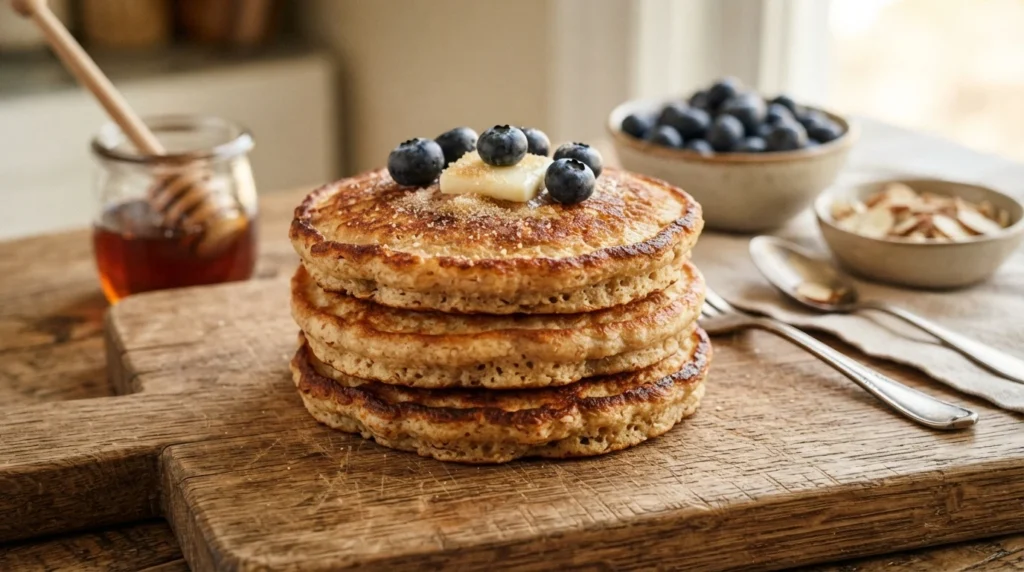

Many home cooks struggle to make fluffy, stackable pancakes without a sticky batter or a broken structure. The secret lies in using almond flour as the primary dry ingredient, which creates a dense but cohesive matrix when combined with eggs and a binder.
Why Almond Flour Pancakes Are Different
Wheat flour relies on gluten to trap gas during baking, creating a light crumb. Almond flour lacks gluten entirely, so these pancakes depend on the proteins in eggs and the starches in the almond meal to hold together. When beaten properly, the egg whites incorporate air without making the batter too liquid, while the almond flour provides structural integrity once cooked.
This recipe focuses on a specific technique: over-whipping the egg mixture slightly before adding dry ingredients. This creates a stable foam that prevents the pancakes from spreading too much in the pan, allowing them to lift and flip cleanly without tearing.
Recipe Overview
- Servings: 4
- Total Time: 15 minutes (prep and cook)
- Cooking Vessel: Non-stick skillet, 8–10 inch diameter
- Key Technique: Whip eggs until frothy before adding almond flour
Ingredients
For this recipe, precision matters. Do not substitute almond flour with coconut flour or regular wheat flour, as the texture and binding properties will fail.
- Large eggs: 3 (room temperature, shells removed)
- Almond flour: 1 cup (approx. 125 grams), finely ground
- Baking powder: 1 teaspoon (unsweetened)
- Cooking oil or butter: 2 tablespoons (melted, approx. 30 grams)
- Vanilla extract: 1 teaspoon
- Pinch of sea salt: optional but recommended for flavor balance
Method
Follow these steps to ensure the pancakes rise and flip successfully.
- Preheat the Pan: Set your non-stick skillet over medium-low heat. You want a gentle, steady warmth—not hot enough to smoke the butter or oil immediately.
- Whip the Eggs: In a medium bowl, crack the three eggs into a clean container. Using a whisk or fork, beat them vigorously for about 1–2 minutes until the whites form soft peaks and the yolks are fully incorporated. This step is critical; it creates the air bubbles that will lift the pancake.
- Combine Dry Ingredients: In a separate small bowl, whisk together the almond flour and baking powder. Ensure the flour is evenly distributed so no pockets of dry starch remain in the final batter.
- Blend Wet and Dry: Pour the melted oil or butter into the egg mixture. Add the vanilla extract and salt if using. Slowly fold in the almond flour mixture just until combined. Do not overmix; a few small lumps are acceptable and actually help with texture.
- Cook the Pancakes: Lightly grease your skillet with a paper towel dipped in oil or melted butter, then wipe away excess to prevent sticking. Pour about 1/4 cup of batter per pancake. Cook until bubbles form on the surface and edges look set (approx. 2–3 minutes).
- The Flip: Gently flip with a spatula. Cook another 1–2 minutes until golden brown.
Troubleshooting Common Issues
Even with perfect technique, issues can arise. Here is how to identify and fix them.
- Pancakes Spread Too Much:
Cause: Not enough air in the egg mixture or pan too hot.
Fix: Whip eggs longer until frothy. Ensure your pan is warm, not scorching hot, before adding batter. - Pancakes Break When Flipping:
Cause: Insufficient cooking time on the first side or batter too thin.
Fix: Cook until bubbles cover 50% of the surface. Do not flip if the edges look raw or wet. - Pancakes Are Gummy or Sticky:
Cause: Too much almond flour relative to eggs or insufficient baking powder.
Fix: Reduce almond flour by 15% next time and ensure baking powder is fresh.
Substitution Guide
If you need alternatives, keep in mind that not all substitutes work identically.
- Swapping Almond Flour: Do not replace with coconut flour (too absorbent) or oat flour (contains carbs). If using nut-free options, ensure they are finely ground and low-carb suitable.
- Sweetener Adjustments: This recipe relies on natural sweetness from ripe bananas or vanilla. Adding sugar increases carbs significantly; use sparingly if at all.
Storage and Reheating
To keep these pancakes fresh, store them in an airtight container at room temperature for up to 2 days, or refrigerate for up to 4 days. Freezing is possible: cool completely, then wrap individual pancakes in plastic wrap and freeze for up to 3 months.
When reheating, use a toaster oven or air fryer at 350°F (175°C) for 3–4 minutes. Avoid microwaving alone, as it can make almond flour pancakes rubbery; if using a microwave, pair with a dry plate to absorb excess moisture.
Final Tips
The key to success is patience during the cooking phase. Rushing the flip often leads to broken stacks. Allow each pancake to set slightly before turning it over. With practice, you will master the technique for consistent results every time.