
Creating a satisfying Keto burrito bowl without rice or beans requires careful attention to moisture management and texture. This dish delivers the familiar comfort of a Mexican-inspired meal while keeping net carbohydrates low, thanks to strategic ingredient swaps.
The Core Problem: Texture and Moisture
Traditional burrito bowls rely on fluffy white rice and absorbent beans as their structural base. For those avoiding grains and legumes, the challenge lies in replicating this texture without adding excess water or starch that disrupts ketosis.
Cauliflower Rice as the Base
Raw cauliflower florets are an excellent substitute for rice due to their grain-like appearance when processed. However, raw cauliflower is high in water content and can become slimy if not handled correctly. The secret lies in cooking it briefly to evaporate moisture.
Avocado Instead of Beans
While beans provide fiber and protein, they are often excluded from strict keto diets due to carb counts. Avocados offer a creamy texture and healthy fats that mimic the mouthfeel of refried beans while keeping the dish low-carb.
The Recipe: Keto Chicken Burrito Bowl
This recipe focuses on a lean, flavorful chicken breast cooked in a light sauce, served over crispy cauliflower rice with fresh toppings.
Ingredients
- Chicken Breast: 500g (boneless, skinless), cut into bite-sized pieces
- Cauliflower: 400g head, chopped into small florets for rice
- Olive Oil: 2 tablespoons (approx. 30ml)
- Lemon Juice: 1 tablespoon (freshly squeezed)
- Cumin: 1 teaspoon
- Paprika: 1 teaspoon
- Ginger Powder: 0.5 teaspoon
- Salt and Pepper: To taste (approx. 1/2 teaspoon each)
- Cilantro: A small bunch, roughly 30g
- Lime Wedges: 2 pieces for serving
- Sliced Avocado: 1 medium avocado (approx. 150g)
- Cornichons or Pickles: Optional, approx. 30g for crunch
Preparation Steps
- Prepare the Cauliflower Rice: Pulse the cauliflower florets in a food processor until they resemble rice grains. Avoid over-processing, which creates mush.
- Cook the Base: Heat a large skillet or wok over medium-high heat. Add 1 tablespoon of olive oil. Pour in the cauliflower rice and stir-fry for 4–5 minutes until edges begin to brown and moisture evaporates.
- Season the Chicken: In a separate bowl, toss the chicken pieces with lemon juice, cumin, paprika, ginger powder, salt, and pepper. Ensure even coating.
- Cook the Protein: Add the seasoned chicken to the skillet (add remaining 1 tablespoon of oil if needed). Cook for 6–8 minutes, stirring occasionally, until internal temperature reaches 74°C (165°F) and juices run clear. Remove from heat.
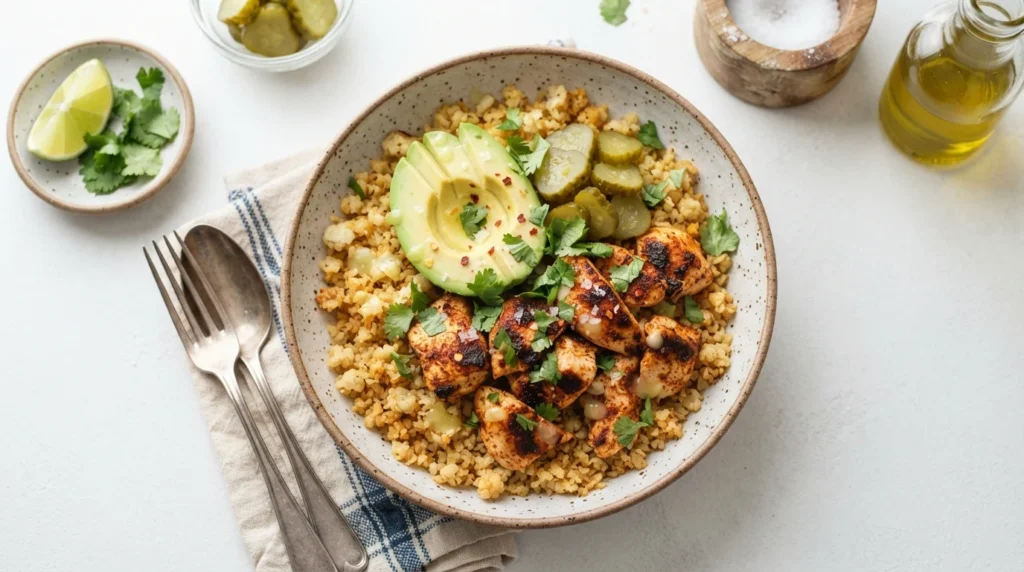
- Assemble the Bowl: Place the cauliflower rice at the bottom of a serving bowl or plate. Top with the cooked chicken pieces.
- Add Toppings: Arrange sliced avocado, fresh cilantro, and optional pickles on top. Drizzle lightly with lime juice just before serving to prevent browning.
Troubleshooting Common Issues
Even with the right ingredients, texture issues can arise in homemade burrito bowls.
- Mushy Cauliflower:
This is the most common failure point. If the cauliflower rice releases too much water, it will make the dish soggy.
Fix: Do not over-process the cauliflower. Ensure the pan is hot before adding ingredients to promote evaporation. - Dry Chicken:
Chicken breasts can easily overcook and dry out in a skillet.
Fix: Use a meat thermometer to check for doneness rather than relying on time alone. If cooking by pan-frying, add a splash of broth or water during the last two minutes of cooking. - Lack of Flavor:
Simple chicken and rice can lack depth.
Fix: Add aromatics like garlic (fresh or powder), onion powder, or a dash of soy sauce (check carb content) to enhance the savory profile.
Substitutions and Variations
To accommodate different tastes or dietary needs within keto boundaries:
- Cauliflower vs. Zucchini: Zucchini can be grated similarly to rice but requires less cooking time as it cooks faster. It may release more water, so pat dry before use.
- Chicken vs. Tofu or Shrimp: For plant-based options, extra-firm tofu (pressed to remove water) works well with similar seasoning. Shrimp cooks in 3–4 minutes and must be removed immediately from heat to prevent rubberiness.
- Sauce Adjustments: While this recipe uses a dry rub, a light cream sauce can be added using full-fat coconut milk mixed with a splash of water or chicken broth for extra moisture without breaking ketosis.
Storage and Reheating
Homemade burrito bowls are best enjoyed fresh, but they can be stored for short-term use.
- Refrigeration: Store components separately. Cauliflower rice and chicken can be refrigerated for up to 24 hours. Toppings like avocado should be added just before eating to maintain texture.
- Freezing: The cooked cauliflower rice and chicken can be frozen individually in airtight containers for up to three months. Thaw overnight in the refrigerator before reheating.
- Reheating: Reheat the rice and chicken together in a skillet over medium heat for 3–4 minutes, covering with a lid to steam gently. This helps restore moisture without drying out the protein.
Carbohydrate Considerations
This dish is designed to be low-carb but not necessarily zero-carb. Cauliflower rice contains approximately 4–6 grams of net carbohydrates per cup, depending on processing and cooking loss. A single serving (approx. 350g total food weight) typically falls between 10–15 grams of net carbs.
Individual metabolic responses vary; those managing diabetes or insulin resistance should monitor blood glucose levels when consuming carbohydrate-containing foods.
Frequently Asked Questions
Can I use canned chicken instead?
No, canned chicken is often high in sodium and carbohydrates. Always use fresh or frozen raw chicken for better control over ingredients.
How do I know the cauliflower is ready?
Cauliflower rice is done when it no longer releases water and has a slight crunch when bitten into.