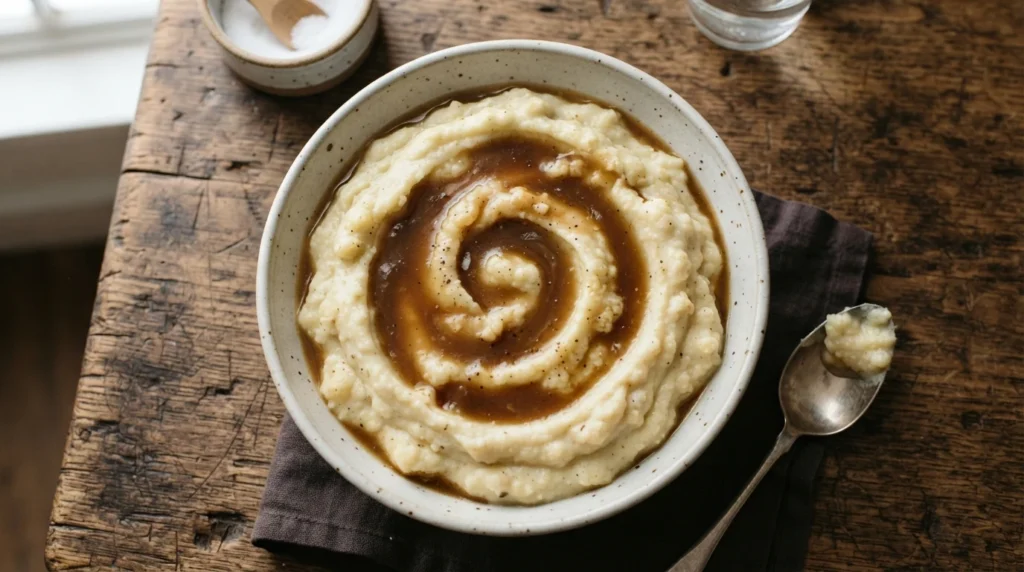

When looking for a lower-carbohydrate alternative to mashed potatoes, the challenge often lies not in creating the mash itself, but in achieving the right texture. A common failure is producing a product that is too loose or turns into a soup when gravy is added. The solution is simple: create a thick, cohesive base using steamed cauliflower and butter, which provides the necessary body for any sauce.
Why Cauliflower Mash Holds Gravy Better Than Potato Mash
Potato mash often relies on starch to thicken sauces, but potatoes release significant water during cooking. If you add gravy to a wet potato base, it can become soupy. Cauliflower, when steamed correctly, releases less free water and has a more porous structure that absorbs fat rather than releasing it. This makes it an ideal vehicle for rich gravies, providing a thick, creamy mouthfeel without the risk of dilution.
Recipe: Creamy Keto Cauliflower Mash
This recipe focuses on technique over heavy seasoning. The goal is a dense, scoopable mash that will support a generous amount of gravy.
Yield: 4 servings (approx. 350g)
Prep time: 10 minutes
Cook time: 20 minutes
Total time: 30 minutes
Ingredients
- Cauliflower florets (fresh), raw: 1.5 kg (about 3–4 heads)
- Butter, unsalted, room temperature: 120 g
- Heavy cream or half-and-half: 60 ml (optional, for extra richness)
- Salt, fine grind: 3 g
- Black pepper, freshly ground: 2 g
Method
-
Preheat your oven to 180°C (350°F) or prepare a large pot of boiling water for steaming. If using the oven, line a baking sheet with parchment paper.
-
Cut the cauliflower into uniform florets, ensuring they are roughly 2–3 cm in size. Uniformity ensures even cooking.
-
Place the florets on the prepared baking sheet or in a steamer basket.
-
Roast for 20 minutes or steam until very tender. Roasting adds a slightly nutty flavor and dries out the vegetable slightly, which helps prevent excess moisture. Steam is faster but may result in a wetter texture if not drained thoroughly.
-
If roasting, remove from heat and let cool for 5 minutes. If steaming, drain immediately in a fine-mesh sieve to remove all surface water. Do not rinse under running water.
-
Transfer the hot cauliflower into a large mixing bowl or food processor.
-
Add the butter, heavy cream (if using), salt, and pepper.
-
Mash by hand with a potato masher until smooth. If using a food processor, pulse briefly; over-processing can release too much internal moisture.
-
Test the consistency: The mash should be thick enough to hold its shape when spooned onto a plate. It should not slide off immediately.
Troubleshooting Common Issues
Even with careful preparation, texture issues can arise. Here is how to address them:
- Issue: The mash is too watery.
Cause: Over-steaming or under-draining releases excess internal liquid.
Fix: Add a pinch more salt to draw out moisture via osmosis, then press the cauliflower firmly with a clean kitchen towel before mashing. Alternatively, use a food dehydrator set to low heat for 10 minutes to dry the florets slightly before cooking. - Issue: The mash breaks apart when gravy is added.
Cause: Lack of fat or insufficient binding.
Fix: Ensure you are using high-quality butter. Add a small amount of egg yolk (about 15g per serving) to the mash before adding gravy; the emulsion helps bind the sauce and prevents separation. - Issue: The flavor is bland.
Cause: Cauliflower has a neutral taste that requires strong fat and seasoning to shine.
Fix: Sauté the florets in butter for 2 minutes before steaming/roasting. This infuses flavor early in the process. Finish with a dash of fresh chives or parsley if desired.
Substitutions and Variations
You can adapt this recipe based on dietary needs, but note that texture changes may occur:
- Cooked Cauliflower: Using pre-cooked cauliflower from a jar or frozen block is convenient. Ensure it is thoroughly drained and dried before mixing with butter.
- Almond Flour Blend: While almond flour adds richness, adding too much can alter the texture significantly. Use sparingly (max 30g) if you wish to create a crumblier texture rather than a puree.
- Sugar-Free Sweetener: If you prefer a hint of sweetness without carbs, add Stevia or Erythritol (about 5g total). This enhances the perception of creaminess in savory dishes.
Storage and Reheating
This mash keeps well for up to 3 days in an airtight container. For longer storage, freeze individual portions wrapped tightly in foil or freezer bags for up to 3 months.
To reheat gently: Place the mash in a saucepan over low heat with a splash of milk or cream. Stir frequently until warmed through. Avoid high-heat reheating, as this can cause separation and make the texture grainy.
Final Tips for Success
The key to this dish is patience during preparation. Do not rush the draining step; any residual water will dilute your gravy. By focusing on thorough drying and generous use of butter, you create a versatile base that works beautifully with mushroom gravy, beef stock reductions, or cheese sauces.