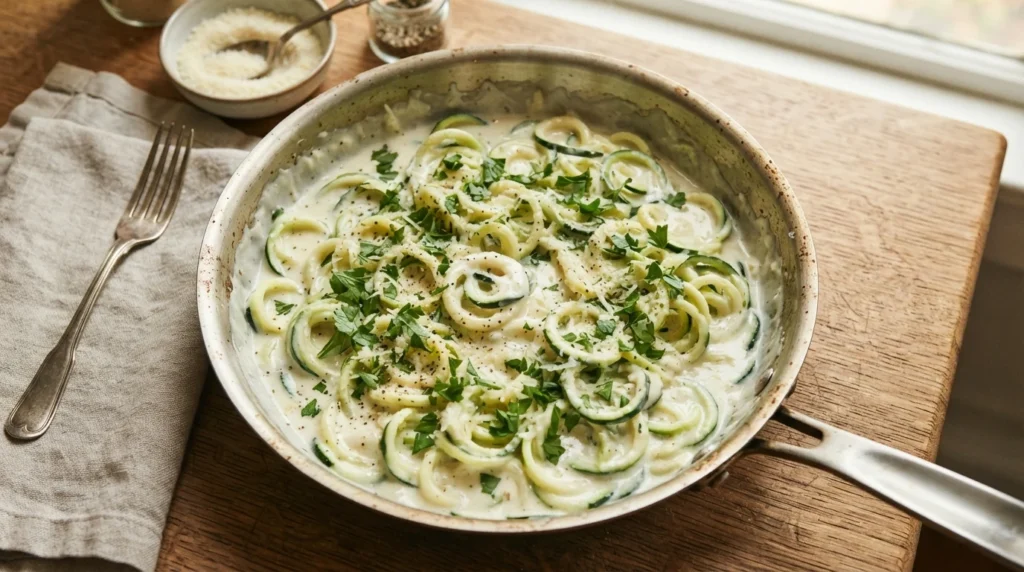

Many keto cooks face the same frustration: their creamy Alfredo sauce turns into a thin, watery sludge when served over courgette (zucchini) noodles. This happens because the heat from cooking the pasta releases moisture that the sauce cannot absorb fast enough.
A Solution That Works
You can make a rich, satisfying Alfredo that stays thick and coats every strand of zucchini without needing extra cheese or heavy cream. The key is to control the moisture before it hits the pan and to use a technique that allows the sauce to set quickly.
Recipe Overview
This dish serves four people and takes about 15 minutes from start to finish. It requires no cooking of the noodles themselves, only sautéing to remove excess water.
- Servings: 4
- Total Time: 15 minutes
- Difficulty: Easy
Ingredients
Prepare the courgettes by slicing them into ribbons and salting them to draw out water. Cook the sauce base gently in a pan, then whisk in cheeses until melted but not scrambled.
- Courgette Noodles:
- 400g courgettes (zucchini), spiralized or sliced lengthwise into thin strips
- Sauce Base:
- 25g unsalted butter, melted
- 100ml heavy cream (minimum 36% fat)
- 40g finely grated Parmesan cheese
- 15g freshly grated Pecorino Romano (optional, for sharpness)
- Aromatics:
- 2 cloves garlic, minced
- 1 tbsp fresh parsley, chopped
- Seasoning:
- 1 tsp salt (adjust to taste)
- 1/2 tsp black pepper
Method
Follow these steps carefully to ensure the sauce remains thick and creamy.
- Prepare the Courgettes: Slice your courgettes into noodles or thin strips. Place them in a bowl and sprinkle generously with salt. Let them sit for 10 minutes, then rinse briefly under cold water to remove excess surface salt and pat completely dry with clean kitchen towels. This step is critical; leaving moisture on the noodles will guarantee a watery sauce.
- Sauté the Base: Heat a large skillet over medium heat. Add the butter and let it melt. Once melted, add the minced garlic and cook for 30 seconds until fragrant but not browned.
- Cook the Noodles: Add the drained courgette noodles to the pan in a single layer. Cook them uncovered for 2 to 3 minutes without stirring. You want them to become slightly soft and release any remaining internal water into the pan. Do not add oil here; the butter and moisture are sufficient.
- Make the Sauce: Remove the pan from the heat immediately. Whisk in the heavy cream, Parmesan, and Pecorino Romano. Return the pan to low heat just until the cheese is melted and the sauce has thickened slightly (about 1 minute). Do not boil the cream.
- Combine: Pour the warm sauce directly over the cooked noodles in the pan. Toss gently to combine. The residual heat will finish cooking the noodles and thicken the sauce further.
- Finish: Stir in the fresh parsley, salt, and pepper. Serve immediately while hot.
Troubleshooting Common Issues
Understanding why your sauce might fail helps you fix it next time.
- The Sauce Turns Watery: This is usually caused by not drying the courgettes thoroughly or cooking them too long before adding the sauce. The heat from the noodles turns cream into water faster than it can set. Always pat the noodles dry before sautéing and cook them briefly to evaporate surface moisture.
- The Cheese Grains: If you see lumps, the cheese was added too hot or the pan was boiling. Remove the pan from heat before adding cheeses and whisk gently over low heat only.
- The Sauce Is Too Thick: If it sets too hard, add a splash of milk or cream while stirring to loosen it back up.
Substitutions and Variations
If you prefer a different flavor profile without breaking your macros:
- Cheese Swap: You can use a mix of Gruyère or Fontina instead of Pecorino Romano for a milder, nuttier flavor. Ensure these cheeses are grated finely.
- Sauce Adjustment: If you want less cream, use half the amount and add an extra tablespoon of Parmesan to help bind the sauce.
- Protein Add-in: For a complete meal, cook diced chicken breast or shrimp separately and add them at the end. Cook protein in a separate pan to avoid overcooking it while trying to thicken the sauce.
Storage and Reheating
This dish is best eaten immediately. If you must store leftovers, place them in an airtight container and refrigerate for up to 2 days. The sauce may separate slightly upon cooling; whisk vigorously before reheating.
To reheat, warm the noodles and sauce gently in a pan over low heat with a splash of cream if needed until combined and heated through. Do not microwave, as this will cause the sauce to break and become oily.