
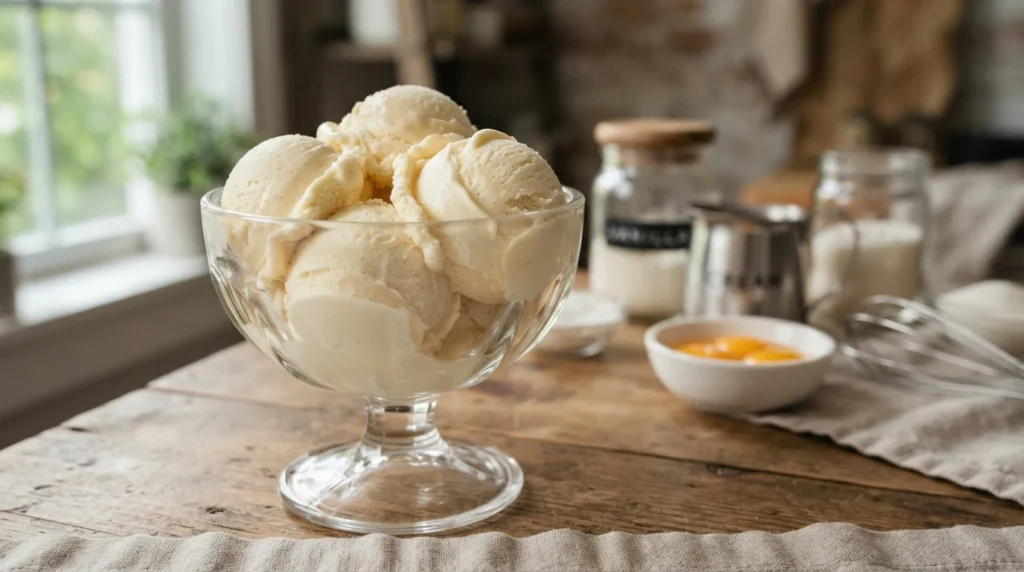

Creating homemade keto ice cream is about balancing fat content with enough liquid to create a smooth, scoopable texture while keeping carbohydrates low. The most common failure point for these recipes is ending up with an icy, grainy product that lacks the richness of commercial versions. By using full-fat heavy cream and egg yolks as the emulsifiers, you can achieve a creamy mouthfeel without needing expensive ice cream machines or hours of churning.
Why This Recipe Works
The science behind a good keto base relies on fat globules coating sugar crystals. In standard ice cream, sugar prevents large ice crystals from forming. On a ketogenic diet, you lack that sugar component, so the texture often suffers. The solution lies in using egg yolks as an emulsifier. Their lecithin naturally binds the fat and water together, creating a stable mixture that resists freezing into hard blocks.
Additionally, heavy cream provides the necessary fat content (usually 36% to 40%). Lower-fat alternatives like half-and-half often result in a product that is too soft or lacks flavor. The combination of these two ingredients creates a base that mimics the mouthfeel of traditional dairy ice cream while adhering to low-carbohydrate guidelines.
Ingredients
This recipe yields approximately six to eight servings, depending on scoop size. All measurements are by weight for accuracy.
- Heavy Cream: 500g (approx. 17.6 oz), cold, not whipped
- Egg Yolks: 4 large yolks, room temperature
- Sugar Substitute: 80g (approx. 2.8 oz) of erythritol or monk fruit blend
- Vanilla Extract: 15ml (approx. 0.5 fl oz), pure vanilla bean extract preferred
- Salt: 1/4 tsp, to balance the sweetness
Note: Erythritol is preferred over other sweeteners as it does not cause cold-induced diarrhea in most people, though individual tolerance varies. Monk fruit blends are a good alternative if you prefer them.
Method
Follow these steps to ensure a smooth texture without graininess. Patience during the mixing phase is key to success.
- Prepare the Custard Base: In a medium saucepan, combine the egg yolks, salt, and sugar substitute. Whisk vigorously until the mixture is pale yellow and slightly thickened (about 2 minutes). This step prevents raw egg taste.
- Heat the Cream: Pour the cold heavy cream into a separate small saucepan. Heat it over medium-low heat until it just begins to simmer around the edges. Do not let it boil, or you risk curdling the eggs when added.
- Temper the Eggs: Slowly pour the warm cream into the egg mixture while whisking constantly. This gradual heating (tempering) prevents the eggs from scrambling.
- Cook to Thickening: Return the combined mixture to the saucepan over low heat. Stir frequently with a wooden spoon or spatula. The custard will thicken and change color from yellow to a deeper amber hue after about 5 to 7 minutes. It should coat the back of the spoon like pudding.
- Add Flavor: Remove from heat immediately once thickened. Stir in the vanilla extract. Overheating can curdle the delicate custard, so remove it from the stove as soon as it reaches the desired consistency.
- Chill Thoroughly: Cover the saucepan and refrigerate for at least 4 hours, preferably overnight. This step is crucial; chilling allows the fat to solidify slightly and the flavors to meld, which also helps prevent ice crystal formation during freezing.
Troubleshooting Common Issues
Even with a perfect recipe, texture issues can arise. Here is how to handle them:
- The mixture curdles in the pan: This usually happens if the cream was too hot when added to the eggs or if the heat was too high. If this occurs, you may need to strain the custard through a fine-mesh sieve to remove lumps, though some texture loss is inevitable.
- The ice cream is too icy or grainy: Ensure the base has chilled completely before freezing. Rapid temperature changes during the initial freeze can create large crystals. For best results, use a shallow container (no deeper than 2 inches) to allow for even freezing.
- The texture is too soft: This indicates insufficient fat content or inadequate chilling. Ensure you are using full-fat cream and that the base has been refrigerated for at least 4 hours before churning.
Substitutions and Variations
You can customize this base to suit different tastes without compromising the low-carb profile:
- Coffee Flavor: Add 30ml of strong brewed coffee (cooled) instead of vanilla.
- Chocolate Twist: Replace half the heavy cream with melted dark chocolate (70% cocoa or higher, about 150g) and use a lower-carb sweetener like Stevia or Erythritol to taste.
- Mint Variation: Add fresh mint leaves during the final minutes of cooking or stir in a teaspoon of peppermint extract after chilling.
Be cautious with substitutions. Adding liquid ingredients like milk reduces fat content, which may require increasing the cream ratio to maintain texture. Always adjust sweetener amounts based on how much fat is added, as fat dilutes sweetness perception.
Storage and Freezing Instructions
To convert the chilled custard into ice cream, transfer it to a shallow container (approximately 6 inches in diameter). Seal tightly with plastic wrap pressed directly onto the surface to prevent air pockets. Place in the freezer for at least 4 hours, or overnight.
For best results, use an ice cream maker if available, churning continuously until the mixture reaches a soft-serve consistency (about 20–30 minutes). If using a standard freezer without a machine, remove the container every 30 minutes and stir it vigorously to break up large ice crystals. This manual stirring method mimics the action of an ice cream maker.
Once frozen to your liking, transfer to an airtight container for long-term storage. Properly stored, this keto vanilla ice cream will maintain optimal texture and flavor for 1 to 2 months in the freezer. Thawing is not recommended; consume immediately after scooping for the best experience.
Frequently Asked Questions
Does this recipe contain any hidden carbohydrates?
The primary carbohydrate source is the sugar substitute used (typically 80g of erythritol or monk fruit blend). This equates to approximately 15–20 grams of carbs per serving, depending on portion size. Heavy cream contains negligible carbs naturally.
Can I use almond milk instead of heavy cream?
No, almond milk lacks the necessary fat content and will result in a very soft, non-scoopable product. Full-fat dairy or high-fat coconut cream are better alternatives for this texture.
How do I know when the custard is ready to chill?The custard is ready when it coats the back of a spoon cleanly and leaves a visible trail when you drag your finger through it. It should look glossy and slightly thick, similar to crème brûlée filling.