
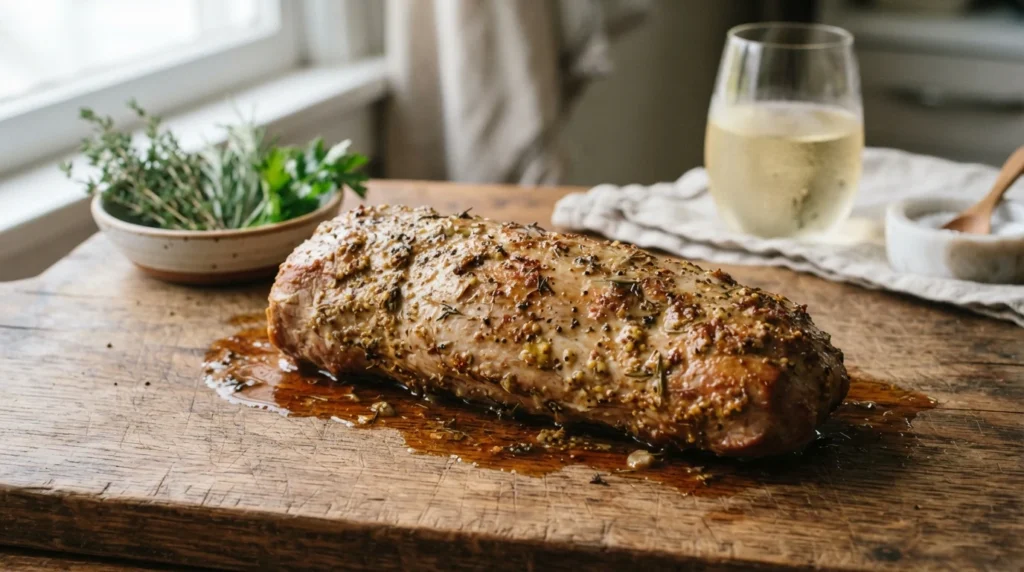

Keto Pork Tenderloin with Mustard Herb Crust
Looking for a satisfying, lower-carbohydrate dinner that requires minimal effort? Roasting pork tenderloin in a savory mustard and herb crust is the answer. This technique creates a flavorful exterior while keeping the meat juicy inside, making it ideal for US and UK home cooks seeking reliable keto-friendly meals.
Recipe Overview
- Total Time: 45 minutes (15 minutes prep + 30 minutes roasting)
- Servings: 4
- Dietary Style: Low-carbohydrate, High-protein
Ingredients
This recipe uses standard pantry staples to keep carbohydrates low while maximizing flavor. All quantities are provided in grams for precision.
- Pork Tenderloin: 1 whole tenderloin (approx. 500–600g), trimmed of excess fat
- Dijon Mustard: 30g, plus an extra teaspoon for coating
- Garlic Powder: 5g
- Dried Thyme: 4g
- Dried Rosemary: 2g
- Salt: 10g (or to taste)
- Black Pepper: 3g
- Butter: 40g, unsalted and softened
Note: The mustard is used both as a marinade component and for the final crust application. Ensure your pork tenderloin is fresh and has been refrigerated before cooking.
Instructions
- Preparation: Preheat your oven to 200°C (400°F). Line a baking sheet with parchment paper for easy cleanup. If using, place the pork tenderloin between plastic wrap and pound it gently to an even thickness of about 1 inch (2.5 cm) using a meat mallet. This ensures uniform cooking time.
- Marinating: In a small bowl, mix the Dijon mustard, garlic powder, thyme, rosemary, salt, and pepper. Rub this mixture evenly over the entire surface of the pork tenderloin. Let it sit at room temperature for 15 minutes to allow the flavors to penetrate.
- Crust Formation: Remove the pork from the refrigerator (it should be cold, not frozen). Take a small knob of softened butter and press it firmly into the mustard mixture on top of the meat. Alternatively, you can mix the remaining tablespoon of Dijon mustard with the 40g of butter to create a paste, which will adhere better than liquid butter alone.
- Roasting: Place the pork on the prepared baking sheet. Roast in the preheated oven for 25–30 minutes. The internal temperature should reach 63°C (145°F) for medium-rare or 71°C (160°F) for well-done. Use a meat thermometer to ensure accuracy, as appearance alone is not a reliable indicator of doneness.
- Resting: Remove the pork from the oven and let it rest on a cutting board for at least 10 minutes before slicing. This step allows the juices to redistribute throughout the meat, preventing them from running out when cut.
Troubleshooting Common Issues
Cooking pork tenderloin can sometimes present specific challenges. Here is how to handle the most common failures:
- The meat dries out: Pork tenderloin cooks very quickly and has little fat, making it prone to drying. To prevent this, do not overcook it; 71°C (160°F) is often sufficient for a juicy texture. Additionally, marinating with the butter helps retain moisture during roasting.
- Uneven cooking: If one end of the tenderloin is thicker than the other, the thinner part may overcook before the thick part reaches temperature. Pounding the meat to an even thickness solves this issue immediately.
- The crust burns before the inside cooks: If you see browning on the edges too early, tent the roast loosely with aluminum foil for the last 10 minutes of cooking. This protects the crust while allowing the center to reach the safe temperature.
Substitutions and Variations
You can adjust this recipe based on your pantry or preference, keeping carbohydrate counts in mind:
- Sugar-Free Mustard: Standard Dijon mustard contains a small amount of sugar. For strict keto adherence, use a sugar-free version or omit the mustard and rely solely on the butter crust for flavor.
- Lemon Zest: Adding 2g of lemon zest to the herb mixture brightens the flavor profile without adding carbs.
- Vinegar: A splash of apple cider vinegar mixed with the herbs can help tenderize the meat slightly, but use sparingly as acidity affects texture.
Storage and Reheating
Proper storage ensures food safety and maintains quality. Cooked pork tenderloin should be consumed within 3 days when stored in an airtight container in the refrigerator. It can be frozen for up to 3 months, wrapped tightly in plastic wrap followed by foil or freezer paper.
To reheat, place slices on a baking sheet and warm them at 160°C (320°F) for about 10–15 minutes until heated through. Avoid microwaving whole pieces, as this tends to dry out the meat further; if using a microwave, cover with a damp paper towel and heat in short bursts.
Frequently Asked Questions
Here are answers to common questions regarding this dish:
- Is pork tenderloin always low-carb? Yes, fresh pork tenderloin is naturally very low in carbohydrates, typically under 1g per serving.
- Can I use a slow cooker? While possible, slow cooking often makes pork tenderloin stringy or dry due to its lean nature. Roasting is generally preferred for texture.
- What is the safest internal temperature? The USDA recommends 71°C (160°F) for whole cuts of pork to ensure safety against pathogens like Salmonella and E. coli.