
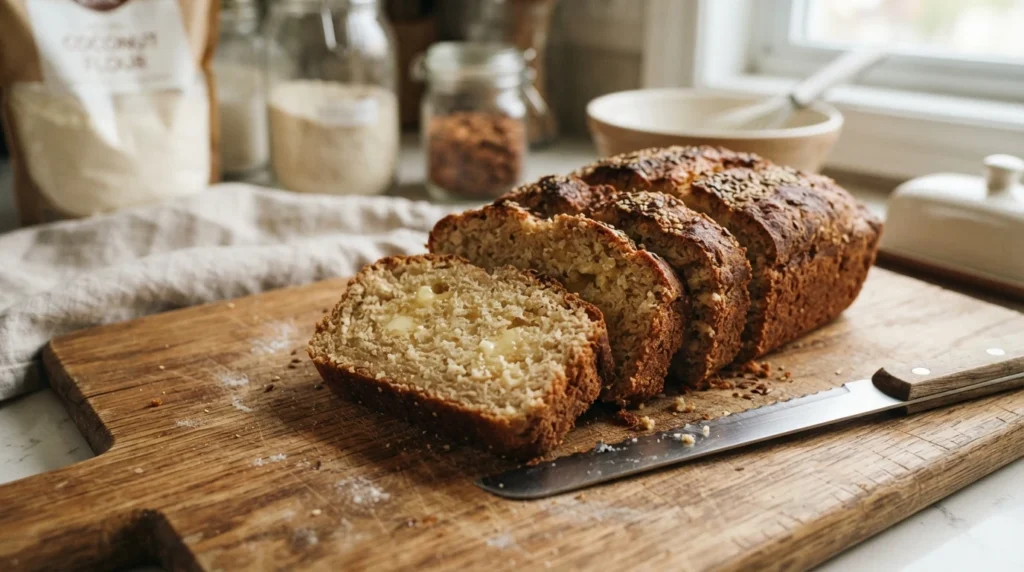

Many home cooks struggle with coconut flour, which absorbs liquid rapidly and often results in dense, dry loaves. The key to avoiding a dry crumb is balancing the flour’s absorbency with sufficient eggs and fat. Below is a practical recipe for moist keto bread that delivers a tender crumb suitable for sandwiches or toast.
Recipe Overview
This bread yields four generous slices. It requires about 15 minutes of active preparation plus 20 minutes of baking time in a standard oven. No preservatives are needed; the bread keeps well due to its high fat and egg content.
Yield and Timing
- Servings: 4 slices
- Total Time: 35 minutes (including cooling)
- Baking Time: 20–25 minutes at 350°F (175°C)
Ingredients
Accurate measurements are critical for coconut flour. Do not substitute with almond flour, as the texture will differ significantly.
- Coconut Flour: 60 grams (unsweetened, fine grind)
- Eggs: 3 large eggs, room temperature
- Melted Butter or Ghee: 45 grams
- Sugar-Free Sweetener: 15 grams (e.g., erythritol or monk fruit blend)
- Baking Soda: 3 grams
- Vanilla Extract: 10 ml
- Water: 50 ml (add only if dough feels too stiff)
Preparation Method
Follow these steps to ensure a uniform crumb. Mixing coconut flour requires patience to avoid lumps.
- Prepare the Pan: Line an 8-inch (20 cm) round loaf pan with parchment paper or grease it lightly with butter. This prevents sticking and aids even baking.
- Mix Dry Ingredients: In a medium bowl, combine the coconut flour, sweetener, and baking soda. Whisk thoroughly to ensure no dry pockets of flour remain.
- Add Wet Ingredients: Add the eggs, melted butter, and vanilla extract to the dry mix. Stir until the batter is smooth and slightly thick.
- Incorporate Liquid: Gradually add the water while mixing. Stop adding liquid when the dough pulls away from the sides of the bowl but still looks moist. If it feels crumbly, you may have added too much dry flour initially; if it is runny, add a teaspoon more coconut flour.
- Transfer to Pan: Pour the batter into the prepared loaf pan and smooth the top with a spatula.
- Bake: Place in the preheated oven for 20 minutes. Check at 18 minutes by inserting a toothpick; it should come out with a few moist crumbs attached, not wet batter or completely clean.
Troubleshooting Common Issues
Even with careful measurement, texture can vary. Understanding the cause helps you fix the result.
Problem: Dry Crumb Despite Proper Ratio
Cause: Coconut flour absorbs up to 4 times its weight in liquid. If your batter seems too thick before baking, it may still be correct, but if it dries out during baking, the oven temperature was likely too high or the bake time exceeded 25 minutes.
Fix: Bake at a slightly lower temperature (325°F/160°C) for longer to keep moisture in. Alternatively, increase the melted fat by 5 grams next time.
Problem: Lumpy Texture
Cause: Coconut flour has fine particles that clump easily if not fully hydrated.
Fix: Sift the flour through a mesh sieve before mixing. Ensure your mixer or whisk is running at high speed for 2 minutes to break up any aggregates.
Problem: Dense Loaf
Cause: Insufficient leavening or overmixing which develops gluten-like structure in the egg proteins.
Fix: Ensure the baking soda is fresh. Fold ingredients gently rather than beating vigorously once wet ingredients are added.
Substitutions and Variations
You can adapt this recipe slightly, but note that coconut flour cannot be swapped 1:1 with other flours.
- Flavor Boost: Add 5 grams of cocoa powder for chocolate flavor without affecting structure significantly.
- Fat Adjustment: Replace butter with coconut oil (45 grams). The texture remains similar, though the bread may have a distinct coconut aroma.
- Sweetness: Increase sweetener to 20 grams if using a less intense sweetener like stevia, but monitor for sticky crumb.
Storage and Reheating
This bread stays fresh for up to 5 days at room temperature if kept in an airtight container. For longer storage, freeze individual slices wrapped tightly for up to 3 months.
To reheat, use a toaster or oven at 350°F (175°C) for 3–5 minutes. Avoid the microwave, which can make the bread rubbery.
Common Questions
Can I add seeds like flax or chia?
Yes, adding 10 grams of ground flaxseed adds fiber and texture without breaking the crumb. Mix them into the dry ingredients.
Is this bread suitable for sandwiches?
Absolutely. The moisture content makes it an excellent base for avocado or egg salad, provided you do not add excessive liquid fillings that could make the bread soggy.