
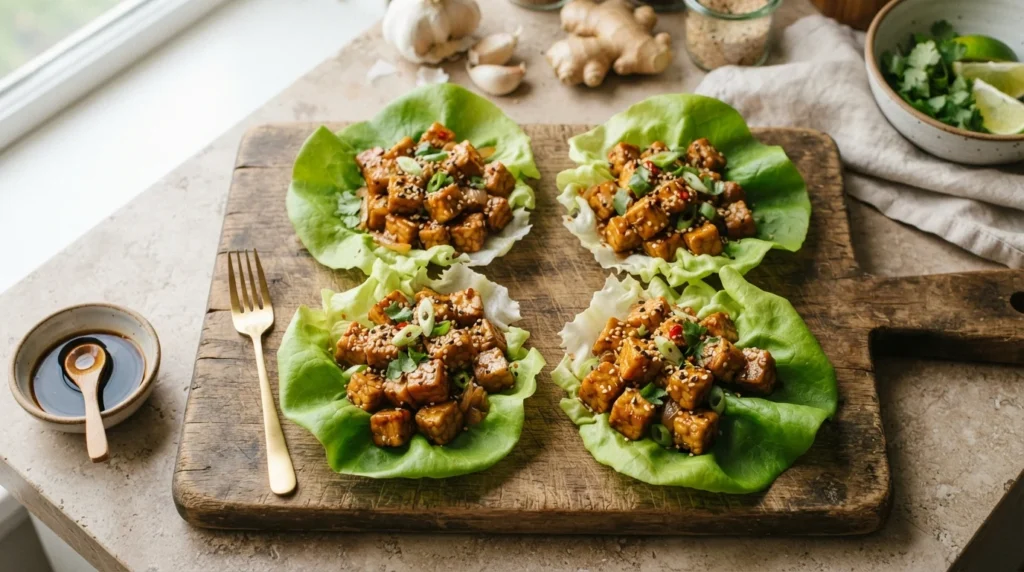

Looking for a satisfying, lower-carbohydrate appetizer that packs high protein without the heavy carb load? This guide walks you through making Keto Tempeh Lettuce Cups with a measured tempeh portion. The key technique is ensuring the tempeh is cooked thoroughly to prevent undercooking while avoiding moisture buildup that makes lettuce soggy.
Recipe Overview
This dish serves 4 people and takes approximately 30 minutes to prepare, including cooking time. It requires no marinating or chilling period beyond the initial prep of the tempeh.
- Servings: 4
- Total Time: 30 minutes
- Dietary Focus: Low-carb, high-protein, gluten-free (check packaged tempeh labels)
Ingredients
Prepare all ingredients before starting. Ensure your tempeh is fully cooked and dry.
- Lettuce: 1 head of butter lettuce or romaine, leaves separated (approx. 500g)
- Tempeh: 200g raw tempeh blocks
- Oil: 2 tbsp olive oil or avocado oil
- Soy Sauce (Tamari preferred): 3 tbsp
- Ginger: 1 tsp fresh ginger, minced
- Garlic: 2 cloves garlic, minced
- Sesame Seeds: 1 tbsp toasted sesame seeds (optional)
Method
Follow these steps to assemble your Keto Tempeh Lettuce Cups.
- Prepare the Tempeh: Tear or cut the 200g of raw tempeh into bite-sized cubes. Pat them gently with a clean kitchen towel to remove excess surface moisture; this is critical for preventing sogginess in the lettuce cups.
- Cook the Protein: Heat 1 tablespoon of oil in a large skillet over medium-high heat. Add the tempeh cubes and cook for 6–8 minutes, stirring occasionally, until they are golden brown and firm to the touch. The internal temperature should reach at least 74°C (165°F) for safety.
- Make the Sauce: In a small bowl, whisk together the remaining oil, 3 tbsp tamari soy sauce, minced ginger, and minced garlic. Heat this mixture in the same skillet for 1 minute until fragrant.
- Combine: Transfer the cooked tempeh to a serving platter. Arrange the lettuce leaves around the base of each cup. Spoon the tempeh over the leaves, followed by the warm sauce. Top with toasted sesame seeds if using.
Troubleshooting Common Issues
Here are practical fixes for common cooking failures:
- Soggy Lettuce: This usually happens when wet tempeh is placed directly onto the leaves. Always pat the tempeh dry before assembly and ensure the sauce is warm but not steaming hot.
- Dry Tempeh: If the tempeh feels crumbly after cooking, it was likely overcooked or too low in moisture initially. Future batches can benefit from a quick steam for 2 minutes before frying to retain texture.
- Undercooked Protein: Since raw tempeh contains mycotoxins if not cooked properly, ensure the internal temperature hits at least 74°C (165°F). Rely on a meat thermometer rather than visual cues alone.
Genuine Substitutions
If you cannot find tempeh, here are supported alternatives:
- Firm Tofu: Use 200g of extra-firm tofu. Press it thoroughly to remove water before frying. It has a milder flavor than tempeh.
- Chickpeas: For a different texture, use 200g of rinsed chickpeas roasted at 200°C (400°F) for 25 minutes. They are lower in protein but higher in fiber.
Storage and Reheating
Store assembled cups in an airtight container in the refrigerator for up to 3 days. Reheat gently in the microwave for 1–2 minutes, adding a splash of water if the lettuce wilts too much.
Note: Do not freeze this dish, as the lettuce will lose its structural integrity.