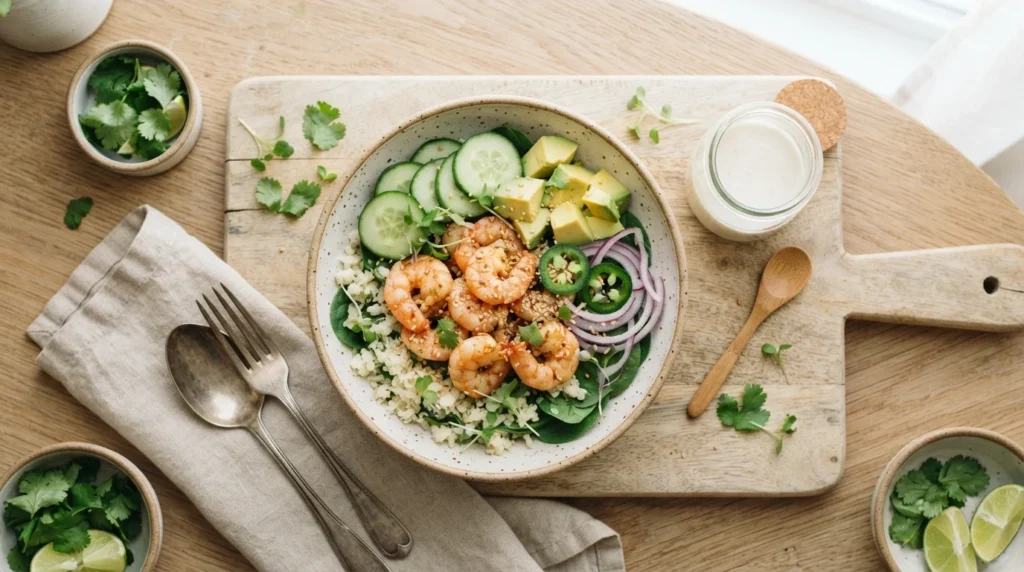

Transform simple ingredients into a vibrant, low-carbohydrate meal with this Keto Shrimp Poke-Style Bowl featuring crisp cucumber and creamy avocado. This dish offers a refreshing alternative to traditional rice bowls while keeping you satisfied with its balance of protein, healthy fats, and crunch.
Why Make a Poke-Style Bowl?
Poke bowls have gained popularity for their ability to combine fresh textures and bold flavors in a single plate. For those following a ketogenic lifestyle, the traditional rice base is often replaced with cauliflower rice, coconut milk, or simply served over a bed of greens. This recipe focuses on the core elements of the poke experience: high-quality protein, hydrating vegetables, and a rich, umami-rich dressing that ties everything together without relying on high-carb sauces.
Recipe Overview
- Servings: 2 large bowls
- Preparation time: 15 minutes
- Cooking time: 8 minutes
- Total time: 23 minutes
- Dietary focus: Low-carb, high-protein, gluten-free (verify soy sauce)
Ingredients
Note: All quantities are in grams. Ensure your shrimp is fully thawed and peeled if using frozen.
- Protein:
- 400g large shrimp, peeled and deveined (raw)
- Vegetables:
- 200g English cucumber, sliced into thin rounds
- 150g ripe avocado, pitted and diced
- 100g red onion, thinly sliced
- 50g fresh cilantro leaves, chopped
- Dressing:
- 120ml light coconut milk (full fat preferred for creaminess)
- 2 tbsp soy sauce or tamari (check label for sodium content; use low-sodium versions if available)
- 1 tsp sesame oil
- 1 tsp fresh lime juice
- 1/2 tsp grated fresh ginger
- 1 clove garlic, minced (approx. 3g)
- Salt and black pepper to taste
Method
Step 1: Prepare the Shrimp
If using frozen shrimp, ensure they are completely thawed. Pat them thoroughly dry with paper towels; moisture is the enemy of a good sear. Season the shrimp lightly with salt and pepper on both sides.
Step 2: Cook the Protein
Heat a large skillet over medium-high heat until hot but not smoking. Add no oil to the pan if using sesame oil in your dressing, or add 1 tsp coconut oil for better browning. Place the shrimp in the pan in a single layer, ensuring they are not crowded. Cook for 2–3 minutes per side until opaque and slightly charred at the edges. Overcrowding the pan will steam the shrimp rather than searing them, resulting in a mushy texture.
Step 3: Make the Dressing
While the shrimp cooks, whisk together the coconut milk, soy sauce, sesame oil, lime juice, ginger, and garlic in a small bowl. Season with salt and pepper. If using low-sodium tamari, you may need to add a pinch of salt to balance the flavor.
Step 4: Assemble the Bowl
Place sliced cucumbers at the bottom of two serving bowls. Top with the cooked shrimp, ensuring they are not broken into small pieces. Arrange the avocado and red onion on top of the protein. Sprinkle with fresh cilantro.
Step 5: Serve
Drizzle the dressing generously over the assembled ingredients just before serving. Eat immediately to enjoy the crisp texture of the vegetables and the creamy sauce. If you have extra shrimp, it can be stored in an airtight container for up to 2 days in the refrigerator.
Troubleshooting Common Issues
Problem: The shrimp is rubbery or overcooked.
Cooking shrimp too long causes them to tighten and become tough. Shrimp cooks very quickly; once they turn opaque, remove them from the heat immediately. They will continue to cook slightly from residual heat. If you find your shrimp are getting too firm, reduce the cooking time by 30 seconds per batch.
Problem: The avocado is mushy or oxidizing.
Avocado releases oil quickly when cut. To prevent browning, toss the diced avocado with a tiny splash of lime juice immediately after cutting. If you are preparing this ahead of time, serve it in separate containers and combine only when ready to eat.
Problem: The dressing is too thin or separates.
This is common when using light coconut milk which has less fat than full-fat versions. Ensure the coconut milk is not refrigerated for days before use; shake the can vigorously to emulsify the ingredients. For a thicker consistency, you can add a small amount of crushed ice cubes to the dressing while whisking.
Substitutions and Variations
- Soy Sauce Alternative: If you cannot find tamari (which is gluten-free), use coconut aminos. It has a similar savory profile with slightly less sodium, making it suitable for those monitoring salt intake.
- Cucumber Substitute: Zucchini can be used in place of cucumber, but slice it very thin and pat dry well, as zucchini releases more water than cucumber.
- Protein Swap: While the recipe calls for shrimp, this structure works with cooked chicken breast (cut into cubes) or firm tofu. If using tofu, press it beforehand to remove excess moisture.
Storage and Reheating
This dish is best enjoyed fresh. However, if you must store leftovers, keep the dressing separate from the solid ingredients in a sealed container. The avocado will continue to oxidize even without browning agents once cut.
To reheat gently: Warm the shrimp and vegetables in a microwave-safe bowl for 1–2 minutes on high, stirring halfway through. Add a splash of water or broth if the mixture looks dry. Reheating may soften the avocado slightly, so consider adding fresh avocado cubes at the end of reheating.
Frequently Asked Questions
Can this bowl be made ahead?
Yes, but assemble it only when ready to eat. You can cook the shrimp and keep the vegetables prepped separately for up to 24 hours in the fridge.
What makes this a keto-friendly dish?
The primary carbohydrate sources are the small amount of onion and natural sugars in the avocado and cucumber, which remain well within daily limits for most individuals following a ketogenic diet.