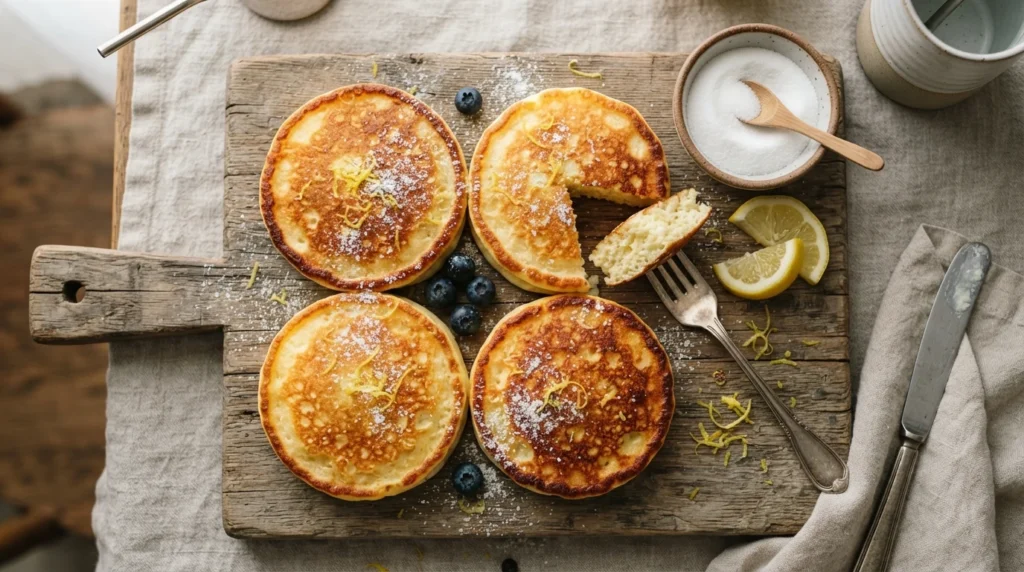

Looking for a satisfying, low-carbohydrate breakfast that isn’t heavy on the carbs? These Keto Ricotta Pancakes with Lemon Zest and Crisp Edges offer a delightful balance of texture and flavor. By using ricotta cheese as the primary binder and leavening agent, you achieve a soft interior without the need for traditional flour or excessive baking powder.
This recipe is designed for home cooks in the US and UK who want to enjoy pancakes without worrying about hidden sugars or high carb counts. The key technique here is relying on the proteins and fats in the ricotta to create structure, while a small amount of xanthan gum ensures the edges stay crisp when cooked.
Recipe Overview
Servings: 4 large pancakes (or 8 small)
Preparation time: 10 minutes
Cooking time: 15 minutes
Total time: 25 minutes
Dietary note: Suitable for low-carb and gluten-free diets. Not automatically ketogenic without verifying specific sweetener or flour choices.
Ingredients
Note: Quantities are provided in grams for precision. Do not guess volume-to-weight conversions.
- Ricotta cheese: 350g, drained and slightly warmed to loosen curds
- Large eggs: 2, separated (whites for fluffiness, yolks for richness)
- Almond flour: 60g, finely ground
- Cooking spray or melted butter: 15ml per pancake for non-stick coating
- Lemon zest: 1 teaspoon (approx. 3g), from one organic lemon
- Baking powder: ½ teaspoon, keto-friendly variety if available
- Xanthan gum: ¼ teaspoon (crucial for crisp edges without gluten)
- Lemon juice: 1 tablespoon (approx. 15ml), fresh squeezed
- Vanilla extract: ½ teaspoon
- Erythritol or Monk fruit blend: 30g, powdered form preferred for even distribution
Method
Follow these steps to ensure the best texture and flavor.
- Prepare the ricotta: Warm the ricotta cheese gently in a microwave-safe bowl for 30–45 seconds. This helps release moisture and makes it easier to mix smoothly. Drain any excess liquid if necessary, but keep some of its natural creaminess.
- Mix dry ingredients: In a medium bowl, whisk together the almond flour, baking powder, xanthan gum, and sweetener until well combined. Sprinkle in the lemon zest first to ensure even distribution.
- Incorporate wet ingredients: Add the egg yolks, vanilla extract, and fresh lemon juice to the dry mix. Stir gently with a spatula just until combined; do not overmix at this stage.
- Add egg whites and ricotta: Beat the egg whites until soft peaks form (not stiff, as you want them to melt into the batter). Fold the beaten whites into the mixture by hand. Gently stir in the ricotta cheese, being careful not to deflate the air incorporated by the egg whites.
- Cooking technique: Heat a non-stick skillet over medium heat (approx. 160°C/325°F). Lightly coat with cooking spray or melted butter. Pour about ¾ cup (170g) of batter per pancake onto the pan, leaving space for edges to crisp.
- Monitor doneness: Cook for 2–3 minutes until bubbles form on the surface and the edges look set and slightly golden. Flip carefully and cook for another 1–2 minutes until the underside is deep golden brown and crispy.
Troubleshooting Common Issues
Even with a solid recipe, home cooks may encounter specific challenges. Here is how to address them:
- Pancakes are too dense: This often happens if the egg whites are over-beaten or if the batter sits too long before cooking. The proteins need to remain airy to create lift.
- Soggy edges instead of crisp: Ensure you use xanthan gum, which provides structure in gluten-free batters. Also, do not overcrowd the pan; each pancake needs enough space to brown properly.
- Batter is too runny: Ricotta can vary in moisture content. If the batter seems thin, add an extra teaspoon of almond flour or a splash more lemon juice to thicken it slightly.
Substitutions and Variations
While the base recipe is designed for consistency, here are some adjustments you can make based on preference:
- Sweetener swap: Erythritol or Monk fruit blends work best for texture. Stevia liquid drops may leave a bitter aftertaste and alter cooking viscosity.
- Dairy-free option: Swap ricotta for full-fat coconut yogurt (1:1 ratio) and ensure you use a xanthan gum-containing flour blend like Bob’s Red Mill 1-to-1 Flour.
- Flavor twist: Add cinnamon or a pinch of nutmeg to complement the lemon, though this will increase carb content slightly due to spice volume.
Storage and Reheating
To enjoy these pancakes later, store them in an airtight container at room temperature for up to 2 days. For longer storage, wrap individual portions tightly and freeze them for up to 3 months.
Reheating: To restore crisp edges, reheat frozen or leftover pancakes in a toaster oven or air fryer at 350°F (175°C) for 3–4 minutes. Avoid microwaving unless you want them soft and steamed, which will compromise the desired texture.
Final Thoughts
These Keto Ricotta Pancakes provide a versatile option for breakfast or brunch, offering flavor complexity without sacrificing nutritional transparency. Remember that individual carbohydrate counts depend on specific brand ingredients; always check labels when purchasing packaged items like almond flour and sweeteners.
Enjoy your meal with fresh fruit or a dollop of whipped cream made from heavy cream and liquid stevia, keeping the low-carb profile intact throughout your dining experience.