
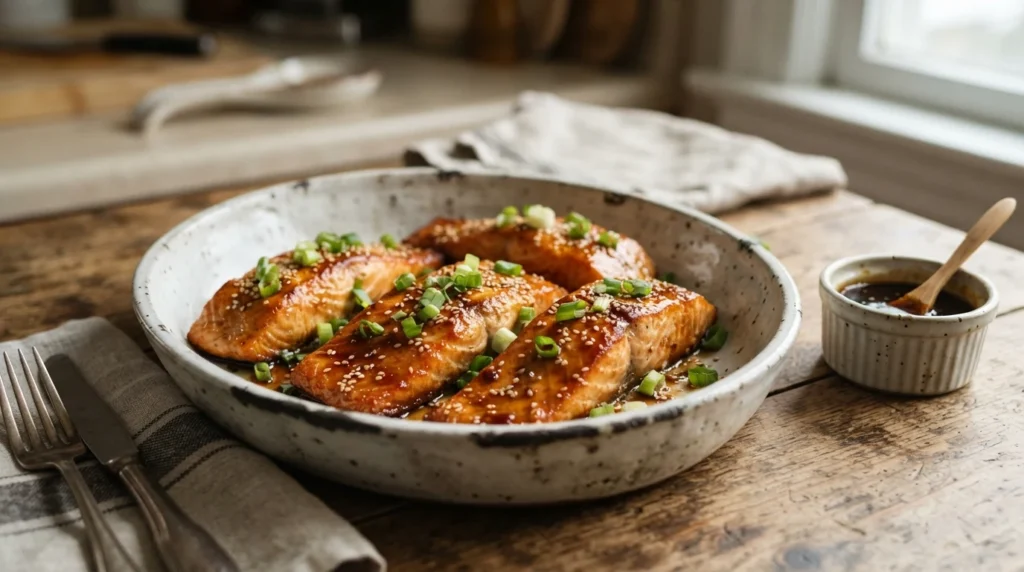

Preparing fish that is perfectly cooked yet glazed with a sticky, glossy sauce can often lead to soggy fillets or burnt sugar. The solution lies in separating the cooking process from the glazing process. By air-frying raw salmon fillets first and then simmering a clean teriyaki sauce in a heat-safe ramekin until reduced, you ensure the fish remains moist while achieving a caramelized finish.
Why This Method Works
The primary challenge with cooking salmon in an air fryer is the rapid moisture evaporation that can dry out delicate flesh. Additionally, traditional teriyaki marinades contain high sugar content which can burn quickly at high air-fryer temperatures. To solve both issues simultaneously, this recipe employs a two-stage technique: pre-cooking the protein and separately reducing the sauce.
Ingredient Preparation
- Salmon fillets should be fresh, boneless, skin-on or skin-off depending on preference, sliced to a uniform thickness of about 1 inch. Patting them dry removes surface moisture that interferes with crisping and helps achieve an even internal temperature.
- For the sauce, use a clean mixture of soy sauce, mirin (or rice vinegar), brown sugar, and ginger-garlic paste. Do not marinate the raw fish; instead, reserve this liquid to be cooked separately until it reduces by half.
Equipment Requirements
Success depends on using a standard air fryer basket with adequate airflow clearance. A single batch of four 6-ounce fillets fits most models comfortably without overcrowding, which would steam the fish rather than circulate hot air. For the sauce, any oven-safe ramekin or small ceramic bowl that fits inside the appliance (not touching the heating element) works well.
Recipe Overview
- Servings: 4 people
- Preparation time: 10 minutes (includes soaking the sauce)
- Air frying time: 8–10 minutes per batch
- Total elapsed time: Approximately 25 minutes
Ingredients List
- Salmon fillets: 4 pieces, boneless, skin-on, each weighing approximately 160 grams (total 640g), sliced to uniform thickness.
- Soy sauce: 2 tablespoons (30ml).
- Mirin or rice vinegar: 2 tablespoons (30ml). Mirin is preferred for sweetness; use rice vinegar as a substitute if unavailable.
- Brown sugar: 1 tablespoon (packed, approx. 15g).
- Fresh ginger: 1 teaspoon grated or minced.
- Fresh garlic: 2 cloves, finely minced.
- Vegetable oil: 1 teaspoon for brushing the basket.
Cooking Instructions
Follow these steps to ensure consistent results. The key is separating the cooking of the fish and the reduction of the sauce.
Step 1: Prepare the Sauce Base
In a small heat-safe ramekin, combine soy sauce, mirin (or rice vinegar), brown sugar, grated ginger, and minced garlic. Stir gently to dissolve the sugar. Let this sit at room temperature for 5 minutes to ensure even heating later.
Step 2: Preheat the Air Fryer
Set your air fryer to 375°F (190°C). Allow it to preheat for 3 minutes. This ensures immediate heat transfer when the salmon enters, promoting even cooking.
Step 3: Cook the Salmon Fillets
Lightly brush the air fryer basket with vegetable oil. Arrange the salmon fillets in a single layer without overlapping. Place them skin-side down if keeping the skin on to help crisp it up naturally.
Put the basket into the preheated air fryer and cook for 8 minutes. Halfway through, shake the basket gently to redistribute heat exposure.
Step 4: Check Doneness
Remove the basket and check the internal temperature of the thickest part of the fillet using a food thermometer. The salmon is done when it reaches 145°F (63°C). If you prefer a slightly firmer texture, cook for an additional minute or two.
Step 5: Reduce the Sauce
While the fish cooks, place the ramekin containing the sauce mixture into the air fryer basket (ensuring it does not touch the heating element). Cook on low heat (if your model allows) or at a very low temperature setting like 200°F (95°C) for about 4–5 minutes, stirring every minute with a non-metallic utensil.
Continue cooking until the sauce has reduced by approximately half and thickens slightly. It should coat the back of a spoon when lifted. This ensures no raw ingredients remain in the glaze.
Step 6: Combine and Serve
Remove the salmon from the air fryer and let it rest for 2 minutes to allow juices to redistribute. Pour the reduced teriyaki sauce over the warm fillets immediately before serving. Garnish with fresh green onions or sesame seeds if desired.
Troubleshooting Guide
- Sauce burns too quickly: If the sugar caramelizes faster than expected, reduce the temperature to 180°F (85°C) and increase cooking time by 2 minutes. Stir more frequently to prevent sticking.
- Fish dries out: This usually happens if fillets are packed too tightly or if they exceed the recommended cooking time. Ensure even thickness; thicker pieces require longer times but should be monitored closely.
- Sauce is too thin: Continue reducing at low heat until desired consistency is reached. Do not add water, as this dilutes flavor and extends cooking time.
- Fish remains undercooked: If the center still feels soft after 10 minutes, return to the basket for another 2–3 minutes. Always verify with a thermometer rather than relying on visual cues alone.
Substitutions
If you lack mirin, substitute it with an equal volume of rice vinegar or white wine for a slightly sharper profile. For those avoiding soy sauce due to gluten concerns, use tamari in the same quantity. Fresh ginger can be replaced by 1/4 teaspoon ground ginger if grated fresh is unavailable.
Storage and Reheating
Allow cooked salmon to cool completely before storing. Refrigerate leftovers in shallow airtight containers for up to 3 days. Do not leave perishable food out at room temperature; refrigeration is critical for safety.
To reheat, place the fillets and sauce back into the air fryer basket at 350°F (175°C) for 3–4 minutes. Avoid microwaving if possible, as it tends to make fish rubbery. If reheating in a microwave, use short bursts with pauses to check internal temperature.
Frequently Asked Questions
Can I cook bone-in salmon in the air fryer?
Yes, but remove the backbone and slice if desired. Bone-in fillets may require 1–2 minutes longer cooking time due to heat conduction through the bone. Ensure the thickest part reaches 145°F (63°C).
Is it safe to reuse raw marinade?
No, never reuse liquid that has contacted raw meat without a thorough boiling step. In this recipe, the sauce is cooked separately from the fish, ensuring food safety standards are met.
How do I know when salmon is fully cooked?
The most reliable method is using a food thermometer set to 145°F (63°C). Visually, the flesh should be opaque throughout and flake easily with a fork. Overcooking leads to dryness.