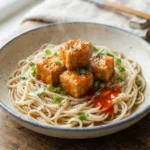
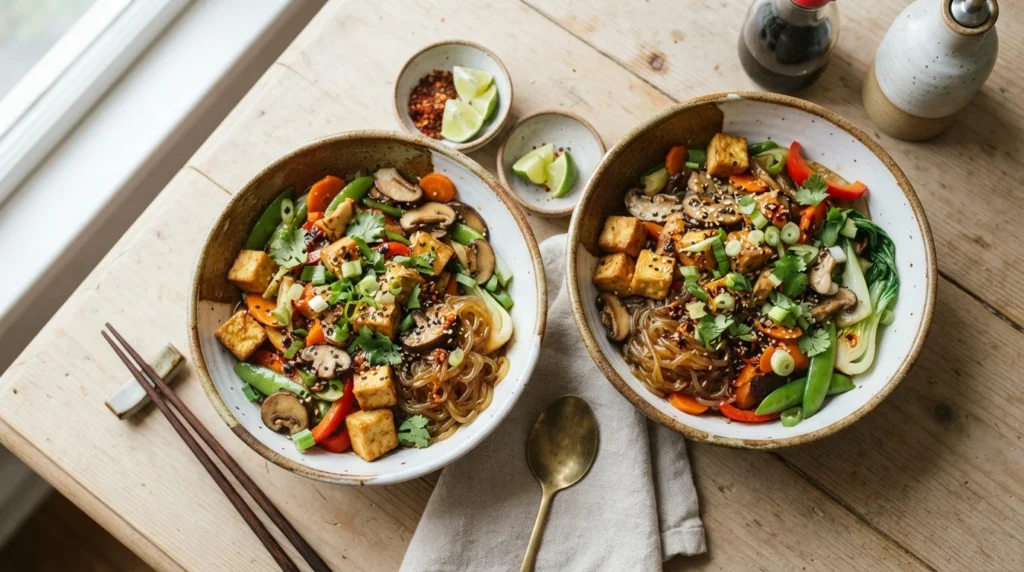

Low-Carb Tofu and Shirataki Noodles Stir-Fry
This dish delivers the texture of noodles and the richness of tofu without the carbohydrates found in traditional pasta or thickened cream sauces. By utilizing shirataki (konjac) noodles and a savory sauce based on coconut aminos, soy sauce, and fresh garlic, you create a satisfying meal that fits easily into a ketogenic eating pattern.
Recipe Overview
- Servings: 2 people
- Preparation time: 10 minutes
- Cooking time: 15 minutes
- Total time: 25 minutes
Ingredients
Note: Ensure all packaged ingredients are verified for low carbohydrate content per serving.
- Shirataki noodles (raw): 400 grams. Rinse thoroughly to remove excess starch before cooking.
- Firm tofu: 350 grams, pressed and cut into 2 centimeter cubes.
- Sliced fresh mushrooms (shimeji or cremini): 150 grams.
- Garlic cloves, minced: 3 units (approximately 15 grams).
- Coconut aminos: 40 milliliters (equivalent to roughly 35 grams liquid). A lower-sodium alternative to soy sauce.
- Sesame oil: 20 milliliters, divided between cooking and finishing.
- Fresh ginger, grated: 10 grams.
- Green onions (scallions), chopped: 40 grams for garnish.
Method
- Preparation: Rinse the raw shirataki noodles under cold running water until the water runs clear to remove surface starch. Pat them dry with a clean kitchen towel or paper towels; excess moisture will cause steaming rather than frying. Cut the firm tofu into bite-sized cubes and set aside.
- Sauté Aromatics: Heat 10 milliliters of sesame oil in a large non-stick skillet over medium-high heat. Add the minced garlic and grated ginger. Sauté for 30 to 45 seconds until fragrant, being careful not to burn the garlic.
- Cook Mushrooms: Add the sliced mushrooms to the pan. Cook for 3 to 4 minutes, stirring occasionally, until they release their moisture and begin to brown slightly. This step removes excess water that would otherwise make the dish soggy.
- Combine Proteins and Carbs: Push the mushroom mixture to the side of the pan. Add the rinsed shirataki noodles in a single layer, spreading them evenly. Toss gently to coat with any remaining oil from the mushrooms. Cook for 2 minutes without stirring frequently; this helps develop a slight texture.
- Tofu and Sauce: Push the noodles and mushrooms to one side of the pan. Add the tofu cubes to the empty space. Pour the coconut aminos over the ingredients, ensuring they are evenly distributed but not swimming in liquid. Stir everything together gently for 2 minutes.
- Simmer and Thicken: Reduce the heat to medium-low. Cover the pan with a lid for 3 to 5 minutes. The shirataki noodles absorb moisture rapidly, and this covered period allows them to soften without becoming mushy while the sauce reduces slightly.
- Finish: Remove the lid. Stir in the remaining 10 milliliters of sesame oil for a glossy finish. Taste for seasoning; if needed, add a pinch of salt or black pepper, as coconut aminos are naturally salty.
- Serve: Transfer to serving bowls immediately. Garnish with chopped green onions. Serve hot.
Troubleshooting Common Issues
Problem: The noodles are too sticky or slimy.
Cause: Insufficient rinsing of the raw shirataki noodles leaves behind starch and mucilage.
Fix: Rinse under running water until the water is completely clear. Pat dry thoroughly before cooking to ensure proper frying rather than steaming.
Problem: The sauce separates or looks oily.
Cause: Using too much oil relative to the liquid volume of the coconut aminos.
Fix: Adjust the ratio by adding a splash more coconut aminos if the dish appears dry, or reduce the oil slightly next time. The natural viscosity of shirataki noodles helps bind the sauce naturally.
Substitutions and Variations
Sauce Alternatives: While coconut aminos is recommended for its low carbohydrate profile (approximately 1 gram net carb per tablespoon), you may substitute with tamari or reduced-sodium soy sauce. Note that these contain slightly more carbohydrates and sodium.
Tofu Texture: Extra-firm tofu holds shape better than medium-firm varieties during high-heat cooking, making it ideal for stir-frying.
Storage and Reheating
This dish is best consumed fresh due to the texture of the shirataki noodles. However, leftovers can be stored in an airtight container in the refrigerator for up to 3 days. When reheating, microwave on high for 1 to 2 minutes or reheat in a skillet over medium heat for 3 minutes. Add a teaspoon of water if the dish appears too thick during reheating.