
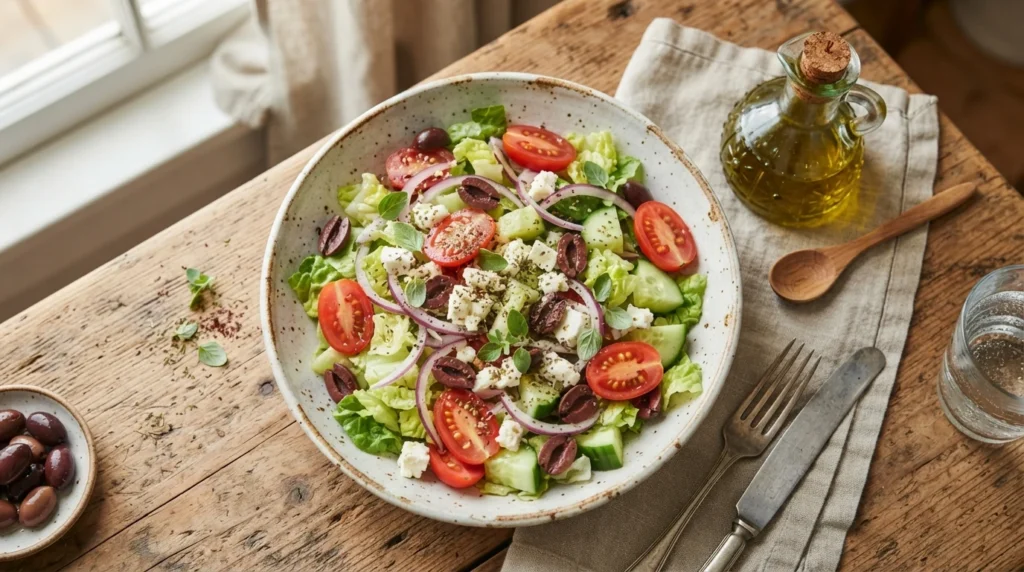

Creating a satisfying Greek salad on a ketogenic diet requires careful attention to carbohydrate content, particularly when using fresh tomatoes and onions. This guide provides a practical approach to making a Keto Greek Salad with measured portions that keep you in check while delivering flavor.
Why Measure Tomatoes and Onions?
Fresh produce is often the primary source of carbohydrates in Mediterranean-style salads. While lettuce, feta, and olive oil are naturally low-carb, tomatoes contain natural sugars and onions add significant carbs if not measured correctly. Overestimating these ingredients can easily push a meal out of ketosis for some individuals.
Measuring ensures consistency across batches and helps you plan your weekly carb budget effectively. Unlike recipes that use vague terms like “a handful” or “as needed,” specific measurements allow for accurate tracking without relying on external apps for every bite.
Recipe Overview
- Servings: 2 large portions
- Total Time: 15 minutes (active prep only)
- Dietary Focus: Low-carb, high-fat, flexible keto
Ingredients
This recipe relies on precise gram measurements for the carbohydrate-heavy vegetables to maintain control over your daily intake.
- Romaine lettuce: 200 grams (chopped into bite-sized pieces)
- Crisp red onion: 45 grams, finely diced
- Tomatoes: 180 grams total, divided as follows:
- 90 grams of Roma tomatoes (halved and seeded)
- 90 grams of cherry or grape tomatoes (quartered)
- Feta cheese: 85 grams, crumbled
- Olive oil: 30 grams extra virgin
- Lemon juice: 15 milliliters (approx. 1 tablespoon)
- Dried oregano: 2 grams
- Salt and black pepper: To taste
Preparation Method
- Prepare the Base: Wash and thoroughly dry your romaine lettuce. Moisture from wet greens can make a salad soggy, affecting texture.
- Dice the Onions: Use 45 grams of red onion. Dice it very finely to reduce its pungency and integrate it better with the other flavors without overwhelming the palate.
- Cut the Tomatoes: Measure exactly 180 grams of tomatoes total. Cut the Roma tomatoes in half and remove seeds and excess juice. Quarter the cherry tomatoes. Removing seeds helps prevent a watery salad later.
- Combine Greens: Place the romaine lettuce in a large bowl or mixing dish. Add the diced red onion and gently toss to coat lightly with olive oil.
- Add Tomatoes: Distribute the 90 grams of Roma halves and 90 grams of cherry tomatoes evenly over the greens. Do not pack them tightly; allow space for dressing absorption.
- Incorporate Cheese: Sprinkle 85 grams of crumbled feta cheese over the top. The fat in the cheese adds richness without adding carbs.
- Dress the Salad: In a small separate bowl, whisk together 30 grams of olive oil and 15 milliliters of lemon juice. Season with 2 grams of dried oregano, a pinch of salt, and freshly ground black pepper.
- Toss to Finish: Pour the dressing over the salad components. Toss gently but thoroughly until all vegetables are coated. Serve immediately on a plate.
Troubleshooting Common Issues
Salads can sometimes fail in unexpected ways. Here is how to identify and fix common problems:
- Watery Salad: If the salad releases excess liquid, it often means the tomatoes were not seeded or juiced sufficiently before adding. Always remove seeds from Roma tomatoes and pat cherry tomatoes dry if possible.
- Overwhelming Onion Taste: The strong bite of raw red onion can be an issue for some. To mitigate this without cooking (which changes carb content), finely dice the 45 grams of onion and let it sit in a pinch of salt for five minutes before adding to the bowl.
- Soggy Greens: Romaine lettuce becomes limp if stored too long or if dressed immediately after washing. Dry your greens thoroughly with a clean kitchen towel before tossing with dressing.
Substitutions and Variations
You can adapt this recipe based on availability, but be mindful of carbohydrate impacts:
- Cucumber Substitute: Cucumbers are generally lower in carbs than tomatoes. If you substitute 45 grams of cucumber for the red onion, ensure you do not add extra volume that displaces other low-carb ingredients.
- Cheese Variation: While feta is standard, Greek yogurt-based cheeses can introduce lactose (milk sugar). Stick to aged feta or goat cheese to keep the dish strictly low-lactose and low-carb.
- Tomato Swap: If you cannot find fresh tomatoes, canned plum tomatoes are an option. However, they contain added salt and water. Drain canned tomatoes thoroughly before measuring 180 grams of pulp only.
Storage and Reheating
This salad is best consumed fresh. Storing it in the refrigerator for more than one day can lead to texture degradation, especially in the lettuce and tomato components.
- Short-term Storage: If storing for less than 24 hours, keep the dressing separate. Toss just before serving to maintain crispness.
- Freezing: This salad does not freeze well. The texture of romaine lettuce and fresh tomatoes degrades significantly when frozen and thawed.
Frequently Asked Questions
Can I eat this while on a strict ketogenic diet?
Yes, this recipe is designed to be low-carb. The total carbohydrate content from the measured vegetables (approx. 10–12 grams net carbs depending on fiber) fits within most standard keto limits of 20–50 grams per day.
Why measure in grams instead of cups?
Volume measurements like cups vary significantly based on how tightly the produce is packed. Grams provide a consistent weight that correlates directly to carbohydrate content, making it easier to track your intake accurately.