
Many home cooks struggle to get browned mushrooms when cooking them with garlic, often ending up with a soggy, steamed result instead of a rich, caramelized side dish suitable for ketogenic meals. The secret lies in managing moisture and heat rather than adding extra liquid.
The Problem: Why Mushrooms Steam Instead of Brown
Mushrooms have high water content that is released during cooking. If you cook them over low heat or crowd the pan, that steam cannot escape efficiently, resulting in a boiled texture. To achieve the desired browned, umami-rich flavor found in many keto-friendly dishes like steak sides or pasta alternatives, you must drive off this moisture aggressively before browning begins.
The Technique: High-Heat Pan Searing
Success depends on three specific factors: a dry pan, high initial heat, and proper spacing. Follow these steps to ensure your mushrooms brown rather than steam.
- Preparation: Clean the mushrooms with a damp cloth or paper towel; avoid submerging them in water which reabsorbs moisture. Pat them completely dry. Slice them into uniform wedges, roughly 1-inch thick, to ensure even cooking.
- Oil Selection: Use a high smoke-point oil such as avocado oil or refined coconut oil. Olive oil has a lower smoke point and may burn quickly under high heat. Measure about 2 tablespoons for a standard 10-inch skillet.
- Heating the Pan: Place your skillet over medium-high to high heat until it is visibly hot. You can test this by sprinkling a few drops of water; they should sizzle and evaporate instantly.
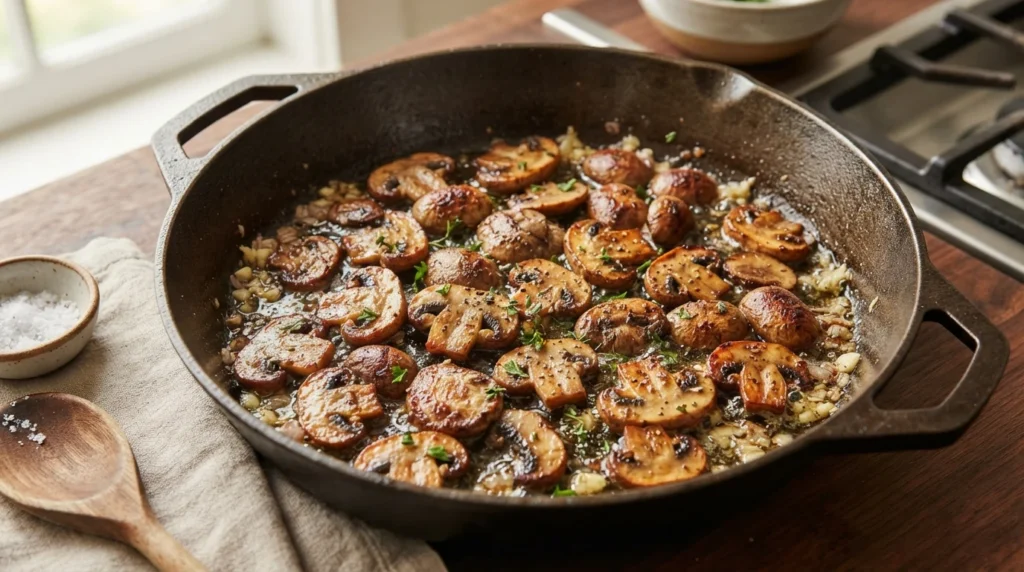
- The Sear: Add the oil, then immediately add the mushrooms in a single layer with space between them. Do not overcrowd the pan. The surface area of contact determines browning efficiency.
- Cooking Time: Cook undisturbed for 4 to 6 minutes. Resist the urge to flip or stir until you see deep golden-brown spots on the underside. This allows the Maillard reaction to occur, creating flavor and texture.
- The Garlic Addition: Push the mushrooms slightly toward the edge of the pan. Add finely minced garlic (about 2 cloves) to the empty space created. Cook for another 1 to 2 minutes until fragrant but not burnt.
- Serving: Remove from heat immediately once browned. The residual heat will finish cooking them gently without further steaming.
Troubleshooting Common Issues
If your mushrooms still steam, check these likely causes and fixes:
- Too Much Moisture: If the pan looks wet, drain the mushrooms on a paper towel before cooking. Ensure they are as dry as possible.
- Overcrowding: When too many mushrooms touch at once, their juices mix and create steam rather than evaporating. Cook in two batches if necessary.
- Low Heat: Low heat cooks the inside before the outside browns, leading to a gray, steamed appearance. Maintain high heat until browning is visible.
Substitutions and Variations
You can adapt this technique for other low-carb vegetables:
- Zucchini or Eggplant: Slice thickly (1 inch) to reduce water release. Sear similarly, but cook slightly longer as they are denser.
- Portobello Caps: Remove the stems and gills to reduce moisture. Brush with olive oil and sear for 5 minutes per side.
For flavor enhancement without carbs, add a pinch of red pepper flakes or fresh thyme during the garlic step. These herbs adhere well to the browned surface and add complexity.
Storage and Reheating
To store this dish for meal prep, allow it to cool completely on a wire rack before transferring to an airtight container. It keeps refrigerated for up to 4 days. When reheating in the microwave, cover loosely with a paper towel to trap steam slightly and prevent drying out. For best texture, reheat in a dry skillet over medium heat for 2 minutes to restore crispness.
Final Notes on Carbohydrates
This method uses only minimal oil (approximately 1 tablespoon per serving after cooking) and no added sugars or starches. Mushrooms contain negligible carbohydrates, making this an excellent low-carb accompaniment for high-protein meals like grilled chicken or beef.