
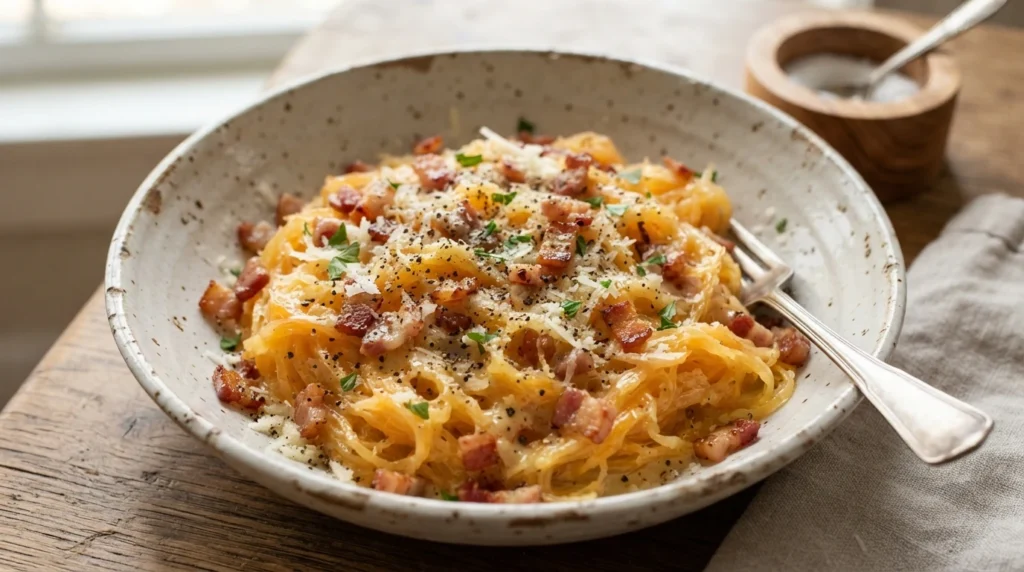

Looking for a way to satisfy your craving for classic Italian carbonara while keeping your carbohydrate count low? You can make a delicious, creamy dish using spaghetti squash as the pasta substitute. This method focuses on emulsifying eggs and cheese with fat to create a rich sauce that clings perfectly to the tender strands of the squash.
Recipe Overview
Yield: 4 servings
Prep time: 15 minutes
Cook time: 30 minutes
Total time: 45 minutes
Ingredients
Note: All measurements are in grams for precision. Do not substitute volume cups without testing weight.
- Spaghetti squash: 1 medium (approx. 600g), peeled and cut into strips
- Pork belly fat back or bacon: 200g, diced into small cubes
- Large eggs: 3 whole eggs, room temperature
- Large egg yolk: 1 extra (optional, for extra richness)
- Parmesan cheese: 50g, finely grated
- Heavy cream or full-fat milk: 30ml (approx. 2 tbsp) – optional for silkiness
- Salt and black pepper: to taste
- Paprika or red pepper flakes: a pinch, optional
Method
- Prepare the squash: Bake the spaghetti squash at 200°C (400°F) for about 45 minutes until it is soft enough to scoop out easily with a fork. Let it cool slightly but keep it warm.
- Cook the meat: In a large skillet over medium-high heat, render the pork belly fat or fry the bacon cubes without adding oil. Cook until the fat has rendered and the meat is crispy (approx. 8–10 minutes). Remove most of the excess fat but leave about 2 tablespoons for the sauce.
- Prepare the pasta: Using a fork, scrape the squash flesh into long strands. If they are too thick, run them through the blades of the fork to separate them further. Season lightly with salt and pepper while still warm.
- Mix the sauce base: In a small bowl, whisk together the whole eggs, the extra yolk (if using), the grated Parmesan, and the reserved pork fat. If you prefer a creamier texture, stir in the heavy cream or milk here. Add a generous pinch of black pepper.
- Combine: Remove the skillet from heat. Add the cooked squash strands to the pan. Pour the egg mixture over the hot pasta and meat. Toss vigorously and immediately. The residual heat will cook the eggs into a creamy sauce without scrambling them.
- Serve: Transfer to a warm serving bowl. Serve immediately while hot.
Troubleshooting Common Issues
The sauce breaks or curdles:
This usually happens if the pan gets too hot before the eggs are added, or if you add cold ingredients to hot eggs. Always remove the pan from direct heat before mixing the egg mixture. The residual heat is sufficient to thicken the sauce.
The dish is dry:
Ensure you have rendered enough fat in the pork. If the squash seems dry, you can add a splash of heavy cream or milk off the heat to loosen the sauce before tossing.
Overcooked eggs:
Do not overheat the pan after adding the egg mixture. Once the eggs start to thicken and coat the pasta, take it off the heat immediately. Overcooking will turn your silky carbonara into scrambled eggs.
Substitutions
- Bacon instead of pork belly: Bacon works well but has less fat content. You may need to add an extra tablespoon or two of olive oil or butter to ensure the sauce is rich enough.
- Cheese alternatives: Pecorino Romano can be used, but it is saltier. Use slightly less if you choose this option. Mozzarella melts well but may make the sauce thicker and less fluid than Parmesan.
Storage and Reheating
This dish is best eaten immediately after cooking to maintain the creamy texture of the egg sauce. If you must store leftovers, cool completely within two hours and refrigerate for up to 3 days. Reheat gently in a saucepan over low heat, adding a splash of milk or cream if it has thickened too much. Note that reheating may cause the egg sauce to separate slightly; gentle stirring can help restore consistency.
Frequently Asked Questions
Can I make this keto-friendly?
Yes, using spaghetti squash and pork belly keeps this dish very low in carbohydrates. However, always check the label of any packaged cheese to ensure it contains no hidden sugars or thickeners.
How do I know if my eggs are cooked properly?
The sauce is ready when it coats the back of a spoon and feels creamy but not runny. It should hold its shape slightly on the pasta strands.