
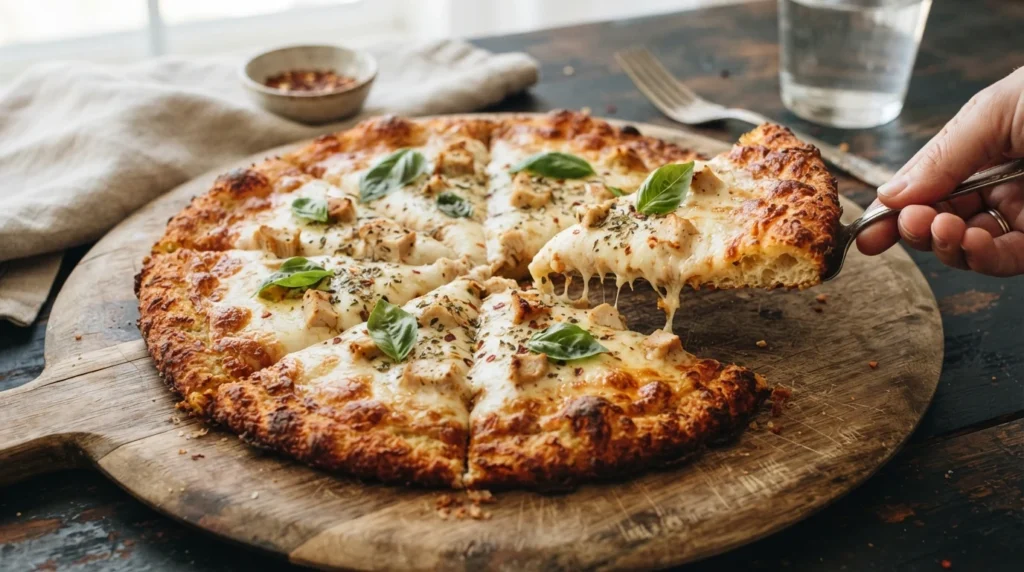

Looking for a satisfying dinner that feels indulgent but fits your lower-carbohydrate goals? This Keto Cheese Dough Pizza delivers a golden, crispy bottom while keeping carbs in check. The secret lies in using almond flour as a structural base, which creates a sturdy crust that resists sogginess better than many other low-carb options.
Why Almond Flour Works for Crispy Low-Carb Pizza
Traditional pizza dough relies on gluten to stretch and hold shape. On the keto diet, you cannot replicate this network with regular flour. Instead, almond flour provides a dense, nutty structure that bakes up with a satisfying crunch.
The Role of Xanthan Gum
Because almond flour lacks gluten, it needs an elastic binder to hold the cheese and toppings together without falling apart. Xanthan gum acts as this glue, creating enough stretch to roll out the dough slightly without tearing. It also helps trap steam during baking, contributing to that crisp texture.
Keto Cheese Dough Pizza Recipe
This recipe yields one 10-inch pizza (serves 2). Preparation time is approximately 20 minutes, and baking takes 15–18 minutes at a high temperature to ensure the crust browns without burning.
Ingredients
- Almond flour: 160 grams (unsweetened, finely ground)
- Cooked chicken breast: 200 grams, shredded or diced (optional protein layer)
- Mozzarella cheese: 150 grams, freshly grated
- Cheddar cheese: 50 grams, finely grated (for sharp flavor)
- Xanthan gum: 2 grams (ensure your almond flour blend does not already contain this)
- Garlic powder: 3 grams
- Oregano: 2 grams
- Salt: 4 grams
- Water or almond milk: 60–80 grams (add gradually to reach dough consistency)
- Olive oil: 15 grams, for brushing the crust before baking
Method
- Mix dry ingredients: In a large bowl, combine the almond flour, xanthan gum, garlic powder, oregano, and salt. If your almond flour is pre-mixed with other flours, check the label to ensure it is unsweetened.
- Add wet ingredients: Pour in the water or almond milk gradually while mixing on low speed. Stop adding liquid once the mixture begins to clump together but still feels slightly crumbly.
- Knead the dough: Turn the mixture onto a lightly floured surface (using cornstarch if you have it, as almond flour can be sticky). Knead for about 5 minutes until the dough comes together into a smooth ball. It should not stick to your hands.
- Rest the dough: Wrap the dough in plastic wrap and let it rest at room temperature for 15 minutes. This allows the xanthan gum to fully activate, making the dough more pliable.
- Shape the crust: Gently roll or press the dough into a circle about 10 inches (25 cm) in diameter. Avoid stretching it too thin, or the edges may tear. Aim for a thickness of roughly 1/4 inch (6 mm) in the center.
- Add cheese: Sprinkle the mozzarella and cheddar evenly over the base. Do not add toppings yet; the cheese acts as a barrier to keep the bottom from getting soggy.
- Bake on a hot surface: Preheat your oven to 425°F (220°C). Place a pizza stone or baking sheet inside for at least 10 minutes before adding the dough. This ensures an immediate sear when the cold dough hits the hot surface.
- Add protein and finish: If using chicken, add it now. Top with any desired vegetables like bell peppers or onions. Brush the outer edge of the crust lightly with olive oil to encourage browning.
- Cook to crispness: Bake for 15–18 minutes until the cheese is melted and bubbling, and the edges are golden brown. Rotate the pan halfway through baking for even cooking.
Troubleshooting Common Issues
Making a low-carb pizza can present specific challenges compared to traditional bread-based versions. Here is how to handle common failures.
1. The Dough is Too Crumbly to Roll
Cause: Insufficient hydration or under-activated xanthan gum.
Fix: Add a teaspoon of water at a time and knead gently. If the dough still crumbles, it may need another 5 minutes of rest to allow the starches to hydrate fully.
2. The Bottom is Soggy
Cause: Insufficient oven heat or not using a preheated surface.
Fix: Ensure your baking stone or sheet is scorching hot before adding the dough. If you are using a conventional oven without a stone, try placing a cast-iron skillet directly on the rack and heating it for 15 minutes first.
3. The Crust Burns Before Cheese Melts
Cause: Dough rolled too thin or baking temperature too high.
Fix: Roll the dough slightly thicker in the center (about 1/2 inch). Lower the oven temperature to 400°F (200°C) and cover the pizza loosely with foil for the first 10 minutes, then remove it to brown the cheese.
4. The Pizza Collapses When Topped
Cause: Lack of structural integrity in the dough or insufficient cheese layer.
Fix: Ensure you have added enough mozzarella to create a barrier between the hot crust and toppings. Letting the pizza rest for 2 minutes after baking can also help it set before serving.
Substitutions and Variations
You can adapt this recipe slightly depending on your pantry or taste preferences, but keep carbohydrate counts in mind.
- Cheese Swap: Parmesan can replace some cheddar for a sharper flavor, though it has lower moisture. Use less than the cheddar amount to avoid excess salt.
- Protein Options: Shredded rotisserie chicken or cooked ground beef (drained well of fat) work well in place of raw chicken.
- Toppings: Avoid high-sugar vegetables like onions if you are strictly counting carbs, or account for them in your daily limit. Mushrooms and spinach are excellent low-carb additions.
Storage and Reheating
Pizza is best enjoyed fresh, but leftovers can be stored properly to maintain texture.
Store the pizza in an airtight container at room temperature for up to 4 hours, or refrigerate it for up to 3 days. For longer storage, wrap individual slices tightly in foil and freeze them for up to 1 month.
To reheat, use a conventional oven or air fryer set to 375°F (190°C) for 8–10 minutes. Avoid the microwave, as it will make the crisp bottom rubbery and soggy. If reheating frozen slices, thaw them overnight in the refrigerator first.
Frequently Asked Questions
Can I use coconut flour instead of almond flour?
Coconut flour absorbs significantly more liquid than almond flour and has a different texture. It is generally not suitable as a 1:1 substitute for this recipe without extensive testing.
How do I know when the pizza is fully cooked?
Look for deep golden brown edges and cheese that has melted and slightly blistered. The center should feel firm to the touch, not soft or doughy.
Is this recipe suitable for freezing?
Yes, you can freeze the assembled pizza before baking. Bake it from frozen, adding about 2–3 minutes to your cooking time and checking frequently to avoid burning.