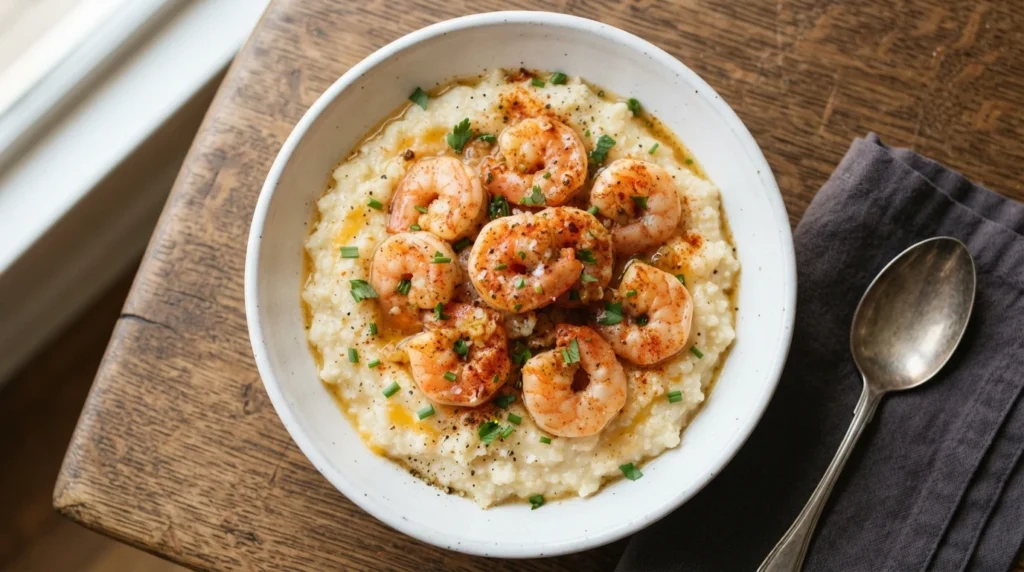

Looking for a satisfying, low-carbohydrate meal that feels indulgent but stays within keto boundaries? This Creamy Cajun Shrimp with Cauliflower Grits delivers bold flavors and a creamy texture without the starch. Ideal for US and UK home cooks seeking a restaurant-quality dinner that is ready in under an hour.
The Perfect Keto Comfort Dish
Shrimp is one of the most versatile proteins on the ketogenic diet, offering lean muscle-building protein with minimal carbohydrates. When paired with a savory Cajun seasoning blend and served over cauliflower grits, it creates a dish that mimics the comfort of traditional shrimp and grits but keeps you in ketosis.
The key to success lies in maximizing the natural sweetness of the shrimp while infusing the dish with smoky paprika and garlic. The cauliflower grits provide a soft, creamy base that absorbs the flavorful sauce, ensuring every bite is balanced and satisfying.
Recipe Overview
- Servings: 4 people
- Prep time: 10 minutes
- Cook time: 15 minutes
- Total time: 25 minutes
- Dietary Notes: Keto-friendly, Gluten-free (check spice packet), Dairy-free (if using coconut milk)
Ingredients
This recipe requires precise measurements to ensure the best texture and flavor profile. All quantities are provided in grams for accuracy.
- Shrimp: 500g peeled, deveined, tail-on large shrimp (raw)
- Cauliflower florets: 400g cut into small chunks (raw)
- Heavy cream: 250ml
- Cooking oil: 30g extra virgin olive oil or coconut oil (solid at room temperature, liquid when heated)
- Cajun seasoning: 15g packet (check label for sugar content; use sugar-free blends if available)
- Garlic powder: 5g
- Paprika (smoked): 3g
- Onion powder: 3g
- Dried thyme: 2g
- Salt and black pepper: To taste
- Cream cheese (optional): 50g cubed, for extra richness
Method
Follow these steps to create a glossy, flavorful dish. The process involves searing the shrimp for color and texture, then building a sauce in the same pan.
- Preparation: Pat the shrimp dry with paper towels to ensure they brown properly. Season lightly with salt and pepper on both sides. Cut the cauliflower into bite-sized florets no larger than 1cm cubes.
- Searing the Shrimp: Heat a large skillet or sauté pan over medium-high heat. Add the oil. Once shimmering, add the shrimp in a single layer to avoid overcrowding. Cook for 2–3 minutes per side until pink and opaque. Remove shrimp and set aside on a plate.
- Blanching Cauliflower: In a separate small saucepan, bring salted water to a boil. Add the cauliflower florets and cook for 3–4 minutes until tender-crisp. Drain thoroughly and rinse under cold water to stop cooking. This step ensures the grits have a creamy but distinct texture.
- Creating the Base: Return the skillet to medium heat. Add the onion powder, garlic powder, and paprika. Sauté for 30 seconds until fragrant. Do not burn the spices.
- Sauce Assembly: Pour in the heavy cream. If using cream cheese, add it now and let it melt slightly. Stir continuously to prevent lumps. Simmer gently for 2–3 minutes until the sauce thickens slightly.
- Combining: Return the shrimp to the pan with the sauce. Toss to coat evenly. Add the drained cauliflower florets and stir well. Cook for another 1–2 minutes to heat through without overcooking the seafood.
- Serving: Transfer to serving bowls immediately. The dish is best served hot while the shrimp remains firm and the sauce is glossy.
Troubleshooting Common Issues
Even with a simple recipe, certain issues can arise. Here are practical solutions for common problems.
Soggy Cauliflower Grits
Cause: Overcooking the cauliflower or insufficient rinsing after blanching.
Fix: Ensure you rinse the cauliflower under cold water immediately after draining. If the grits turn mushy, add a splash of fresh heavy cream to loosen them up slightly before serving.
Dry Shrimp Texture
Cause: Overcooking in the pan or starting with wet shrimp.
Fix: Always pat shrimp dry before cooking. If they appear rubbery, serve immediately; do not let them sit on the plate. The residual heat from the sauce should finish them gently.
Sauce Separation
Cause: High heat or insufficient stirring when adding cream.
Fix: Maintain a medium-low simmer when combining the cream. Constant stirring emulsifies the fat and liquid, creating a smooth consistency.
Substitutions and Variations
You can adapt this dish based on pantry staples or dietary preferences.
- Dairy-Free: Replace heavy cream with full-fat coconut milk (canned, not carton) for a similar texture. Note that coconut milk may impart a subtle tropical note.
- Cheese Variation: Add grated parmesan (15g) to the sauce for a nutty depth of flavor and extra protein.
- Spice Adjustments: For a milder version, reduce paprika by half. For more heat, add cayenne pepper or red pepper flakes during the spice sauté step.
Storage and Reheating
This dish holds well for short-term storage but is best enjoyed fresh due to the shrimp texture.
- Fridge Storage: Cool completely within two hours. Store in an airtight container for up to 3 days. Reheat gently on the stove or in the microwave, adding a teaspoon of water if the sauce thickens too much.
- Freezing: Freezing shrimp dishes is not recommended as it alters the texture of the protein and cauliflower. If frozen, expect a softer consistency upon thawing.
Frequently Asked Questions
Can I make this dish ahead of time?
The sauce and cauliflower can be prepared in advance, but add the shrimp only when serving to maintain optimal texture.
Is this recipe suitable for a strict ketogenic diet?
Yes, provided the Cajun seasoning is sugar-free. Cauliflower grits are very low in carbohydrates, making this an excellent option for maintaining ketosis.
How do I ensure the shrimp are safe to eat?
Cook until the meat turns opaque pink and firms up. Use a food thermometer if available; shrimp should reach an internal temperature of 63°C (145°F).