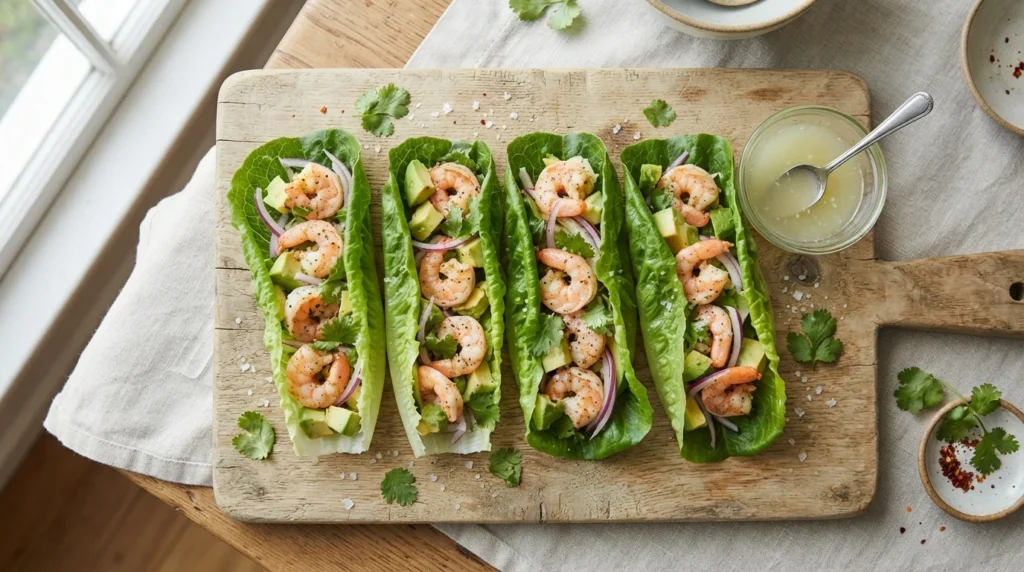

Shrimp lettuce wraps are a staple for those seeking a fresh, protein-rich option that fits within a ketogenic eating pattern. Unlike heavy tortillas or bread-based alternatives, this dish relies on large, sturdy leafy greens to hold a savory filling, making it an ideal choice for meal prepping or quick weeknight dinners.
Why This Recipe Works
The primary challenge with lettuce wraps is ensuring the greens do not tear when filled. By selecting heartier varieties and cooking the shrimp to a tender state rather than a hard, rubbery one, you create a filling that holds its shape. The combination of avocado provides healthy fats and creaminess, balancing the briny taste of the seafood and the acidity of lime juice.
Recipe Overview
This dish serves four people. Preparation takes approximately 15 minutes, with no long marinating or resting periods required. The total active cooking time is around 10 minutes.
Yield and Timing
- Servings: 4
- Total Time: 25 minutes (including prep)
- Prep Time: 10 minutes
- Cook Time: 10 minutes
Ingredients
To make these wraps, gather the following components. Ensure all ingredients are at room temperature for easier mixing.
- Large Romaine or Butterhead Lettuce Leaves: 20 leaves (roughly 150g), washed and patted completely dry
- Jumbo Shrimp: 400g, peeled, deveined, and tails removed
- Avocado: 1 medium fruit (about 150g), ripe but not over-ripe
- Lime Juice: 2 tablespoons (freshly squeezed)
- Salt: 1 teaspoon
- Black Pepper: 1/2 teaspoon, freshly ground
- Ginger Paste: 1 tablespoon (optional, for depth of flavor)
- Red Chili Flakes: 1/2 teaspoon (optional, for heat)
Optional Add-ins
You may add cooked bacon bits (approximately 50g) or a tablespoon of soy sauce if you prefer a slightly umami profile, though these are optional adjustments.
Method
Follow these steps to prepare the dish from scratch.
- Prepare the Shrimp: Place the jumbo shrimp in a bowl. If using ginger paste or chili flakes, mix them with 1/4 teaspoon of salt and a splash of water to create a marinade. Toss the shrimp gently to coat them evenly. Let them sit for 5 minutes while you prepare other components.
- Preheat the Pan: Heat a large non-stick skillet over medium heat. Add no oil or use a minimal amount if your pan is particularly dry. The goal is to sear the shrimp without burning it.
- Cook the Protein: Add the marinated shrimp to the hot pan in a single layer. Cook for 3 to 4 minutes, turning them halfway through, until they turn opaque and firm to the touch. Overcooking shrimp makes them tough and rubbery, which ruins the texture of the wrap.
- Cool Slightly: Remove the shrimp from the pan and let them rest for 2 minutes. This allows residual heat to finish cooking them gently without drying them out. Do not drain any liquid that may have collected at the bottom of the pan, as this contains flavor.
- Prepare the Avocado: Cut the avocado into small cubes (approximately 1cm). Place it in a bowl with the lime juice and a pinch of salt. Toss to coat. The acid in the lime prevents oxidation and keeps the flesh green.
- Assemble the Wraps: Lay the lettuce leaves flat on a clean surface. Spoon about 30g of shrimp mixture onto each leaf, spreading it evenly. Top with a small mound of avocado cubes (about 15g per serving). Garnish with a sprinkle of black pepper and chili flakes if desired.
Troubleshooting Common Issues
Even simple dishes can present challenges. Here are the most common issues you might encounter and how to resolve them.
1. The Lettuce Tears When Filled
Cause: Using small or thin leaves, or filling them too aggressively before they are dry.
Fix: Always pat the leaves thoroughly with a clean kitchen towel. Moisture weighs down the leaf and causes it to snap. Choose larger varieties like Iceberg or large Butterhead romaine for better structural integrity.
2. The Shrimp is Too Tough
Cause: Overcooking in a hot pan or cooking for too long after the meat turns pink.
Fix: Remove shrimp as soon as they are opaque in the center and firm on the outside. They will continue to cook slightly from residual heat. If you must cook longer, reduce the heat to low to maintain moisture.
3. The Dish is Too Dry
Cause: Lack of fat or moisture in the filling.
Fix: Add a tablespoon of olive oil when sautéing the shrimp, or mix in finely minced scallions which release water as they cook. A squeeze of fresh lime juice also helps retain some internal juices.
Substitutions and Variations
While the base recipe is straightforward, you can adjust it to suit your taste preferences.
- Cooking Method: Instead of pan-searing, you can poach the shrimp in a splash of water with lime juice for 4 minutes. This yields a softer texture but requires more time.
- Spice Level: Increase chili flakes to taste, or substitute with cayenne pepper for a sharper heat.
- Dairy-Free Note: This recipe contains no dairy products, making it naturally suitable for those avoiding lactose.
Storage and Reheating
Because lettuce is perishable, this dish is best consumed immediately after assembly. However, if you wish to prepare components ahead:
- Shrimp: Can be cooked and stored in the refrigerator for up to 3 days.
- Avocado: Best eaten fresh; if stored, it will darken quickly due to oxidation.
To reheat shrimp gently, place them in a microwave-safe dish with a teaspoon of water and heat on high for 30 seconds. Avoid reheating the assembled wraps, as the lettuce will wilt rapidly and lose its crunch.
Frequently Asked Questions
Can I use frozen shrimp?
Yes, but ensure they are fully thawed and patted dry before cooking to prevent steaming rather than searing.
Is this keto-friendly?
Yes, the ingredients listed contain negligible carbohydrates, making this a suitable option for a ketogenic diet.