
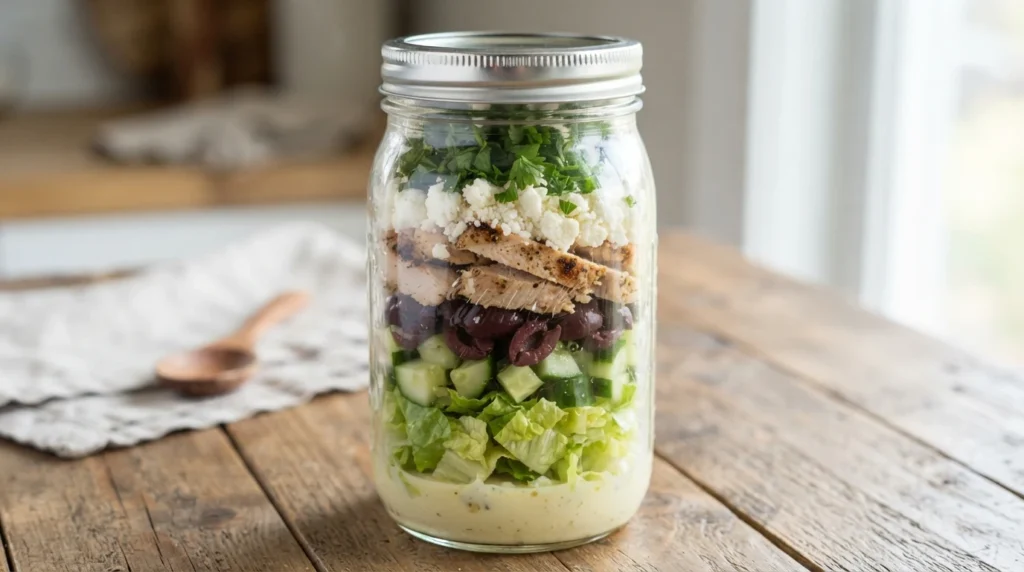

Planning ahead for the week can be effortless when you master the art of the mason jar salad. This Keto Greek Chicken Mason Jar Salad is designed for home cooks who want a satisfying, lower-carbohydrate meal that stays crisp from fridge to plate. By placing the oil-based dressing at the very bottom, you ensure that chicken, greens, and feta remain dry and distinct until ready to eat.
Why Use a Mason Jar for Your Salad?
The primary advantage of this method is texture preservation. When salads are mixed in a bowl, moisture migrates from the dressing to the vegetables within minutes, turning crisp lettuce into soggy sludge. In a jar, gravity does the work: the oil and vinegar layer at the bottom act as a seal, keeping everything else dry.
For Keto eaters, this also simplifies portion control. You can measure your protein and fat precisely before cooking, knowing exactly what you are consuming without needing to guess at hidden carbs in pre-packaged salads or sauces.
Recipe Overview
- Servings: 1 large salad (serves 1)
- Total Time: 35 minutes (includes prep, cooking, and assembly)
- Dietary Focus: High protein, low-carb, gluten-free
- Storage: Up to 4 days in the refrigerator when sealed properly
Ingredients
All measurements are in grams for precision. Ensure your ingredients are fresh and at room temperature before assembly.
- Chicken Breast: 300g, raw, boneless skinless
- Greek Yogurt (Plain, Full-Fat): 150g, for the creamy base
- Extra Virgin Olive Oil: 20g
- Lemon Juice: 10ml (approx. 2 large lemons)
- Dried Oregano: 5g
- Salt and Black Pepper: to taste
- Cucumber: 150g, peeled and diced small
- Kalamata Olives: 60g, pitted and halved
- Feta Cheese: 80g, crumbled
- Romaine Hearts: 150g, sliced into strips
- Parsley: 20g, fresh and chopped
Preparation Method
This recipe requires three main stages: preparing the protein, making the dressing, and assembling the jar.
Step 1: Cook the Chicken
Pan-searing or poaching are both excellent methods for maintaining moisture. For a mason jar salad, we recommend pan-searing to develop flavor without overcooking.
- Heat a large skillet over medium-high heat with a splash of oil.
- Add the 300g raw chicken breast. Season generously with salt and pepper.
- Cook for 6–8 minutes total, flipping halfway through. The internal temperature should reach 74°C (165°F) before resting.
- Let the chicken rest for 5 minutes to redistribute juices, then slice into thin strips or bite-sized chunks.
Step 2: Prepare the Dressing
The dressing needs to be potent but not overpowering. The yogurt provides creaminess and reduces the amount of oil needed compared to traditional vinaigrettes.
- In a small bowl, whisk together the 150g Greek yogurt, 20g olive oil, 10ml lemon juice, 5g dried oregano, and a pinch of salt.
- Taste and adjust seasoning. The acidity from the lemon should cut through the richness of the yogurt and cheese.
Step 3: Assemble the Jar
Use a standard 1-liter mason jar. Cleanliness is critical for food safety.
- Place the dressing mixture at the very bottom of the jar. This acts as the foundation and prevents direct contact between moisture-rich ingredients.
- Add a layer of dry, crisp vegetables first: the 150g romaine hearts and cucumber.
- Layer in your proteins: the sliced cooked chicken and Kalamata olives.
- Top with the creamy feta cheese and fresh parsley. The feta acts as a moisture barrier for the greens.
- Screw the lid on tightly. Shake gently to coat the ingredients when ready to eat.
Troubleshooting Common Issues
Even with the correct technique, issues can arise. Here is how to handle them.
Problem: The Chicken is Dry
Cause: Overcooking or starting with low-quality lean meat that loses moisture quickly.
Fix: Always stop cooking at 74°C (165°F). Letting the meat rest for 5 minutes allows juices to reabsorb. If you must cook further, reduce heat to avoid drying out.
Problem: The Salad is Soggy
Cause: Moisture from the chicken or dressing soaking into the greens before eating.
Fix: Ensure the dressing is at the bottom. If you assembled it incorrectly, reassemble with a dry towel between layers. Alternatively, add a layer of cheese or protein directly on top of the greens to create a physical barrier.
Problem: The Dressing Separates
Cause: Oil and water-based liquids separating without emulsification.
Fix: Whisk vigorously before pouring into the jar. When shaking to eat, ensure the lid is tight enough to force the mixture back together.
Storage and Reheating
This salad is best consumed within 24 hours for optimal texture, though it remains safe for up to 4 days if kept cold.
- Refrigeration: Store the sealed jar upright in the fridge. Do not shake until ready to serve.
- Reheating: This salad does not require reheating, as the chicken is already cooked and the greens wilt when heated. Eating it cold or at room temperature is preferred for texture.
- Freezing: Do not freeze this salad. The combination of yogurt dressing, fresh herbs, and leafy greens will degrade in quality upon thawing.
Substitutions
You can adapt this recipe based on availability, but be aware of the impact on texture and macros.
- Chicken Alternative: Turkey breast or tofu (firm) work well. Tofu should be pressed to remove excess water before cooking/frying.
- Dressing Swap: For a non-dairy option, blend silken tofu with the oil and lemon instead of yogurt. Note that this changes the texture significantly.
- Cheese: Goat cheese or halloumi can replace feta. Halloumi requires grilling to soften slightly before adding.
Remember, individual dietary needs vary. While this recipe is designed for a ketogenic lifestyle due to its high fat and protein content with minimal carbohydrates, always consult a registered dietitian regarding specific medical conditions or dietary restrictions.