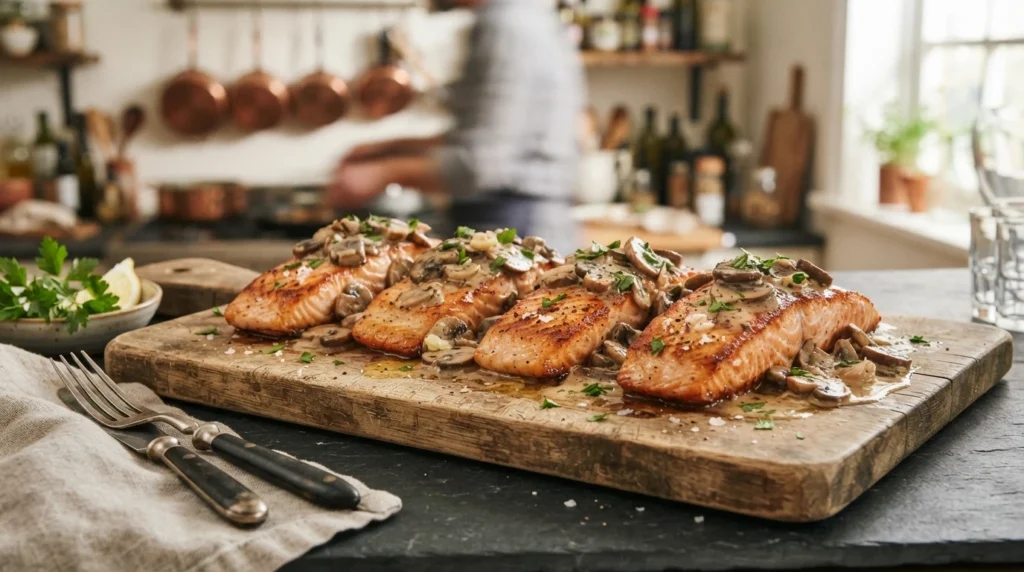

Looking for a satisfying, lower-carbohydrate dinner that comes together quickly? This Keto salmon with garlic butter mushrooms recipe delivers rich flavor without the heavy starches found in traditional preparations.
The core technique here is simple: cook the salmon skin-side down to render fat and create a crispy texture, then deglaze the pan with butter and white wine before adding fresh mushrooms. This method ensures the fish stays moist while developing a savory sauce that clings to every bite.
Recipe Overview
This dish serves four people and requires minimal active time once the salmon is seared. It uses pantry staples like olive oil, butter, garlic, and wine, making it easy to adapt for different budgets or availability.
- Servings: 4
- Prep time: 10 minutes
- Cooking time: 15 minutes
- Total time: 25 minutes
Ingredients
For the best texture and flavor, use fresh ingredients. The following list includes exact quantities in grams and specifies whether items are raw or cooked.
- Salmon fillets: 4 pieces (approx. 150g each), skin-on, raw
- Brown mushrooms: 300g, sliced into thin strips, raw
- Butter: 60g, unsalted, cold but not frozen
- Olive oil: 2 tablespoons (approx. 30ml), extra virgin
- Garlic: 4 cloves, minced finely, raw
- Dry white wine: 100ml (optional for deglazing)
- Sour cream or heavy cream: 150ml, cold
- Lemon juice: 1 tablespoon, fresh, raw
- Parsley: 2 tablespoons, chopped, fresh
- Salt and black pepper: to taste
How to Make It
Follow these steps in order to ensure the salmon cooks evenly and the sauce emulsifies correctly.
- Preparation: Pat the salmon fillets completely dry with paper towels. This is crucial for achieving a crispy skin. Season both sides generously with salt and freshly ground black pepper.
- Searing the Salmon: Heat a large skillet over medium-high heat. Add the olive oil and let it shimmer but not smoke. Place the salmon fillets skin-side down first. Do not move them for at least 4-5 minutes to allow the skin to crisp up without sticking.
- Cooking the Fish: Flip the fillets carefully using a wide spatula. Cook for another 3-4 minutes until the flesh is opaque and flakes easily when tested with a fork. Remove from heat immediately; overcooking will dry out the meat.
- Sautéing Mushrooms: In the same pan, if there is residual fat, add more butter if needed. Increase heat to medium-high. Add the sliced mushrooms in a single layer. Cook for 5-6 minutes, stirring occasionally, until they release their moisture and turn golden brown. Do not overcrowd the pan or they will steam instead of sear.
- Adding Aromatics: Push the mushrooms to the side of the pan. Add the minced garlic to the empty space. Cook for 30-60 seconds until fragrant, being careful not to burn it.
- Deglazing: Pour in the white wine (if using) and scrape up any browned bits from the bottom of the pan with a wooden spoon. Let it bubble for 2 minutes to reduce slightly.
- Creating the Sauce: Turn off the heat. Stir in the cold sour cream or heavy cream, lemon juice, and half of the chopped parsley. Whisk gently until smooth. The residual heat will warm the cream without curdling it.
- Serving: Spoon the garlic butter mushroom sauce over the salmon fillets and garnish with the remaining parsley. Serve immediately while hot.
Troubleshooting Common Issues
Even experienced cooks sometimes encounter hurdles when preparing this dish. Here is how to handle them.
- Soggy Mushrooms:
The most common issue is mushrooms releasing too much water and becoming limp. This happens if they are cooked in a crowded pan or on low heat. To fix it, ensure you have enough surface area for the mushrooms to spread out and cook quickly over medium-high heat. - Dry Salmon:
If the fish turns out dry, you likely overcooked it or started with frozen fillets that were not thawed properly. Always use room temperature ingredients and stop cooking when the internal temperature reaches 145°F (63°C) to ensure juicy results. - Curdled Cream:
If the sauce looks grainy, you may have added hot cream to boiling liquid. The fix is simply to whisk in a small amount of cold butter or cream while stirring vigorously over low heat to re-emulsify it.
Substitutions and Variations
You can adjust this recipe based on dietary needs or pantry staples, keeping carbohydrate counts in mind.
- Cream Substitute: Greek yogurt is a lower-carb option. Use 150g full-fat plain Greek yogurt instead of sour cream. Stir it in at the very end over low heat to prevent separation.
- Mushroom Swap: Portobello or shiitake mushrooms work well, but ensure they are sliced thin for even cooking. If using dried mushrooms, soak them first and use only a fraction of the soaking liquid as wine.
- Dairy-Free: For those avoiding dairy, replace butter with olive oil and use coconut cream (from canned full-fat coconut milk) instead of sour cream. Note that coconut cream adds natural sweetness which may complement the lemon.
Storage and Reheating
This dish is best enjoyed fresh, but it can be stored for future meals with some precautions.
Store leftovers in an airtight container in the refrigerator for up to 3 days. The salmon may lose its crispy skin during reheating, which is normal. To reheat, use a microwave on low power in short intervals or place the fillets in a dry pan over very low heat with a splash of butter and lemon juice to restore moisture.
Frequently Asked Questions
Here are answers to common questions about this dish.
- Can I freeze this meal?
Freezing is possible, but the texture of the salmon may soften slightly upon thawing. It is best frozen within 24 hours of cooking and reheated gently. - Is this keto-friendly?
Yes, this dish is naturally low-carbohydrate with approximately 10-15g of net carbs per serving depending on the specific mushrooms used. Avoid adding sugar or high-carb sauces.