
Many keto cooks struggle to achieve a rich, velvety sauce for stir-fries without relying on cornstarch, which contains carbohydrates that break ketosis. The solution lies in utilizing high-fat dairy products or specialized thickeners available in the US and UK kitchens.
Recipe Overview
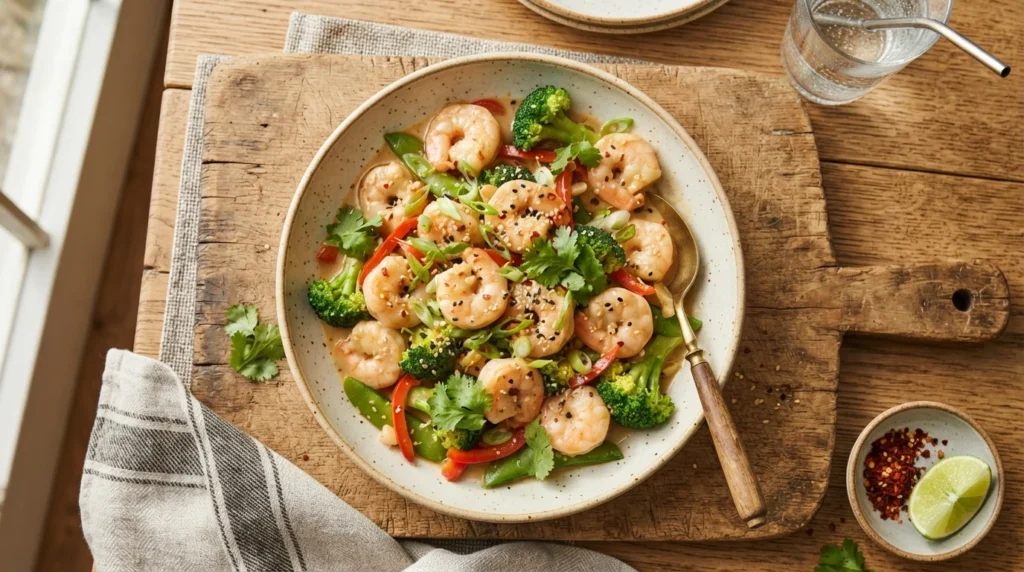
This dish delivers a satisfying, glossy coating to broccoli and shrimp while staying strictly low-carb. It requires no sugar-free thickeners that might alter flavor; instead, it relies on emulsification and fat content for texture.
- Servings: 2
- Total Time: 15 minutes
- Dietary Focus: Keto, Low-Carb, Gluten-Free
Ingredients
Prepare the following ingredients. All quantities are in grams unless otherwise noted.
- Large shrimp (peeled and deveined): 300g, raw
- Broccoli florets: 250g, cut into bite-sized pieces
- Coconut milk (full-fat, canned): 1 cup (approx. 240ml), liquid from the can
- Heavy cream (or coconut cream if using a dairy-free diet): 60ml (approx. 5 tbsp)
- Soy sauce (low-sodium): 2 tbsp, or tamari for gluten-free preference
- Garlic: 1 clove, minced finely
- Ginger: 1/2 inch piece, grated
- Red chili flakes: 1 tsp (optional, for heat)
- Sesame oil: 1 tbsp
- Butter or ghee: 10g
- Salt and black pepper: to taste
Method
Follow these steps to create a cohesive dish. Pay attention to heat management to ensure the shrimp cooks quickly without drying out.
- Preparation: Pat the shrimp dry with paper towels and season lightly with salt and pepper. Cut the broccoli into uniform florets if they are not already prepared.
- Searing the Protein: Heat a large skillet or wok over medium-high heat. Add the sesame oil. Once hot, add the shrimp in a single layer. Cook for 2–3 minutes per side until opaque and pink. Remove shrimp from the pan and set aside on a plate.
- Cooking the Vegetables: In the same pan, add the butter or ghee. Add the broccoli florets and stir-fry for 4–5 minutes until they are tender-crisp but still have a bright green color. This step ensures the vegetables retain their texture.
- Building the Sauce: Push the vegetables to the side of the pan. In the empty space, add the minced garlic and grated ginger. Sauté for 30 seconds until fragrant, being careful not to burn them.
- Thickening Without Cornstarch: Pour in the coconut milk from the can. Stir well to combine with the vegetables. Let this simmer gently for 2 minutes. The natural starches in the coconut milk and the fat content will begin to thicken the liquid slightly.
- Incorporating Cream: Add the heavy cream (or coconut cream) to the pan. Stir continuously over low heat for 1–2 minutes. The fat in the cream emulsifies with the coconut milk, creating a glossy, sauce-like consistency without needing a thickener.
- Final Seasoning: Stir in the soy sauce (or tamari), chili flakes, and salt to taste. If the sauce looks too thin, continue to simmer over low heat while stirring constantly for another minute to encourage evaporation and thickening.
- Combining: Return the shrimp to the pan, tossing them gently in the sauce for 1 minute to coat evenly. Do not overcook the shrimp at this stage, as they will continue cooking in the residual heat.
Troubleshooting Common Issues
Even with careful technique, specific problems can arise when avoiding cornstarch.
- Sauce is too watery: This often happens if the coconut milk is not simmered long enough to reduce. Ensure you cook the liquid mixture over medium-low heat for at least 3 minutes after adding the cream. If it remains thin, remove the pan from heat and cover it; residual heat will continue to thicken the sauce without burning the ingredients.
- Shrimp turns grey: Overcooking is the most common cause of this issue. Shrimp should be removed from the pan immediately once they turn opaque pink. If you must reheat leftovers, do so gently in a microwave or on the stovetop for a short time to avoid toughening.
- Broccoli becomes mushy: If the broccoli loses its crunch, it was likely cooked too long before adding the sauce. Keep the vegetables separate from the liquid until the very end of the cooking process to maintain texture.
Substitution Options
If you prefer a dairy-free version or have specific dietary needs, consider these adjustments:
- Dairy-Free Cream Substitute: Use full-fat coconut cream instead of heavy cream. This provides similar richness and thickness but will impart a distinct tropical flavor profile.
- Soy Sauce Alternative: For those avoiding soy, use a low-sodium coconut aminos or a gluten-free tamari substitute to maintain the salty umami flavor without compromising dietary restrictions.
Storage and Reheating
This dish stores well in an airtight container for up to 3 days in the refrigerator. For freezing, portion it into individual servings and freeze for up to one month. Thaw overnight in the refrigerator before reheating.
To reheat, place the food in a microwave-safe bowl and heat on medium power for 1–2 minutes, stirring halfway through. Alternatively, reheat gently in a skillet over low heat with a splash of water or broth to restore moisture, as reheating can sometimes cause sauces to separate or thicken further.
Frequently Asked Questions
Can I use almond milk instead of coconut milk?
Generally, no. Almond milk is too thin and lacks the fat content necessary to emulsify into a creamy sauce without additional thickeners like xanthan gum or cornstarch.
How do I know when the shrimp are done?
Shrimp are done when they turn bright pink and opaque throughout. They should curl slightly into a ‘C’ shape; if they form a tight ‘O’, they may be overcooked.