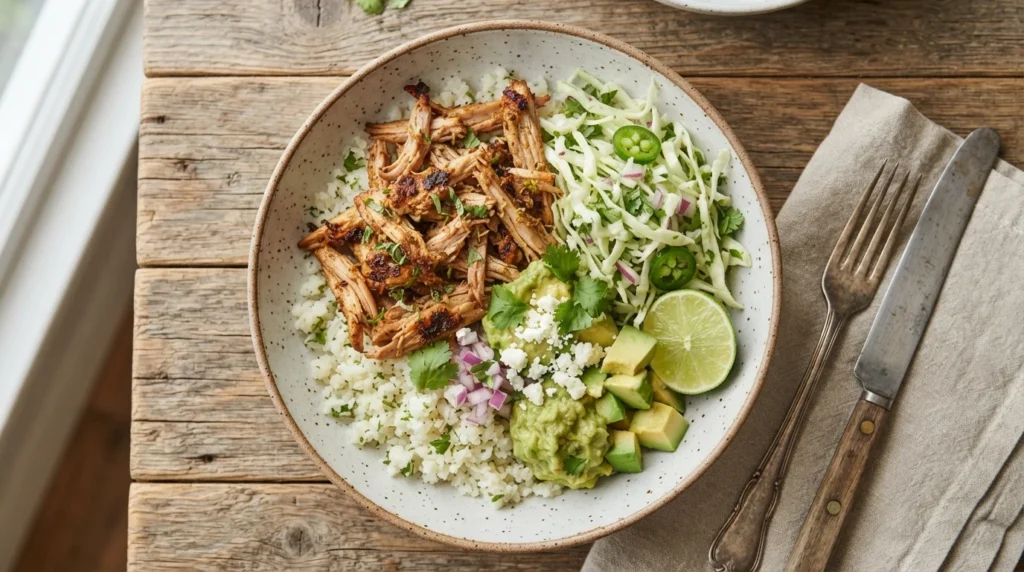

Transform leftover or fresh pork shoulder into tender, flavorful pork carnitas without relying on traditional sauces. This method uses only oil, salt, pepper, and lime juice to create a rich coating that keeps the meat moist while infusing it with authentic Mexican-inspired flavor. Serve the shredded pork over cauliflower rice topped with a creamy lime cabbage slaw for a complete keto bowl.
Easy Keto Pork Carnitas Bowl
This recipe focuses on simple techniques to ensure your pork stays juicy and flavorful without added sugars or heavy marinades. The key is slow cooking in oil until the fat renders naturally, creating that signature crispy yet tender texture.
Yield: 4 servings
Prep time: 10 minutes
Cook time: 45 minutes (active) + 30 minutes passive
Total time: 1 hour 15 minutes
Dietary notes: Keto-friendly, Gluten-free, Dairy-free, High protein
Ingredients
- Pork shoulder roast or butt (boneless): 700g, raw, boneless cut suitable for shredding
- Vegetable oil: 45ml (approx. 3 tbsp), neutral flavor like canola or grapeseed
- Salt: 12g, coarse sea salt or kosher salt
- Black pepper: 6g, freshly ground
- Lime juice: 30ml (approx. 2 limes), fresh squeezed
- Lime zest: 5g from 1 lime
- Cauliflower rice: 300g, raw, pre-rinsed and dried
- Green cabbage (shredded): 200g, raw, finely shredded
- Red onion (finely diced): 80g, raw
- Garlic (minced): 15g, fresh cloves
- Cilantro (fresh, chopped): 20g, optional garnish
Method
- Prepare the pork: Place the 700g raw pork shoulder in a heavy-bottomed skillet or Dutch oven. Add the 45ml of oil to cover the bottom by about 1cm.
- Sear the meat: Heat over medium-high heat until the oil shimmers. Season generously with the 12g salt and 6g pepper. Sear for 3–4 minutes per side until a deep golden-brown crust forms on all surfaces. This creates a flavorful base.
- Slow cook: Reduce heat to low. Cover the pan and let the pork simmer gently for 25–30 minutes. Avoid lifting the lid frequently to maintain moisture.
- Add citrus: Remove from heat briefly, then stir in the fresh lime juice (30ml) and zest (5g). Return to low heat for 5 minutes to let the flavors meld without boiling off the liquid.
- Shred and serve: Transfer pork to a cutting board. Using two forks, shred the meat against the grain until it falls apart easily. It should be moist but not mushy. Toss with any pan juices remaining in the skillet.
- Prepare slaw: In a separate bowl, combine the 200g raw shredded green cabbage and 80g raw diced red onion. Add minced garlic (15g) and a splash of lime juice if desired for extra zing.
- Assembly: Spoon cauliflower rice (300g raw weight) onto plates. Top generously with the shredded pork carnitas. Finish with the cabbage slaw and fresh cilantro (20g) for color and freshness.
Troubleshooting Common Issues
Problem: Pork is too dry or crumbly.
Cause: Cooking at too high a heat or cooking time exceeding the render point.
Fix: Ensure you are cooking on low heat after the initial sear. If the meat looks dry, add a teaspoon of water or broth and cover to steam for 2–3 minutes before shredding.
Problem: Sauce is too thin or oily.
Cause: Not enough fat rendered from the pork.
Fix: Pork shoulder contains significant intramuscular fat. If the oil looks separate, continue cooking until the liquid becomes clear and glossy. Do not add extra sugar to thicken; use cornstarch only if you are willing to increase net carbs slightly.
Problem: Cabbage is soggy.
Cause: Overcooking or insufficient moisture absorption.
Fix: Shred the cabbage just before serving. If you prepare it ahead, toss with a teaspoon of oil and lime juice to prevent wilting during storage.
Substitutions and Variations
- Cauliflower rice: Can be replaced with zucchini noodles or cooked quinoa for those who prefer grains. Note: Quinoa contains slightly more carbs than cauliflower.
- Pork substitute: Chicken thighs work well but require a longer cooking time (approx. 40 minutes) to become tender. Turkey is leaner and may need added moisture.
Storage and Reheating
Store leftovers in an airtight container in the refrigerator for up to 3 days. The pork holds its texture well when chilled, though it may firm up slightly upon cooling. To reheat, warm gently in a skillet with a splash of oil over medium heat until heated through. Avoid microwaving directly without covering, as this can dry out the shredded meat.
Freezing is possible for up to 2 months. Portion into individual bowls before freezing to maintain shape. Thaw overnight in the fridge and reheat gently. Note that the texture of the cabbage may soften slightly after freezing; consider using fresh slaw for best quality.
Frequently Asked Questions
Can I use canned pork instead of raw?
While some brands offer canned carnitas, they often contain added sugars and sodium. Using 700g of raw pork shoulder ensures you control the ingredients and carbohydrate content accurately.
How do I know when the pork is fully cooked?
Use a meat thermometer; it should register at least 71°C (160°F) internally. Relying solely on color can be misleading, especially with dark cuts of pork.