
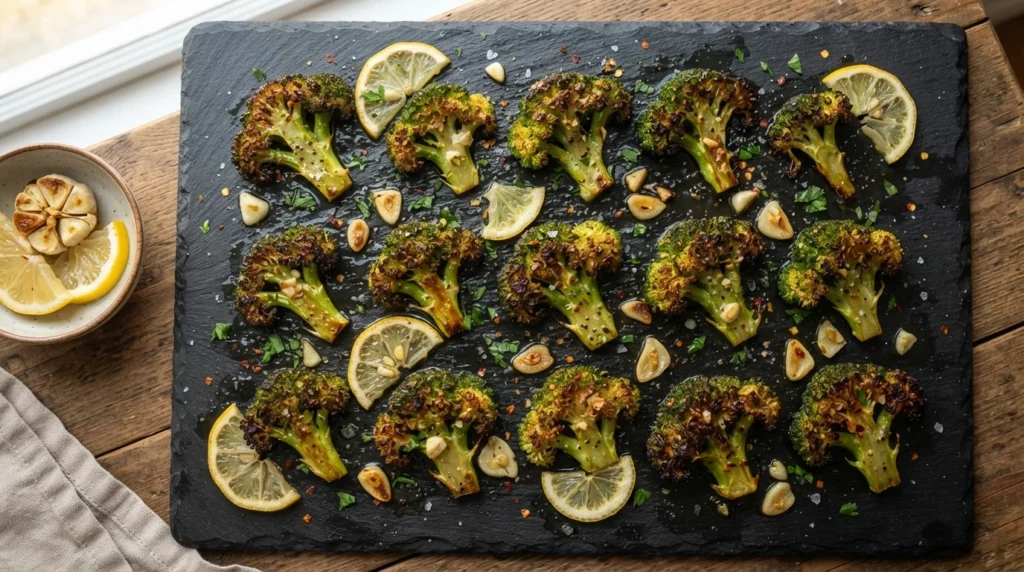

Steaming broccoli often results in soggy, limp florets that lack flavor and texture. To solve this, roast your broccoli until it is golden and crisp on the outside while remaining bright green and tender inside. This method creates a satisfying crunch without adding carbohydrates, making it an ideal side dish for any low-carb meal.
Simple Keto Broccoli Roasted with Garlic and Lemon
This recipe focuses on high-heat roasting to dehydrate the broccoli slightly, concentrating its natural sugars and creating a caramelized crust. It requires no complex ingredients or pre-cooking steps, making it quick to prepare while delivering a robust flavor profile.
Recipe Overview
- Servings: 4
- Preparation Time: 10 minutes
- Cooking Time: 25 minutes
- Total Time: 35 minutes
- Dietary Notes: Low-carb, High-protein, Gluten-free (if using fresh ingredients)
Ingredients
To make this dish, you will need the following components. All quantities are in grams for precision.
- Broccoli florets: 500g, cut into uniform bite-sized pieces
- Olive oil: 30ml (approx. 2 tablespoons)
- Garlic cloves: 4 cloves, minced or grated
- Lemon juice: 15ml (from half a large lemon)
- Parmesan cheese: 30g, freshly grated (optional, for extra flavor and fat)
- Salt: 2g
- Black pepper: 1g
Method
Follow these steps to ensure the broccoli reaches the perfect roasted texture. The key is to avoid overcrowding the pan, which causes steaming rather than roasting.
- Prepare the Pan: Preheat your oven to 220°C (425°F) with a standard fan setting if available. Line a large baking tray with parchment paper to prevent sticking and simplify cleanup.
- Cut the Broccoli: Ensure your broccoli florets are roughly uniform in size, about 3-4cm wide. Consistent sizing ensures even cooking; larger pieces may burn before smaller ones are tender.
- Mix Ingredients: In a large bowl, toss the broccoli florets with the olive oil, minced garlic, lemon juice, salt, and pepper. If using Parmesan, mix it in now so it distributes evenly across the florets before baking.
- Arrange on Tray: Spread the coated broccoli in a single layer on the prepared baking tray. Do not pile them up; they should sit flat with space between pieces to allow air circulation and direct heat contact.
- Roast: Place the tray in the preheated oven. Roast for 20–25 minutes, depending on your oven’s performance. Halfway through (around the 12-minute mark), flip the florets with a spatula to ensure even browning.
- Check Doneness: The broccoli is ready when the edges are deeply golden brown and crisp, while the centers remain tender when pierced with a fork. It should not be mushy or shriveled excessively.
- Serve: Remove from the oven immediately once done to prevent overcooking. Serve warm as a side dish for steak, fish, or pasta, or eat on its own.
Troubleshooting Common Issues
Roasting broccoli can sometimes present specific challenges if not executed correctly. Here are the most common failures and how to fix them.
Problem: Soggy or Mushy Florets
Cause: The florets were piled too high in the pan, trapping steam instead of allowing heat to circulate. Alternatively, they may have been cut unevenly, causing smaller pieces to overcook while larger ones remained underdone.
Fix: Spread the broccoli out more loosely on the tray next time. Ensure all pieces are similar in size before starting. If the florets turn out too soft after cooking, they were likely steamed rather than roasted; try increasing the oven temperature slightly or reducing the crowding.
Problem: Uneven Browning
Cause: Uneven oil distribution or inconsistent cutting led to some pieces roasting faster than others. Darker spots may indicate localized burning due to direct heat exposure on one side.
Fix: Flip the broccoli halfway through the cooking process, as demonstrated in the method above. Use a spatula gently to turn the pieces and redistribute any oil that has pooled on top.
Substitution Guide
While fresh ingredients yield the best results, there are practical alternatives for specific dietary needs or availability.
- Cauliflower: Cauliflower florets can substitute broccoli in a 1:1 ratio by weight. However, cauliflower has less natural sweetness and becomes softer faster. Reduce cooking time by 3–5 minutes to avoid mushiness.
- Sugar-Free Lemon Juice: If you are avoiding added sugars (though fresh lemon juice contains negligible carbs), use a certified sugar-free lemon concentrate or extract instead of fresh juice.
- Vegan Cheese: For those avoiding dairy, nutritional yeast can mimic the cheesy flavor profile without adding significant carbohydrates. It does not melt in the same way Parmesan does but adds savory depth.
Storage and Reheating
Roasted broccoli is best consumed within 1–2 days of preparation to maintain peak texture and flavor. Store leftovers in an airtight container in the refrigerator for up to 3 days.
To reheat, place florets in a single layer on a baking sheet and warm at 200°C (400°F) for 5–8 minutes until crisp again. Avoid microwaving, as this tends to make broccoli soggy rather than restoring its roasted texture.
Final Thoughts
Mastering the art of roasting vegetables is essential for keeping meals satisfying on a low-carbohydrate diet. By focusing on high heat and proper spacing, you can transform limp florets into a delicious, crunchy side dish that complements any main course.