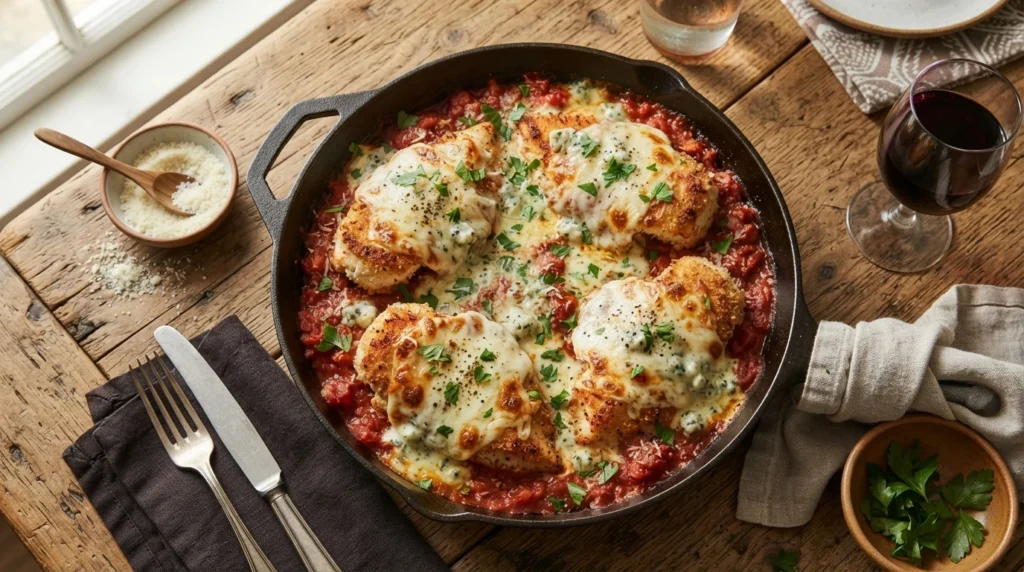

Keto Skillet Chicken Parmesan: A Bread Crust-Free Option
Looking for a satisfying low-carb meal? You can make authentic-tasting chicken parmesan without breadcrumbs by using a simple egg and oil coating. This skillet method delivers a crispy, golden exterior while keeping the dish keto-friendly and free from hidden carbs.
This recipe yields four generous servings. Total preparation time is approximately 35 minutes, including cooking times for both the chicken and the cheese sauce.
Ingredients
- Chicken Breast: 4 large pieces (approx. 180g each), pounded to even thickness
- Egg Yolks: 4 large yolks, room temperature
- Heavy Cream: 250ml (1 cup)
- Parmesan Cheese: 150g (finely grated)
- Mozzarella Cheese: 100g (shredded, low-moisture preferred)
- Gorgonzola or Blue Cheese: 30g (crumbled, optional for flavor depth)
- Garlic Powder: 1 tsp
- Dried Oregano: 1 tsp
- Parsley: 2 tbsp, chopped
- Butter and Olive Oil: 3 tbsp total (2 tbsp butter, 1 tbsp olive oil)
- Salt and Black Pepper: To taste
Method
- Preparation: Pat the chicken breasts completely dry with paper towels. This step is critical for achieving a crispy coating. Pound the chicken to an even thickness of about 1/2 inch using a meat mallet.
- The Coating: In a shallow bowl, whisk the egg yolks with a pinch of salt and pepper until frothy. Dip each chicken breast into the egg mixture, ensuring full coverage. Place the coated chicken on a wire rack to prevent sticking.
- Searing the Chicken: Heat the butter in a large skillet over medium-high heat. Once foaming, add the olive oil. Carefully place the chicken breasts in the pan without overcrowding. Sear for about 4 minutes per side until golden brown and cooked through (internal temperature of 74°C/165°F). Remove and set aside on a wire rack.
- Preparing the Sauce: In the same skillet, reduce heat to medium. Add minced garlic and cook for 30 seconds until fragrant. Pour in the heavy cream and bring to a gentle simmer. Do not boil aggressively, or the sauce may separate.
- Adding Cheese: Remove from heat immediately. Stir in the Parmesan, Mozzarella, and Gorgonzola cheeses. Cook for 2 minutes until the mixture is thickened and creamy. If using blue cheese, add it at this stage to ensure it melts properly.
- Assembly: Place each seared chicken breast into the skillet. Spoon the cheese sauce generously over the top, ensuring an even layer. Cover the skillet with a lid for 3-4 minutes to allow the cheeses to melt and bind the dish together.
Troubleshooting Common Issues
Problem: The chicken is dry or tough.
Cause: Overcooking or starting with frozen, unevenly thawed meat.
Fix: Always use fresh, high-quality chicken and cook it just until it reaches 74°C (165°F). Let the cooked chicken rest for 5 minutes before saucing to retain juices.
Problem: The sauce is oily or separated.
Cause: Boiling too vigorously or adding cheese to a hot pan.
Fix: Remove the pan from heat before adding the cheeses. Emulsifying the cream and cheese gently creates a silky texture rather than an oily one.
Substitutions and Variations
- Cheese Swap: For a nut-free option, replace Gorgonzola with Swiss or Provolone cheese. Note: These may create a slightly different flavor profile but work well as substitutes.
- Sauce Adjustment: If you prefer less cream, use half-and-half (250ml) instead. This reduces fat content slightly while maintaining richness.
Storage and Reheating
Store leftovers in an airtight container in the refrigerator for up to 3 days. To reheat, place the skillet over medium-low heat with a splash of water or broth. Cover and heat gently until warmed through, avoiding high heat which can dry out the chicken.
For freezing, portion the dish into containers and freeze for up to 2 months. Thaw overnight in the refrigerator before reheating according to the instructions above.
Frequently Asked Questions
Can I use this recipe for a strict ketogenic diet?
This recipe is naturally low-carb, containing approximately 3-4g of net carbs per serving depending on cheese varieties. It does not contain sugar or high-glycemic ingredients.
How do I ensure the chicken is safe to eat?
Always cook chicken to an internal temperature of 74°C (165°F) as measured with a food thermometer. Relying on color alone can be misleading, especially with dark meat or unevenly cooked pieces.