


-4.6 C
New York
Monday, March 2, 2026

Buy now

spot_img
Home Blog Page 10

Data Security’s Holy Trinity: DSPM, DLP, and Privacy – Unleashing Their Power Together!”

In the digital age, data breaches are as common as they are unwelcome. But fear not, for where there’s a challenge, there’s also a solution! Enter the dynamic trio of data security tools and regulations: Data Security Posture Management (DSPM), Data Loss Prevention (DLP), and Data Privacy. Let’s dive in and understand how these powerhouses work together to keep your data safe and compliant.

A Quick Crash Course

– Data Security Posture Management (DSPM) – Think of DSPM as your data’s bodyguard. It’s responsible for keeping an eye on your sensitive data, knowing where it’s stored, who’s accessing it, and making sure it’s being used appropriately. With AI and Machine Learning on its side, DSPM can predict potential threats and beef up security strategies.

– Data Loss Prevention (DLP) – DLP is the enforcer, making sure your sensitive data doesn’t go walkabout. It identifies, classifies, and safeguards your info, preventing data breaches and keeping you compliant with regulations. Even in the complex world of cloud storage, DLP’s got your back.

– Data Privacy – You know how important privacy is, but keeping up with regulations like GDPR and CCPA can be a headache. Data privacy ensures you’re transparent and protecting personal data, or else face hefty fines. It’s not just about tech; it’s about coordinating with legal, compliance, and business units too.

The Power of Three

DSPM, DLP, and data privacy aren’t just three separate tools; they’re a united front, working together to deliver comprehensive data protection. Here’s how they team up:

– Enhanced Security – DSPM identifies risks, and DLP jumps in to prevent breaches. For example, if DSPM spots sensitive data at high risk due to accessibility, DLP can instantly apply policies to limit unauthorized access or sharing. Together, they support data privacy and ensure you’re adhering to laws.

– Real-Time Protection – As data flows through your organization, DSPM keeps a constant watch, while DLP dynamically enforces policies. This means your sensitive data is always protected, no matter where it is or how it’s being used.

– Regulatory Compliance – Navigating the complex landscape of global privacy laws is no easy task. DSPM provides visibility into data storage and access patterns, while DLP ensures data handling aligns with specific requirements. This synergy helps you maintain compliance, even as regulations evolve.

The Role of Data Classification

Data classification is the foundation upon which DSPM, DLP, and data privacy stand. It helps you assign the right level of protection to your data based on its sensitivity and relevant regulations. Without proper classification, your data security efforts could be in vain.

DSPM, DLP, and Data Privacy: A Match Made in Data Heaven

While there’s some overlap in their roles, each brings unique capabilities to the table. DSPM provides an overview of your data landscape, DLP enforces specific policies, and data privacy ensures compliance with legal and regulatory standards. Together, they form an impenetrable fortress around your data.

GenAI: The New Challenge

Generative AI (GenAI) like Copilot and ChatGPT introduces new data security risks, but DSPM, DLP, and data privacy are evolving to meet these challenges. DSPM helps identify where sensitive data is exposed to AI tools, DLP prevents sensitive data from being shared with LLMs, and data privacy ensures AI usage aligns with regulations.

The Power of Convergence

Combining DSPM, DLP, and data privacy provides a robust defense against data breaches and compliance issues. This combined approach results in a more resilient and compliant data management system, ready to face new threats and regulatory changes.

So there you have it! The convergence of DSPM, DLP, and data privacy is the key to keeping your data safe and your organization compliant. Embrace the power of three, and your data will thank you!


🔓 Firefox’s Secret Weapon: Free Built-In VPN in Beta – Join the Exclusive Club!

💥 Breaking News! Mozilla’s unleashing a free, built-in VPN for Firefox, and you might just snag an invite to the beta party! 🎉

What’s Firefox VPN?

Imagine a tiny, powerful shield for your browser. That’s Firefox VPN! It’s a free, browser-only feature baked right into Firefox, currently in beta testing. Here’s what it does:

🔒 Encryption on Steroids: It hides your IP and browsing activity from peeking eyes, but only within Firefox.
🌎 Location Privacy: It’ll connect you to the nearest stable server, so US users will stay in the US. No Netflix from abroad, yet.
📈 Data Collection: Mozilla promises to keep it minimal and anonymous, no snooping on your visited sites.

How to Join the Beta?

Patience, grasshopper! Mozilla’s picking testers at random. Here’s how you might get the nod:

1. Mozilla Account: You’ll need one of those.
2. Toolbar Prompt: If you’re lucky, you’ll see a prompt in your Firefox toolbar. Opt-in and log on to your Mozilla account to activate the VPN.
3. Toggle On: Click the VPN icon in your toolbar and flip the switch to connect.

Firefox VPN vs Mozilla VPN: The Showdown!

These two share a mom (Mozilla), but they’re as different as night and day:

🆓 Firefox VPN: Free, browser-only, no frills.
💰 Mozilla VPN: Paid, full-device protection, advanced features like split tunneling and ad blocking.

Mozilla’s got big plans for Firefox VPN, aiming to make it the crème de la crème of VPN-integrated browsers. But for now, it’s just getting started, so stay tuned!

Also, check out:

🌐 The Tor Project’s beta Android VPN – join the testers!
💰 EventVPN: Can privacy-first ads save free VPNs?
🔒 The future of censorship-resistant VPNs: To VPN or not to VPN?

Why I Traded Up to the Apple Watch 11… But Wish I’d Kept the SE 3″

After three fantastic years with the Apple Watch SE 2, I finally upgraded to the Apple Watch 11, and boy, was I blown away! The bigger, brighter display made every interaction a joy, and the speedy new S10 processor made everything feel lightning-fast compared to my old SE 2. Plus, the improved battery life let me wear it all day and night, taking full advantage of Apple’s new Sleep Score feature.

But here’s the thing: I was mainly after the blood-pressure monitoring feature, which is still not approved in Australia by the Therapeutic Goods Association. So, for now, the Series 11 feels like overkill for my personal use case, especially since the Apple Watch SE 3 offers almost all the same health and fitness tracking features, including Sleep Score.

The SE 3: Nearly as Good, Half the Price

Apart from missing out on some cardiac health monitoring features and minor design differences, the Apple Watch SE 3 is nearly identical to the Series 11. My colleague Jacob Kroll even scored it higher in his review, giving it 4.5 stars out of 5, compared to the Series 11’s 4 stars.

What’s more, the SE 3 is selling for the same low price as the SE 2, starting at $249 / £219 / AU$399, while the Apple Watch 11 starts at $399 / £369 / AU$679. The SE 3 packs the same S10 processor as the Series 11, so you get the always-on display, double-tap gesture, and wrist-flick functionality. Day-to-day performance is nearly identical too.

Battery Life: A Trade-off

The Apple Watch 11 does win out in battery life, offering up to 24 hours compared to the SE 3’s 18 hours. But the SE 3 has a secret weapon: low-power mode, which can stretch a single charge to nearly two days. Plus, it now supports fast charging, so you can quickly top it up before bed or while you’re getting ready in the morning.

Even durability has been improved. My SE 2’s screen got a few scratches, but the SE 3’s Ion-X glass makes it four times more resistant to cracks.

Futureproofing? Not a Big Deal

The SE 3 misses out on 5G connectivity if you opt for the LTE version, but I don’t think that’s a major selling point for a smartwatch. Most of us have our phones with us anyway, so we’re typically tethered to our paired iPhone.

When Health Matters

The Apple Watch SE 3 doesn’t have blood oxygen monitoring, sleep apnea detection, or irregular heart rhythm notifications. But if you already have these conditions, you’re likely using an Apple Watch 10 or 11 already. For me, I’m at a stage where monitoring my blood pressure a few times a week would be helpful, but I’m not quite getting that with the Series 11 yet.

The Bottom Line

Don’t get me wrong, I love the Apple Watch 11. But given I’m not getting what I hoped for right off the bat, I think the larger 44mm Apple Watch SE 3 would have served me just as well. So, if you’re in the market for a new Apple Watch, consider what you really need from it and then make your decision. You might just save some cash!

Game Changer Alert! NVIDIA’s QeRL Slashes 32B LLM Training Time to Single H100 GPU – And Boosts Exploration!”

Ever dreamt of running Reinforcement Learning (RL) on a whopping 32 billion parameter Language Model (LLM) in just 4 bits, on a single H100 GPU, with BF16-level accuracy and a 1.2–1.5× speed boost? NVIDIA researchers, along with their collaborators from MIT, HKU, and Tsinghua, have made it a reality with QeRL – a groundbreaking training framework that pushes RL post-training into 4-bit FP4 (NVFP4) while keeping gradient math in higher precision via LoRA. The team’s work is now open-source, and you can check it out here:

So, what’s QeRL doing to the Reinforcement Learning loop?

Most RLHF/GRPO/DAPO pipelines spend most of their time in rollouts (token generation). QeRL shifts the policy’s weight path to NVFP4 (FP4) with dual-level scaling and keeps logits/gradients in higher precision via LoRA. This way, backprop remains stable while the sampling path hits hardware-efficient FP4×BF16 kernels (Marlin). The result? Faster prefill/decoding during rollouts without needing a separate full-precision policy.

Quantization as exploration, now schedulable

A fascinating finding: deterministic FP4 quantization raises policy entropy, flattening token distributions early in training and improving exploration. To control this effect over time, QeRL introduces Adaptive Quantization Noise (AQN) – channel-wise Gaussian perturbations mapped into LayerNorm scale parameters and annealed with an exponential schedule. This keeps kernel fusion intact (no extra weight tensors) while transitioning from exploration to exploitation.

What do the results say?

On the Qwen2.5 backbone model, QeRL shows that NVFP4+LoRA outperforms vanilla LoRA and QLoRA in rollout throughput and overall training time, with >2× rollout throughput on 14B/32B models against QLoRA and ~1.8× end-to-end vs QLoRA in a representative setup. The team also demonstrates training a 32B policy with GRPO on a single H100-80GB, thanks to the lower memory footprint of weight-only FP4.

Accuracy-wise, for a 7B model, the team reports GSM8K = 90.8% and MATH500 = 77.4%, surpassing 16-bit LoRA and QLoRA under their setup and matching full-parameter fine-tuning. Across broader math benchmarks, QeRL maintains parity or advantage while converging faster due to improved exploration.

What QeRL is – and isn’t

QeRL is weight-only FP4 with LoRA updates; it doesn’t claim FP4 precision for logits/gradients. The benefits focus on rollout/prefill throughput and memory footprint, with empirical evidence that quantization-induced entropy aids RL exploration when AQN modulates it over training. Generalization to other tasks depends on reward design and sequence lengths.

Key Takeaways

– QeRL combines NVFP4 4-bit weight quantization with LoRA to accelerate the rollout phase and cut memory, enabling RL for a 32B LLM on a single H100-80GB.
– Quantization acts as exploration: FP4 increases policy entropy, while Adaptive Quantization Noise (AQN) schedules channel-wise noise via LayerNorm scales.
– Reported efficiency: >1.5× rollout speedups vs 16-bit LoRA and ~1.8× end-to-end vs QLoRA; >2× rollout throughput vs QLoRA on 14B/32B setups.
– Accuracy holds: Qwen2.5-7B reaches 90.8% on GSM8K and 77.4% on MATH500, matching full-parameter fine-tuning under the paper’s setup.

Editorial Comments

QeRL speeds up the RL rollout stage by quantizing weights to NVFP4 and keeping updates and logits in higher precision using LoRA. It reports >1.5× rollout speedups and can train a 32B policy on a single H100-80GB GPU. It adds Adaptive Quantization Noise to control exploration during training. Results are shown mainly on math-reasoning tasks using GRPO and DAPO. The gains rely on NVFP4 kernel support such as Marlin.

Check out the FULL CODES [here](https://arxiv.org/pdf/2510.11696) and the Paper. Don’t forget to explore our GitHub Page for Tutorials, Codes, and Notebooks. Follow us on Twitter, join our 100k+ ML SubReddit, subscribe to our Newsletter, and now, you can also join us on Telegram!

Meet the New Mercedes-Benz Vision Iconic EV: Your Dream Batmobile is Here!”

🚀 Mercedes-Benz has just dropped the Vision Iconic EV in Shanghai, and it’s a game-changer! This concept car is not just a bold statement for the brand’s electric future, but also a nod to its rich history.

🌞 Sun-Powered & Brainy: The Vision Iconic EV boasts a unique solar paint job that can harness power from the sun to add extra range to your drive. Plus, it’s packed with neuromorphic compute power, a tech that mimics the human brain for super-fast decision-making. Mercedes claims it could be ten times more efficient than current systems!

💥 Design That Pops: With a long, low body and a massive illuminated grille, this luxury coupe is a modern take on classic Benzes like the W 108 and 600 Pullman. It’s got a hint of the GLC’s face and more than a touch of the Batmobile – you know, in the best possible way!

🎬 Art Deco Inside: Step into the Vision Iconic EV, and you’re transported to the Art Deco era. The instrument clusters light up like high-end chronograph watches, and one of the four clocks houses an AI assistant ready to take care of everything while you relax.

🚗 Level 4 Autonomous Driving: With this tech on board, you could theoretically take a nap or enjoy a movie while the car drives itself on the highway. Plus, it’s got hands-free parking, so you won’t even have to worry about finding a spot.

🔧 Tech for the Future: While the Vision Iconic Concept is still just a design study, it gives us a sneak peek into what’s coming. We’re talking solid-state battery tech for monster range, steer-by-wire systems, and rear-axle steering for easy maneuvering.

So, are you ready to trade in your old ride for a solar-powered, brainy Batmobile? We know we are! 🤩

Unveiling the ‘Context-Folding’ LLM Agent: Mastering Long Tasks with Ease!”

💡 Ever struggled with long, complex tasks that require keeping track of multiple steps and details? Well, we’ve got a game-changer for you! Today, we’re diving into the world of ‘Context-Folding’ Large Language Model (LLM) Agents, designed to tackle long-horizon reasoning tasks while keeping memory usage in check. Buckle up, because this is one smart cookie! 🍪

🧠 The Brain Behind the Operation

We start by setting up our environment and loading a nifty Hugging Face model. This model is our agent’s brain, generating and processing text locally, ensuring it runs smoothly even on Google Colab without any API dependencies. No fuss, no muss! 🌟

🔢 A Simple Calculator Tool

Next, we whip up a simple calculator tool for basic arithmetic. After all, even the smartest agents need a little help sometimes! 😉

🧠 The Memory System

We also create a dynamic memory system that folds past context into concise summaries. This way, our agent can maintain a manageable active memory while retaining essential information. It’s like having a personal assistant that never forgets! 🤝

🧑‍🏫 The Prompt Templates

To guide our agent, we design prompt templates that help it decompose tasks, solve subtasks, and summarize outcomes. These templates ensure clear communication between reasoning steps and the model’s responses. It’s like giving our agent a roadmap to success! 🗺️

🤖 The Agent in Action

Finally, we implement the agent’s core logic. Each subtask is executed, summarized, and folded back into memory, demonstrating how context folding enables our agent to reason iteratively without losing track of prior reasoning. It’s like watching a master at work! 🌟

🎯 The Demo

To show off our agent’s skills, we put it to the test with sample tasks. Through these examples, we witness the complete context-folding process in action, producing concise and coherent outputs. It’s like watching a magic trick, but with code! 🎩

🌟 The Result

In conclusion, we’ve shown how context folding enables long-horizon reasoning while avoiding memory overload. By combining decomposition, tool use, and context compression, we’ve created a lightweight yet powerful agentic system that scales reasoning efficiently. It’s like having a personal assistant that can handle complex workflows over time! 🎉

So, are you ready to give this ‘Context-Folding’ LLM Agent a try? Check out the FULL CODES and the Paper to dive deeper into the rabbit hole. And if you’re feeling social, why not follow us on Twitter, join our 100k+ ML SubReddit, subscribe to our Newsletter, or even join us on Telegram? We’d love to have you on board! 🤗

Happy coding! 💻🚀

SK Hynix Joins the Big Leagues: Unveils Massive 245TB SSD for AI and Cloud Giants!”

Hold onto your hats, tech enthusiasts! SK Hynix has just thrown its hat into the ring of high-capacity SSD powerhouses, unveiling the PS1101 – a whopping 245TB PCIe Gen5 enterprise drive. This beast of a storage solution was showcased at the Dell Technologies Forum in Seoul, and it’s set to give data centers a serious boost in handling large AI workloads.

The PS1101 is designed with data centers in mind, not your average desktop PC. It uses QLC NAND and the speedy PCIe Gen5 interface to deliver lightning-fast data transfer speeds while keeping power usage and space requirements low. This bad boy is built in the E3.L form factor and is modestly labeled the “World Best” by SK Hynix.

But the PS1101 isn’t the only new kid on the block. SK Hynix also introduced the 61TB PS1012, which offers twice the bandwidth of comparable Gen4 SSDs, and the PEB110 E1.S model, supporting capacities from 2TB to 8TB using TLC NAND. And for those who need serious speed on their devices, there’s the PCB01 client SSD, capable of sequential read speeds of 14GB/s and write speeds of 12GB/s.

SK Hynix isn’t stopping at SSDs. They also showed off their next-generation DRAM and HBM products, including HBM4 memory operating at a staggering 2TB per second. Talk about future-proofing!

With the PS1101, SK Hynix is joining the likes of Kioxia, Huawei, and Sandisk in offering ultra-dense enterprise SSDs. While they didn’t announce a production timeline, we can expect to see these monsters in early 2026. So, data center managers, start making room – the SSD giants are about to get even bigger!

🎶 Marshall’s Bromley 750: The Party Speaker That’s as Stunning as It’s Expensive! 🎶

🎧 Marshall’s First Ever Party Speaker: Bromley 750 Reviewed in Two Minutes! 🎧

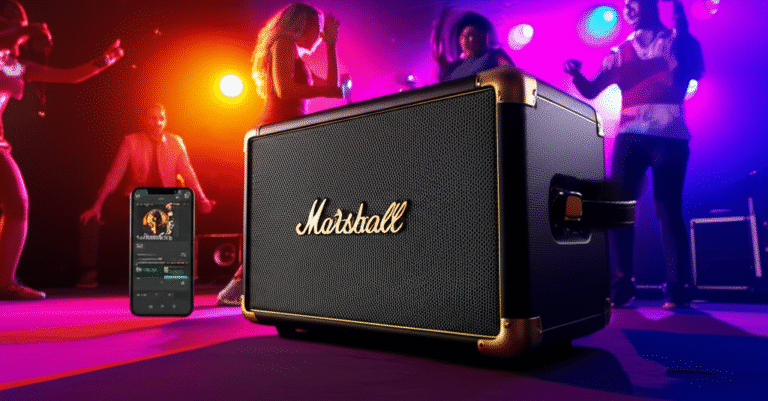
Marshall, the audio specialist known for its impressive Bluetooth speakers and home theater systems, has finally entered the party speaker scene with the Bromley 750. And boy, does it make an entrance!

💸 Expect to Pay a Premium Price 💸

With a hefty price tag of $1,299 / £899 / AU$1,799, the Bromley 750 is no lightweight in the price department. But with that price comes some serious specs and features.

🔊 Sound Quality: A Party in a Box! 🔊

The Bromley 750 boasts a whopping 500W of Class D amplification, delivering powerful, bass-heavy sound that’ll make any gathering a party. But it’s not just about the power – the sound is clear and defined, even at high volumes. Plus, the sound character control lets you adjust the audio from dynamic and nuanced to loud and powerful, making it versatile for any occasion.

🎬 Features Galore: Lights, Connectivity, and More! 🎬

This speaker is packed with features to keep the party going. There are multiple ports for wired listening, including XLR/6.35mm combo ports for karaoke or instruments. The integrated stage lights are a showstopper, with three different modes that react to the music. And with a massive 40-hour battery life, you can party all day and all night.

📱 App: Room for Improvement 📱

While the Marshall app lets you control volume and listen to broadcasts, it’s a bit disappointing compared to the Heston 120’s feature-rich app. You can’t remotely adjust EQ or sound characteristics, which is a bummer.

🤝 Should You Buy the Marshall Bromley 750? 🤝

If you’re a regular party host and love the Marshall aesthetic, the Bromley 750 is a fantastic investment. It’s pricey, but you get premium build quality, awesome audio, and buckets of power. Just make sure you have the space for it!

🌟 Also Consider… 🌟

JBL PartyBox 720: More powerful and cheaper, but less dustproof and shorter battery life.
LG xboom Stage 301: A smaller, cheaper option with great audio and lighting, but less power.

🔬 How We Tested the Marshall Bromley 750 🔬

We tested the Bromley 750 for a week, both indoors and outdoors, using a variety of music genres and streaming services. We tested all its features, including karaoke and instrument capabilities, and even took it to a parking lot for a mini-rave!

5 Mind-Blowing iPhone Apps Supercharged by Apple’s AI: Try Them Now!”

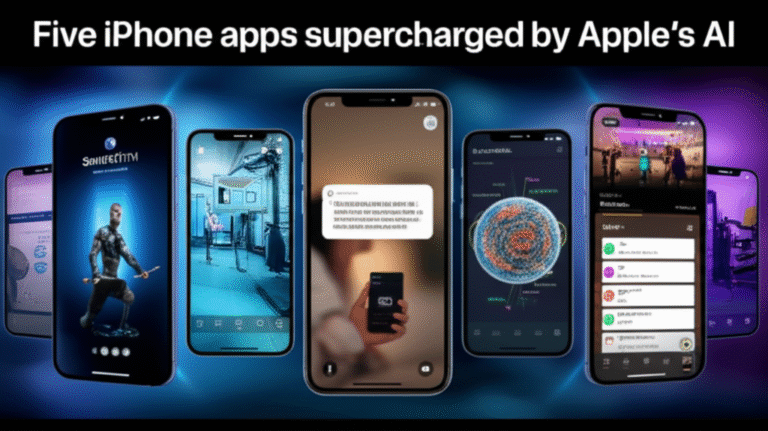
In the latest iOS 26, Apple has given app developers access to its powerful Foundation Models, and the results are nothing short of amazing! Some of your favorite apps have been given a serious AI boost, making them smarter, faster, and more intuitive than ever. Let’s dive into five incredible apps that are harnessing Apple’s AI to enhance your iPhone experience.

Why should you care?

Apple’s Foundation Models framework lets developers tap into the same AI powering features like Writing Tools, Image Playground, and Genmoji. But here’s the kicker: instead of relying on cloud-based APIs or generic chatbots, these apps can now call Apple’s on-device model directly. This means your data stays private, tasks run locally for speed, and AI features feel seamlessly integrated.

The Apps You Can’t Miss:

1. SmartGym
– What it does: Turns your iPhone into a personal trainer. Describe the workout you want, and SmartGym builds a routine tailored to you.
– How Apple Intelligence helps: Analyzes your training history, adapts routines over time, and offers personalized suggestions.

2. Stoic Journal
– What it does: A journaling app that understands your emotions. It provides context-aware prompts and helps you make sense of your thoughts.
– How Apple Intelligence helps: Detects mood, emotional tone, and recurring themes in your entries, keeping your reflections private and personal.

3. CellWalk
– What it does: Explores detailed 3D models of cells and molecules. Ask natural language questions, and CellWalk provides conversational explanations.
– How Apple Intelligence helps: Adapts explanations based on your knowledge level and ensures accurate responses using the app’s verified scientific database.

4. Stuff
– What it does: A minimalist to-do and list app that turns your words into organized tasks. Speak or scan images to create tasks effortlessly.
– How Apple Intelligence helps: Automatically extracts tasks, dates, tags, and priorities from your text or images, making list management a breeze.

5. VLLO video editor
– What it does: Edits your videos seamlessly. It analyzes your clips, suggests background music, and builds highlight reels based on your requests.
– How Apple Intelligence helps: Automatically identifies key scenes, detects faces, reads mood, and understands pacing to create polished videos quickly.

Why these apps matter:

Apple’s Foundation Models framework lets developers build AI into the core experience of their apps, making them faster, smarter, and more intuitive. As more apps adopt this technology, we’ll see entire categories transformed. So, if you have an iPhone with Apple Intelligence support, these five apps are a must-try! They’re the future of mobile apps, and it’s here now.

Oracle’s Big Bet: 50,000 AMD GPUs Power New Supercluster, Rivals Nvidia’s Dominance”

Oracle just dropped a bombshell at its AI World conference, announcing a massive expansion of its partnership with AMD. They’re cooking up the first hyperscaler supercluster that anyone can access, and it’s packing a whopping 50,000 AMD Instinct MI450 Series GPUs! This isn’t a one-off either; Oracle and AMD have been tight for a while now, with previous deployments using AMD’s MI300X and MI355X GPUs.

The new supercluster is going all-in on AMD, featuring a full suite of their components in Oracle’s Helios rack architecture. We’re talking MI450 GPUs, next-gen AMD EPYC ‘Venice’ CPUs, and Pensando ‘Vulcano’ networking. Oracle might be playing nice with Nvidia too, but it’s clear they’re not putting all their eggs in one basket.

Oracle’s message at AI World 2025 is loud and clear: they’re all about bringing AI to you, not the other way around. That means buddying up with rivals and keeping multiple chip vendor options on the table, all to give customers more choice.

The latest Helios racks are packed with dense, liquid-cooled goodness, supporting up to 72 GPUs per rack. Oracle promises low-latency, and they’re backing it up with up to three 800 Gbps ‘Vulcano’ AI-NICs per GPU, and each GPU offering up to 432GB of HBM4 and 20 TB/s of memory bandwidth. The result? Customers can train and infer models that are 50% larger than before.

But that’s not all! Oracle also announced the general availability of OCI Compute with AMD Instinct MI355X GPUs, with up to 131,072 of them available in the zettascale Supercluster. Oracle’s EVP, Mahesh Thiagarajan, said the continued partnership with AMD is all about giving customers “robust, scalable and high-performance infrastructure” with “the best price-performance, open, secure, and scalable cloud foundation.”

AMD shareholders must be thrilled – their stocks jumped by around 8.7% the day after the announcement.

If you’re into tech news, make sure to follow TechRadar on Google News and add us as a preferred source. And hey, if you’re into video content, check us out on TikTok too! You can also get regular updates from us on WhatsApp.

While you’re here, why not check out the best cloud hosting providers and the best AI tools and writers? And if you’re into live events, Oracle AI World 2025 is happening right now!

Follow by Email
YouTube
WhatsApp