

3.3 C
New York
Wednesday, March 4, 2026

Buy now

spot_img
Home Blog Page 40

Introducing Fresh Looks: Anime-Inspired Styles for NotebookLM Video Overviews

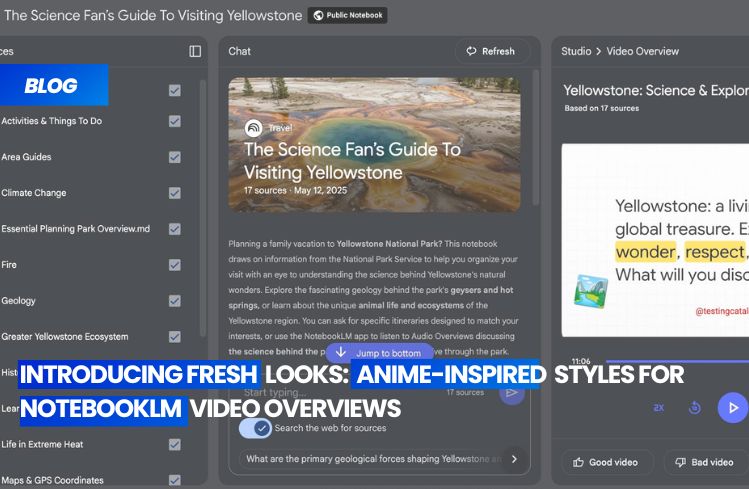
Google’s research assistant tool, NotebookLM, is set to undergo a significant transformation with an upcoming update to its video overviews feature. This move aligns with Google’s broader strategy to infuse its AI-driven productivity tools with creative, media-rich outputs. Currently, users are limited to a single video overview format, “Explainer,” which provides a structured summary connecting various information sources within a project. However, early builds hint at an impending change with the introduction of a format selector menu, suggesting a shift similar to that seen in audio overviews, where users now have the liberty to choose between styles to suit their preferences or use case.

The evolution of video overviews in NotebookLM isn’t confined to formats alone. Google is also introducing a suite of new visual styles, moving away from the current single, classic template. Leaked style options include “Whiteboard,” “Watercolour,” “Risographic,” “Heritage,” “Papercraft,” and “Anime.” These styles offer detailed and vibrant visuals, far surpassing the current standard. This push towards personalization and creativity across Google’s AI tools could make NotebookLM video summaries more appealing and accessible to a wider range of users, from educators and marketers to researchers seeking shareable media content.

These updates could also signal backend improvements, potentially tied to an upgrade of the Nano Banana model or the anticipated Veo 3.1 release. The goal? Richer, higher-quality output. While no official timeline has been provided, these features could be unveiled soon, possibly coinciding with Google’s upcoming wave of product launches. Moreover, the addition of an auto-select function, designed to intelligently choose the best visual style for a given summary, would further lower barriers for users and facilitate wider adoption within educational and collaborative environments.

In essence, these updates strengthen NotebookLM’s position in Google’s product lineup, transforming it into a more versatile knowledge management platform. It will be better equipped to serve both individual and team workflows, fostering a more dynamic and engaging user experience. As Google continues to push the boundaries of AI integration, NotebookLM’s multimedia evolution is a testament to the company’s commitment to making its tools more intuitive, personalized, and creatively expressive.

Comet AI Browser from Perplexity Now Available Globally at No Cost

Perplexity, the innovative AI company, has thrown open the doors to its groundbreaking browser, Comet, to users worldwide. After a successful limited release on July 9 and a buildup of anticipation on the waitlist, Comet is now freely available for download. This launch targets desktop users, with mobile apps currently in preview and slated for broader release soon.

In just 84 days, millions of users have signed up for the Comet waitlist, eager for a powerful, personal AI assistant to enhance their online browsing and research experience. Perplexity’s bold claim? “The internet is better on Comet.”

Comet is not just another browser; it’s a full-fledged browsing tool with an AI assistant built into every new tab. This assistant is designed to streamline various aspects of your online life, from research and meetings to coding, shopping, and task management. Perplexity’s unique Background Assistants allow multiple tasks to run simultaneously, ensuring your work continues even as you switch to other tasks. For Max subscribers, the Email Assistant is a game-changer, drafting replies, checking calendars, and scheduling meetings when cc’d on email threads. Early users have reported asking 6 to 18 times more questions on their first day with Comet, a testament to its intuitive and helpful AI.

How Comet is Revolutionizing the Web

Perplexity’s mission is to transform the cluttered, ad-driven web into a more user-centric space, focusing on questions and direct answers. The newly introduced Comet Plus subscription, priced at $5 per month and included with Pro and Max plans, offers direct access to premium journalism within the browsing flow. This feature not only enhances user experience but also introduces a novel pay-per-usage model for partnering publications.

Getting Started with Comet

Downloading Comet is easy. Simply visit the official website and follow the prompts. Once installed, you’ll find an AI assistant in every new tab, ready to assist with your browsing needs. Whether you’re a student, a professional, or simply someone who spends a lot of time online, Comet promises to make your internet experience more efficient and enjoyable.

In a world where AI is increasingly integrated into our daily lives, Perplexity’s Comet browser stands out as a pioneering tool that leverages AI to enhance our online browsing experience. With its user-centric design, powerful AI assistant, and innovative pay-per-usage model, Comet is more than just a browser; it’s a step towards a better, more intuitive internet.

So, are you ready to experience the future of browsing? Download Comet today and let its AI assistant transform the way you interact with the web.

Anthropic Appoints Former Stripe CTO to Lead AI Infrastructure

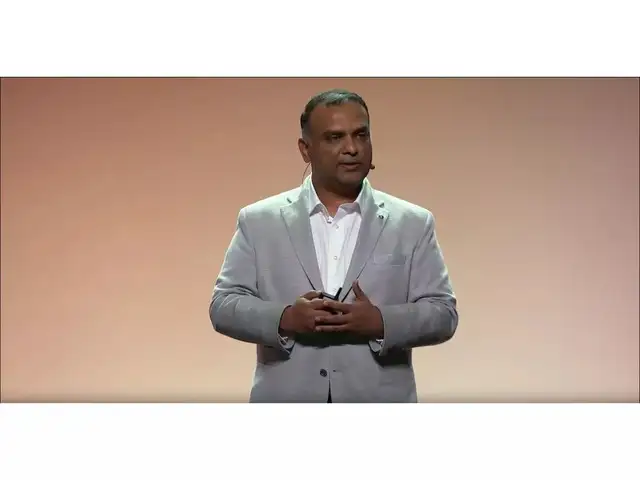
Anthropic, the AI company known for its conversational model Claude, has appointed a new chief technical officer (CTO), Rahul Patil. Patil, who previously held the CTO role at Stripe, succeeds co-founder Sam McCandlish, who will transition to the newly created position of chief architect, focusing on pre-training and large-scale model training. Both will report to Anthropic president Daniela Amodei.

Meet Rahul Patil, the new CTO of AI firm Anthropic - The Economic Times

This leadership shuffle is more than just a change in business cards. Anthropic is also restructuring its core tech team to align product engineering, infrastructure, and inference, fostering a cohesive environment for its builders, maintainers, and model whisperers.

As CTO, Patil takes on the challenge of maintaining Anthropic’s infrastructure amidst surging demand for Claude. Meanwhile, McCandlish will explore ways to make future Claudes smarter. The timing of these changes is significant, given the substantial investments in compute by OpenAI and Meta.

Anthropic’s budget may not match these tech giants, but the company is focused on optimizing GPU efficiency. Claude’s growing popularity has already led to rate limits for power users this summer, with new limits capping Sonnet usage between 240 and 480 hours a week and Opus 4 between 24 and 40 hours.

Patil, with two decades of experience at Stripe, Oracle, Amazon, and Microsoft, is joining Anthropic to ensure system stability. Amodei praised his proven track record, while Patil expressed enthusiasm about Anthropic’s mission.

Is Anthropic’s leadership reshuffle a strategic move to scale infrastructure, or a sign of struggle against OpenAI and Meta’s spending power? Should AI companies prioritize efficiency and smarter architecture, or is throwing billions at compute the only way to stay competitive? Share your thoughts in the comments or on our social media platforms.

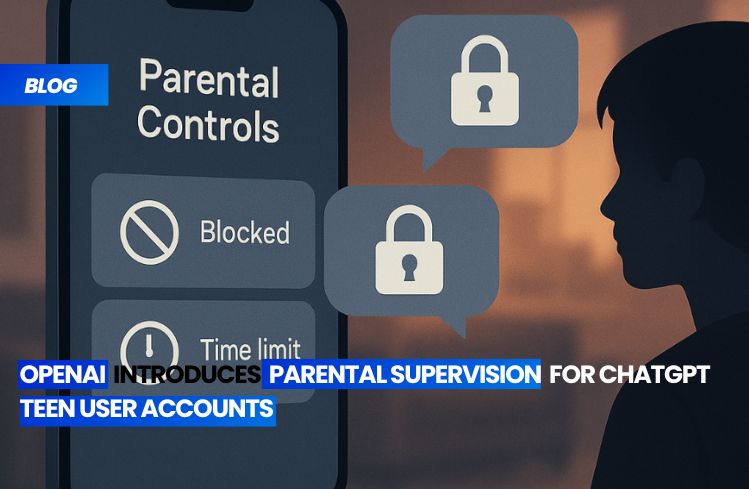
OpenAI Introduces Parental Supervision for ChatGPT Teen User Accounts

OpenAI, the innovative AI company, has unveiled a significant new feature for its popular conversational AI model, ChatGPT: parental controls. This move aims to provide families with enhanced tools to manage and monitor their teens’ interaction with the platform. The new settings, designed for families with teens aged 13 to 17, require guardian consent and are now rolling out across all ChatGPT platforms.

The parental controls offer a range of customizable options. Parents can toggle switches for features like voice mode, image generation, memory, and training use. They can also set usage limits and establish quiet hours, ensuring that ChatGPT aligns with their family’s digital routines. Linked teen accounts will automatically benefit from stronger default safety filters, and teens will be unable to override the guardian-set parameters.

OpenAI’s announcement, shared via their official Twitter account, emphasizes the importance of this update: “Introducing parental controls in ChatGPT. Now parents and teens can link accounts to automatically get stronger safeguards for teens. Parents also gain tools to adjust features & set limits that work for their family. Rolling out to all ChatGPT users today on web, mobile soon.”

The implementation of these controls is part of OpenAI’s broader commitment to age-appropriate interactions and data protection. The company has developed an age-aware profile system that applies teen safeguards when a user is identified as under 18 or when age is unclear. This system is designed to minimize exposure to mature content and risky prompts, subjecting crisis-related content to stricter checks.

How the Parental Controls Work

The process of setting up these controls is straightforward. A parent sends an invite, links their account with their teen’s, and selects the desired controls. They can limit or turn off features such as chat review, image tools, and voice functionality. The content filters are automatically tightened for the linked teen profile, and the changes apply account-wide.

The feature set includes account linking, configurable limits, stricter defaults for teens, and clearer data-use choices. These controls are accessible in the Settings menu and apply to both web and mobile clients once enabled in the family account.

OpenAI’s Commitment to Youth Safety

This update from OpenAI is not an isolated effort but a continuation of their commitment to youth safety. ChatGPT already permits use by individuals aged 13 to 17 with consent. The company has previously published youth safety policies, added opt-outs for training data, and developed stronger content classifiers. The introduction of parental controls extends these commitments into tangible, product-level controls for families.

The significance of this update lies in its shift from policy to enforcement. By providing guardians with verifiable control, OpenAI is offering a more robust solution than device-level blocks. This update aims to build trust, ensure compliance with teen data rules, and provide clearer accountability.

In the rapidly evolving digital landscape, it’s crucial for platforms to adapt and prioritize the safety and well-being of their youngest users. OpenAI’s introduction of parental controls for ChatGPT is a step in the right direction, demonstrating their commitment to responsible AI development and use. As the platform continues to grow and evolve, it’s likely that we’ll see further innovations in this area, ensuring that AI remains a safe and beneficial tool for users of all ages.

Hume AI Evaluates Octave 2’s Multilingual Text-to-Speech Capabilities

Hume AI is gearing up to introduce Octave 2 Multilingual, the latest addition to its text-to-speech portfolio following the debut of the original Octave model. This new iteration promises to expand the horizons of speech synthesis, supporting over 10 languages, a significant leap from its predecessor’s focus on emotionally expressive English voices. Octave 2 is designed to deliver expressive, natural voices with minimal latency, making it an ideal choice for real-time voice generation applications such as live translation, voicebots, and conversational interfaces.

Imagine a scenario where a robot engages in a dialogue with a Russian hacker. With Octave 2, such interactions could sound more authentic and natural, thanks to its ability to switch between languages and produce convincing human-like speech, even for languages with distinct phonetic characteristics like Russian.

The new model is poised to cater to a diverse range of users, from developers crafting multilingual apps and real-time translation tools to creators working on podcasts or audiobooks in multiple languages. One of its standout features is the ability to transition seamlessly between languages, delivering speech that is remarkably human-like. Early tests suggest that Octave 2 outperforms its predecessor in terms of naturalness, making it challenging to discern from actual human speech.

While Octave 2 is not yet publicly available, it has been spotted in early internal and hidden tests, hinting at an impending public release. This aligns with Hume AI’s broader product strategy, which focuses on developing emotion-rich and context-aware AI voices. If Octave 2’s speed and language versatility hold up at scale, it could quickly draw interest from both commercial and research sectors, given the growing demand for tools that handle real-time, multilingual audio.

The discovery of Octave 2’s new features came from testing and observing differences in generated outputs, as the company has not yet officially documented or announced them. As the launch approaches, developers and early adopters should stay tuned for further updates and public demonstrations to explore the full potential of this promising text-to-speech model.

In the rapidly evolving landscape of AI and machine learning, Hume AI’s Octave 2 Multilingual represents a significant step forward in text-to-speech technology. Its ability to generate natural, expressive speech in multiple languages with low latency opens up new possibilities for real-time voice applications. As we await its public release, the tech community eagerly anticipates the impact this model will have on the future of voice synthesis and multilingual communication.

DeepSeek V3.2-Exp: Harnessing DeepSeek Sparse Attention for Cost-Efficient Long-Context Processing Without Sacrificing Benchmark Performance

DeepSeek, the innovative AI company, has unveiled DeepSeek-V3.2-Exp, an intermediate update to its V3.1 model, introducing DeepSeek Sparse Attention (DSA) to enhance long-context efficiency. This update, coupled with a significant 50%+ reduction in API prices, aligns with DeepSeek’s commitment to improving the economics of long-context inference. Let’s delve into the efficiency, accuracy, and implications of this update.

Under the Hood of DeepSeek-V3.2-Exp

DeepSeek-V3.2-Exp retains the V3/V3.1 stack, comprising Mixture of Experts (MoE) and Multi-Head Latent Attention (MLA), and inserts a two-stage attention path: a lightweight “indexer” and sparse attention over a selected subset.

Lightning Indexer: The first stage uses a lightweight scoring function to compute index logits for each query token against preceding tokens. This stage operates in FP8 and with few heads, minimizing wall-time and FLOP cost relative to dense attention.

Fine-Grained Token Selection: The system selects only the top-k=2048 key-value entries for each query, performing standard attention only over that subset. This changes the computational complexity from O(L^2) to O(Lk), where k is significantly less than L, preserving the ability to attend to distant tokens when needed.

The indexer is trained to mimic the dense model’s head-summed attention distribution via KL-divergence, first under a short dense warm-up, then during sparse training with separate gradients. DSA is implemented under MLA in MQA mode for decoding, aligning with the kernel-level requirement for KV entry reuse across queries.

Under the Hood of DeepSeek-V3.2-Exp

Efficiency and Accuracy: A Closer Look

Costs vs. Position: DeepSeek provides per-million-token cost curves for prefill and decode on H800 clusters. Decode costs fall substantially with DSA, while prefill also benefits through a masked MHA simulation at short lengths. Unofficial reports suggest decode costs at 128k could be around six times cheaper, but independent replication is needed to confirm this.

Benchmark Parity: The released table shows MMLU-Pro at 85.0 (unchanged), with small movements on GPQA/HLE/HMMT tasks due to fewer reasoning tokens. There’s flat or positive movement on agentic/search tasks, and the authors note gaps close with intermediate checkpoints.

Operational Signals: Day-0 support in SGLang and vLLM suggests production-aimed changes, while references to TileLang, DeepGEMM, and FlashMLA indicate open-source kernel support.

Pricing: DeepSeek cut API prices by 50%+, consistent with model-card messaging and media coverage focusing on lower long-context inference economics.

Implications and Next Steps

DeepSeek V3.2-Exp demonstrates that trainable sparsity (DSA) can maintain benchmark parity while significantly improving long-context economics. With official 50%+ API price cuts, day-0 runtime support, and potential larger decode-time gains, teams should consider V3.2-Exp as a drop-in A/B for RAG and long-document pipelines where O(L^2) attention dominates costs. Independent validation of throughput and quality on specific stacks is recommended.

FAQs

1. What is DeepSeek V3.2-Exp? It’s an experimental, intermediate update to V3.1-Terminus that introduces DeepSeek Sparse Attention (DSA) for enhanced long-context efficiency.

2. Is it truly open source, and under what license? Yes, the repository and model weights are licensed under MIT, as per the official Hugging Face model card.

3. What is DeepSeek Sparse Attention (DSA) in practice? DSA adds a lightweight indexing stage to score/select relevant tokens, then runs attention only over that subset, yielding fine-grained sparse attention and reported long-context training/inference efficiency gains while maintaining output quality.

OpenAI’s Efforts on User Profiles and Direct Messaging for ChatGPT

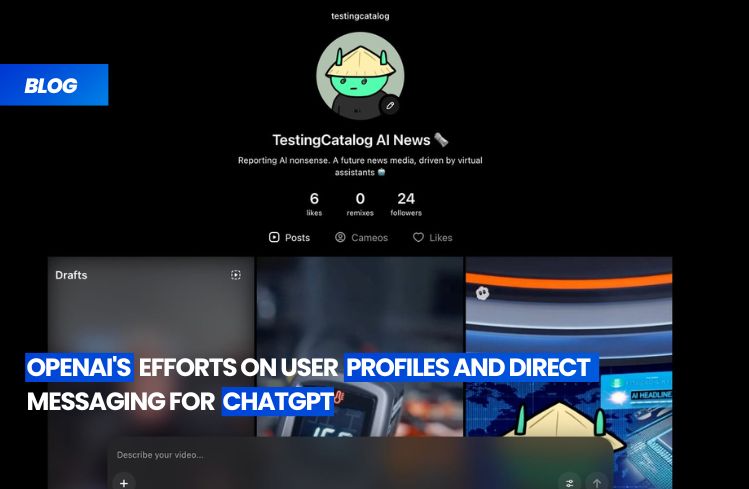
OpenAI’s recent updates have introduced significant changes, positioning the company as a key player in the burgeoning world of AI-powered content sharing and social interaction. The launch of Sora 2, a dedicated iOS app, has brought a social twist to AI-generated videos, allowing users to view, share, and engage with content through personalized feeds. With the ability to set up profiles, follow others, and build a presence within the app, Sora 2 is poised to attract early adopters, creators, and enthusiasts of generative video technology. This move signals OpenAI’s interest in fostering a community around AI video, moving beyond one-off generations and towards network effects.

In a related development, OpenAI is set to introduce profile customization options to its ChatGPT Android app, allowing users to add a username and a profile photo. This feature, currently in beta, is not yet functioning perfectly but hints at a broader transformation of ChatGPT from a productivity tool into a platform with social features. Code references in recent beta builds suggest that direct messaging could also be on the horizon, potentially enabling users to communicate and collaborate directly within the app. This echoes the collaborative capabilities already available to ChatGPT Teams and Workspace account users.

The question on everyone’s mind is whether these new social features in ChatGPT will remain distinct from Sora 2’s social system or eventually merge. Speculation also abounds about potential integrations with other identity projects, given Sam Altman’s involvement. If OpenAI proceeds with these plans, the addition of a social layer could significantly reshape user workflows and communication patterns, particularly for teams and creators. However, it faces stiff competition from established platforms like Meta and X.

As for the timeline, the presence of these options in beta builds and code suggests a gradual rollout, likely starting with limited tests before a broader release. The developer community is eagerly awaiting updates at the upcoming OpenAI Dev Day, where more details on the roadmap could be revealed. For now, OpenAI’s foray into social spaces indicates an ambition to become a multi-purpose platform, not just an AI assistant or productivity tool.

In other news, OpenAI has announced that it will soon allow ChatGPT users to add a username and a profile photo to their accounts. This feature, which is currently in beta on the Android app, is not yet functioning perfectly but is expected to roll out soon. This move comes on the heels of the launch of Sora 2, a dedicated iOS app that allows users to view and share AI-generated videos through a personalized feed. With the ability to set up profiles, follow others, and build a presence within the app, Sora 2 is positioned as an entry into the AI-powered content-sharing space.

The company’s strategy with Sora 2 signals an interest in creating a community around AI video, moving beyond simple one-off generations and towards network effects. This is a significant shift for OpenAI, which has previously focused on AI assistants and productivity tools. The addition of social features to ChatGPT, as evidenced by the recent beta builds, further underscores this shift.

One of the key questions surrounding these developments is whether the social features in ChatGPT will remain distinct from those in Sora 2 or eventually merge. This is particularly relevant given the potential for integration with other identity projects, such as World, considering Sam Altman’s involvement. If OpenAI moves ahead with these plans, the social layer could significantly reshape user workflows and communication patterns, especially for teams and creators. However, it faces stiff competition from established platforms like Meta and X.

Meta and X.

The timeline for these changes is not yet clear, but the presence of these options in beta builds and code suggests a gradual rollout, likely starting with limited tests before a broader release. The developer community is watching closely for updates at the upcoming OpenAI Dev Day, where more details on the roadmap could emerge. For now, OpenAI’s move into social spaces seems to signal an ambition to become a multi-purpose platform, not just an AI assistant or productivity tool.

Introducing ServiceNow AI’s Apriel-1.5-15B-Thinker: A Multimodal Reasoning Model with Open Weights, Achieving State-of-the-Art Performance on a Single-GPU Budget

ServiceNow AI Research Lab has introduced Apriel-1.5-15B-Thinker, a groundbreaking 15-billion-parameter open-weights multimodal reasoning model, setting new benchmarks in cost-efficiency and performance. This model, trained using a data-centric mid-training recipe, achieves an Artificial Analysis Intelligence Index (AAI) score of 52, matching the performance of DeepSeek-R1-0528 while being significantly smaller. The model’s checkpoint is available under an MIT license on Hugging Face.

Frontier-Level Performance at a Fraction of the Cost

Apriel-1.5-15B-Thinker’s AAI score of 52 is a testament to its exceptional performance across a range of tasks. The AAI metric aggregates results from 10 third-party evaluations, including MMLU-Pro, GPQA Diamond, Humanity’s Last Exam, and others, providing a comprehensive measure of the model’s capabilities. This score is particularly impressive given the model’s size and the training method used.

The model’s performance is not limited to theoretical benchmarks. It demonstrates practical utility in various domains, such as math, coding, science, and tool use. For instance, it achieves an 87.5-88% pass rate on the American Invitational Mathematics Examination 2025 (AIME 2025), and scores competitively on other tasks like GPQA Diamond, IFBench, and LiveCodeBench.

Single-GPU Deployability: A Game Changer for Enterprises

One of the most significant advantages of Apriel-1.5-15B-Thinker is its single-GPU deployability. Unlike many large language models that require substantial computational resources, this model can fit on a single GPU. This feature targets on-premises and air-gapped deployments, making it an attractive option for enterprises with fixed memory and latency budgets.

Open Weights and Reproducible Pipeline: Transparency and Trust

ServiceNow AI has made the model’s weights, training recipe, and evaluation protocol publicly available. This transparency allows for independent verification and encourages further research and development. The open-weights approach also fosters collaboration and innovation in the AI community.

Training Mechanism: Base and Upscaling, Continual Pretraining, and Supervised Fine-Tuning

Apriel-1.5-15B-Thinker’s training process begins with Mistral’s Pixtral-12B-Base-2409 multimodal decoder-vision stack. The research team then applies depth upscaling, increasing decoder layers from 40 to 48, and realigns the vision encoder with the enlarged decoder. This approach avoids the need for pretraining from scratch while preserving the model’s single-GPU deployability.

The model undergoes two stages of continual pretraining (CPT). The first stage involves mixed text and image data to build foundational reasoning and document/diagram understanding. The second stage focuses on targeted synthetic visual tasks to sharpen spatial and compositional reasoning. Sequence lengths extend to 32k and 16k tokens, respectively, with selective loss placement on response tokens for instruction-formatted samples.

Following CPT, the model undergoes supervised fine-tuning (SFT) using high-quality, reasoning-trace instruction data. This process involves two additional SFT runs, with the final checkpoint being a weight merge of these runs. Notably, the training process does not involve reinforcement learning (RL) or reinforcement learning from AI feedback (RLAIF).

Data Note

Approximately 25% of the data used in the depth-upscaling text mix comes from NVIDIA’s Nemotron collection.

**Apriel-1.5-15B-Thinker: A Practical Baseline for Enterprises**

Apriel-1.5-15B-Thinker’s performance and cost-efficiency make it a practical baseline for enterprises evaluating open-weights reasoners. Its open weights, reproducible recipe, and single-GPU latency make it an attractive option for those considering larger closed systems. The model’s availability on Hugging Face, along with its detailed model card and evaluation protocol, makes it easy for enterprises to assess its suitability for their specific needs.

In conclusion, ServiceNow AI’s Apriel-1.5-15B-Thinker is not just a new multimodal reasoning model; it’s a testament to the potential of careful mid-training techniques in delivering high performance at a fraction of the cost. Its open-weights approach, single-GPU deployability, and impressive performance across a range of tasks make it a compelling choice for enterprises and researchers alike. As AI continues to evolve, models like Apriel-1.5-15B-Thinker will play a crucial role in shaping the future of multimodal reasoning.

OpenAI Employees Voice Concerns Over Company’s Social Media Expansion

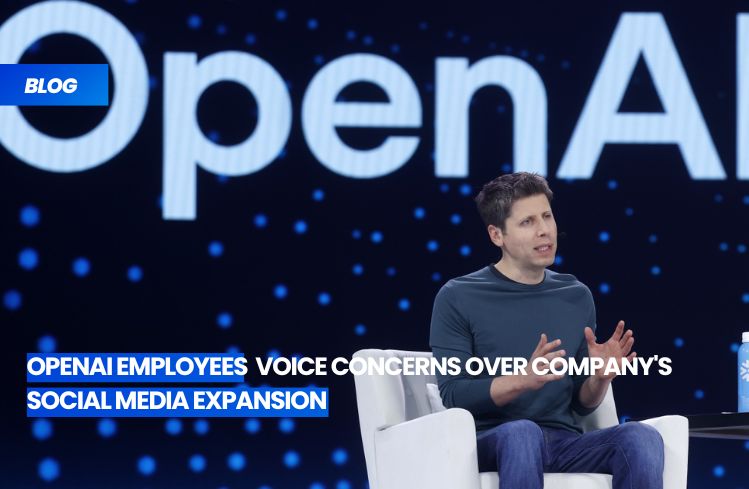
OpenAI, the AI research powerhouse, has ventured into the realm of social media with its latest offering, Sora. This new app, akin to TikTok but powered by AI, has sparked a whirlwind of reactions, ranging from enthusiasm to apprehension, both within and outside the company.

Sora, launched on September 30, is OpenAI’s most significant foray into consumer entertainment. It’s a platform brimming with AI-generated video clips, including a generous sprinkling of Sam Altman deepfakes. The app has everyone from current employees to former researchers engaged in heated discussions on Twitter about its implications.

John Hallman, a researcher at OpenAI, candidly expressed his unease about the launch, admitting, “AI-based feeds are scary.” However, he acknowledged the team’s efforts to design Sora responsibly, stating, “I think the team did the absolute best job they possible could in designing a positive experience.”

Harvard professor and OpenAI researcher Boaz Barak echoed this sentiment, noting a mix of excitement and dread. He warned that it’s too early to celebrate, given the pitfalls of platforms like Facebook and TikTok.

Meanwhile, some former OpenAI researchers are using this moment to promote their alternatives. Rohan Pandey, a former researcher, plugged his new startup, Periodic Labs. The company focuses on using AI for scientific discovery, a stark contrast to what Pandey sees as “the infinite AI TikTok slop machine.”

This drama underscores a recurring question about OpenAI’s identity: is it a nonprofit research lab dedicated to mitigating AI risks, or the world’s fastest-growing consumer tech company?

CEO Sam Altman weighed in, insisting that Sora is a fun side project. He argued that it helps showcase new tech and raise funds for OpenAI’s more serious AI research, particularly in the realm of Artificial General Intelligence (AGI).

However, critics argue that this is a familiar path trodden by social media giants. They started as seemingly innocuous platforms, only to later reshape society in profound ways. OpenAI promises that Sora won’t optimize for addictiveness and plans to nudge users when they’ve been scrolling too long. Yet, the app already incorporates dopamine-bait mechanics like emoji bursts for likes.

One day old and still in its infancy, Sora’s launch signals OpenAI’s entry into a contentious space. It remains to be seen whether Sora is a harmless way to fund serious AI research or the beginning of another addictive social media platform we’ll come to regret.

The debate raises broader questions: Should AI companies be building consumer entertainment apps at all? Or does this distract from their stated mission of developing safe AGI? The conversation is far from over, and it’s one we should all be a part of. Share your thoughts in the comments, or continue the discussion on our Twitter or Facebook page.

Introducing Cursor’s Innovative Features: Hooks, Team Rules, and Secure Sandboxed Terminals

Cursor, the innovative AI tool provider, has rolled out a suite of new features tailored to empower development teams and enhance AI workflows. These updates, designed to offer greater control, security, and customization, are now available to users with varying access levels.

Advanced Control with Hooks

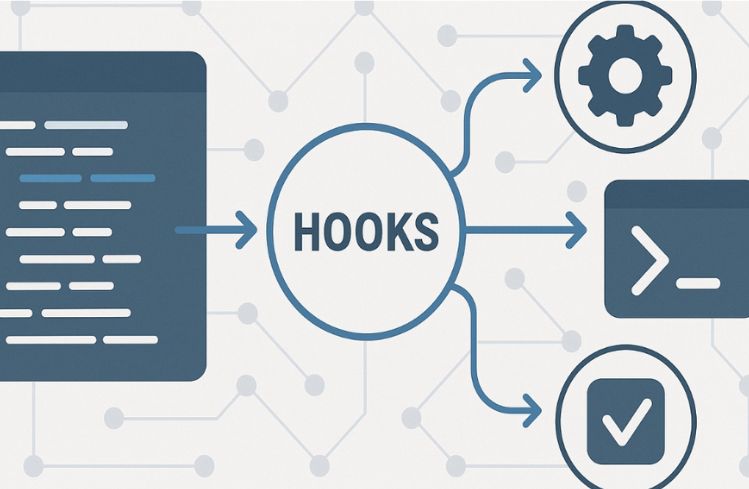
The standout addition is the “Hooks” feature, currently in beta, which allows users to script and customize the behavior of AI Agents during runtime. This granular control enables advanced automation and ensures compliance by offering functionalities such as usage auditing, command blocking, and secret redaction. Early adopters have praised the flexibility and customization that Hooks bring to their workflows.

Centralized Team Rules for Uniformity

Another significant update is the introduction of “Team rules,” enabling organizations to define global behavioral policies from a central dashboard. This feature extends to the Bugbot integration, addressing longstanding requests for uniformity across repositories in large teams. Now, teams can maintain consistent policies and practices, streamlining workflows and enhancing collaboration.

Enhanced Collaboration and Security

The latest Cursor update, version 1.7, brings several improvements to enhance collaboration and security. Prompt suggestions now appear as you type, with a simple ‘Tab’ press to accept. Shareable deeplinks for prompts have been introduced to streamline collaboration and onboarding, particularly for technical documentation and internal knowledge sharing.

In a significant security enhancement, Cursor’s “sandboxed terminals” now execute commands in isolated environments. This limits internet access and contains potential risks, making it a crucial feature for teams operating in allowlist mode. Developers retain fallback options to ensure operations are not disrupted by sandboxing.

Seamless Integration with Team Workflows

To align with real-world team workflows, Cursor has added the ability to monitor Agent status directly from the menubar. Additionally, direct image file support for Agents has been implemented, making it easier to track processes and utilize visual data.

Availability and Access

These updates reflect Cursor’s commitment to giving engineering teams more control, security, and customization. While some features are available to all users, others may be limited to teams or specific platform users, with some currently in public beta.

In a tweet announcing the updates, Cursor (@cursor_ai) wrote, “Cursor 1.7 is now available! As you type a prompt, suggestions now appear. Press Tab to accept. Also new: custom hooks, deeplinks, team-wide rules, menubar support, and more. #AI #DevTools #Collaboration”

By continually innovating and responding to user needs, Cursor continues to set the standard for secure collaboration and automation within coding environments. These updates are a testament to the company’s dedication to empowering development teams with cutting-edge AI tools.

Follow by Email
YouTube
WhatsApp