

2.9 C
New York
Wednesday, March 4, 2026

Buy now

spot_img
Home Blog Page 42

Crafting a Sophisticated Agentic Retrieval-Augmented Generation System: Dynamic Strategies and Intelligent Retrieval

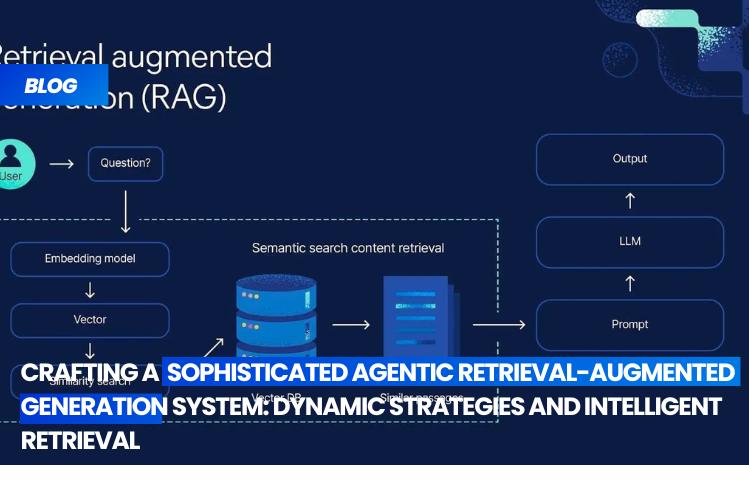
In this guide, we delve into the construction of an Agentic Retrieval-Augmented Generation (RAG) system, where the agent goes beyond mere document retrieval, actively deciding when to retrieve, selecting the best retrieval strategy, and crafting responses with contextual awareness. By integrating embeddings, FAISS indexing, and a mock LLM, we demonstrate how agentic decision-making can elevate the standard RAG pipeline into a more adaptive and intelligent system.

Setting the Foundation

We commence by defining a mock LLM to simulate decision-making processes, creating a retrieval strategy enum for varied approaches, and designing a `Document` dataclass to efficiently manage our knowledge base. This foundational setup ensures our system can handle and structure information effectively.

“`python
class MockLLM:
# …

class RetrievalStrategy(Enum):
SEMANTIC = “semantic”
MULTI_QUERY = “multi_query”
TEMPORAL = “temporal”
HYBRID = “hybrid”

@dataclass
class Document:
id: str
content: str
metadata: Dict[str, Any]
embedding: Optional[np.ndarray] = None
“`

Building the Core

Next, we initialize the Agentic RAG system, setting up the embedding model and FAISS index. Documents are added by encoding their contents into vectors, enabling fast and accurate semantic retrieval from our knowledge base. This core component is the heart of our adaptive information retrieval system.

“`python
class AgenticRAGSystem:
def __init__(self, model_name: str = “all-MiniLM-L6-v2”):
# …

def add_documents(self, documents: List[Dict[str, Any]]) -> None:
# …
“`

Enhancing the Agent’s Capabilities

To make our agent more capable, we introduce two crucial methods: `decide_retrieval` and `choose_strategy`. The first determines if a query truly requires retrieval, while the second selects the most suitable strategy: semantic, multi-query, temporal, or hybrid. This allows our agent to target the correct context with clear, printed reasoning for each step.

“`python
def decide_retrieval(self, query: str) -> bool:
# …

def choose_strategy(self, query: str) -> RetrievalStrategy:
# …
“`

Implementing Retrieval and Synthesis
Python Programming Language - 10B@sic

We then implement the actual retrieval and synthesis processes. Semantic search is performed, branching into multi-query or temporal re-ranking when needed. Retrieved documents are deduplicated, and a focused answer is synthesized from the retrieved context. This ensures efficient, transparent, and tightly aligned retrieval.

“`python
def retrieve_documents(self, query: str, strategy: RetrievalStrategy, k: int = 3) -> List[Document]:
# …

def synthesize_response(self, query: str, retrieved_docs: List[Document]) -> str:
# …
“`

The Complete Pipeline

Finally, we integrate all components into a single query pipeline. When a query is run, the system first decides if retrieval is necessary, then selects the appropriate strategy, fetches documents accordingly, and synthesizes a response while displaying the retrieved context for transparency. This makes the system feel more agentic and explainable.

“`python
def query(self, query: str) -> str:
# …
“`

Demo and Conclusion

In a runnable demo, we create a small knowledge base of AI-related documents, initialize the Agentic RAG system, and run sample queries that highlight various behaviors, including retrieval, direct answering, and comparison. This final block ties the whole tutorial together and showcases the agent’s reasoning in action.

In conclusion, we’ve seen how agent-driven retrieval decisions, dynamic strategy selection, and transparent reasoning come together to form an advanced Agentic RAG workflow. This foundation allows us to extend the system with real LLMs, larger knowledge bases, and more sophisticated strategies in future iterations.

Claude’s Customizable Skills: A Work in Progress by Anthropic

In a quiet yet significant move, Anthropic seems to be gearing up for a substantial update to its AI assistant, Claude. The company has been spotted integrating a new feature called ‘Skills’, currently accessible as a hidden toggle named “Skills Preview” within the settings. This addition is set to empower users, particularly power users and developers, with more control over Claude’s outputs, moving beyond the current style selectors and into the realm of custom prompt functionality.

Anthropic raises $450M to build next-gen AI assistants | TechCrunch

The ‘Skills’ feature, still under wraps, allows users to upload repeatable and customizable instructions, dubbed ‘skills’, using either a .skill file or a zipped folder containing a SKILL.md file. This suggests Anthropic is standardizing a file-based system for user-defined capabilities, mirroring concepts seen in other AI tools like Dia Browser, which also explored user-activated custom functions under the ‘Skills’ label.

The primary audience for this feature is expected to be those seeking more granular workflow automations. Users could potentially script skills for instant execution of tasks ranging from data transformations and content generation to domain-specific tasks triggered by keywords. For instance, users regularly employing Claude for tasks like SVG Robot benchmarking or data extraction could script their own skill, eliminating the need for repeated prompt engineering.
Anthropic seeks $2bn in new funding, valuation could hit $60bn: report |  Capacity Media

As of now, Anthropic has not clarified the full range of possible tasks or provided public samples. The Skills option’s placement within Claude’s settings hints at its potential mainstream availability across all user tiers, pending successful initial testing. This move aligns with Anthropic’s broader strategy to make Claude more flexible and accessible to both technical and non-technical users, narrowing the gap with competitors like OpenAI, which already offer plug-in and custom function support.

The discovery of the Skills Preview option appears to have originated from early user interface leaks and hidden settings exploration, with Anthropic maintaining silence on official channels thus far. However, the company’s recent push into real-time UI generation and modularity in Claude’s web interface suggests that skills might one day extend beyond text-based instructions into interactive or artifact-generating add-ons.

In conclusion, Anthropic’s stealthy introduction of the ‘Skills’ feature signals a significant shift in Claude’s capabilities, promising users more control and customization options. As the feature continues to develop, it will be interesting to see how Anthropic balances the needs of its diverse user base while maintaining Claude’s accessibility and ease of use. With competitors like OpenAI already offering similar functionality, Anthropic’s move is a strategic one, positioning Claude to better compete in the rapidly evolving AI landscape.

Microsoft Unveils Copilot Connectors, Coco Mode, and Email Assistant

Microsoft’s Copilot, the AI assistant that’s been making waves, is gearing up for its next big stride. The company is set to introduce broader third-party integrations, bringing Copilot closer to its competitors in terms of multi-source aggregation, but with a distinct Microsoft twist. The previously hidden Google Drive connector is now activatable, with connector selectors appearing in the prompt bar, hinting at the imminent arrival of these new features.

🎯 Microsoft Copilot Studio – Copilot Connectors: What it is, how it really  works, and its future

The upcoming connectors are designed to pull in and analyze content from a wide range of services, transcending the boundaries of work and personal accounts. Microsoft is working on connectors for Outlook, Gmail, Google Calendar, and Google Contacts, among others. This means Copilot will soon be able to delve into your inbox, calendar, and contact lists, providing a holistic view of your digital life.

For Outlook users, the new connector isn’t just a file picker; it’s a full-fledged inbox and calendar assistant. Copilot will be able to search, read, and analyze messages and invites directly from Outlook, making your email management more efficient. Moreover, internal flags suggest an “email assistant” is in the works, which could translate to a Copilot Assistant integrated directly into the mail application.

Google services users will also benefit from these updates. Connectors for Google Drive, Calendar, and Contacts are planned, giving Copilot ongoing access to these data sources once connected. Users will have the power to enable or revoke access at any time, ensuring their data remains secure and under their control.

🎯 Microsoft Copilot Studio – Copilot Connectors: What it is, how it really  works, and its future

Each connector will have its own dedicated toggle, mirroring the connector management style familiar to users of other productivity tools. When a source is connected, Copilot gains full access; otherwise, users will be prompted to connect as needed.

On the conversational front, Copilot is also introducing new modes, including one called “Coco.” Described as “warm and intuitive,” Coco mode promises a more personal chat style. While it’s unclear whether Coco is a distinct agent, a persona, or simply a special prompt style, selecting it currently presents a standard chat UI. As more modes are rolled out, the Copilot UI is expected to become denser, with up to eight selectable modes soon available.

These features, once live, will cater to a wide range of users. Business users managing multiple inboxes, heavy Outlook users, and those who wish to unify their work and personal cloud data in Copilot will find these updates particularly appealing. Microsoft’s strategy is clear: transform Copilot from a standalone AI tool into a true productivity hub that seamlessly integrates both Microsoft and Google ecosystems.

The latest integrations are nearing completion, suggesting a public release in the coming months. For those tracking Copilot’s evolution, this signals a new phase in Microsoft’s AI platform, one that emphasizes convenience and deeper workflow integration. As Copilot continues to grow, it’s poised to become an indispensable tool for users across the globe.

Introducing Sora 2: OpenAI’s New AI Video App, Inspired by TikTok

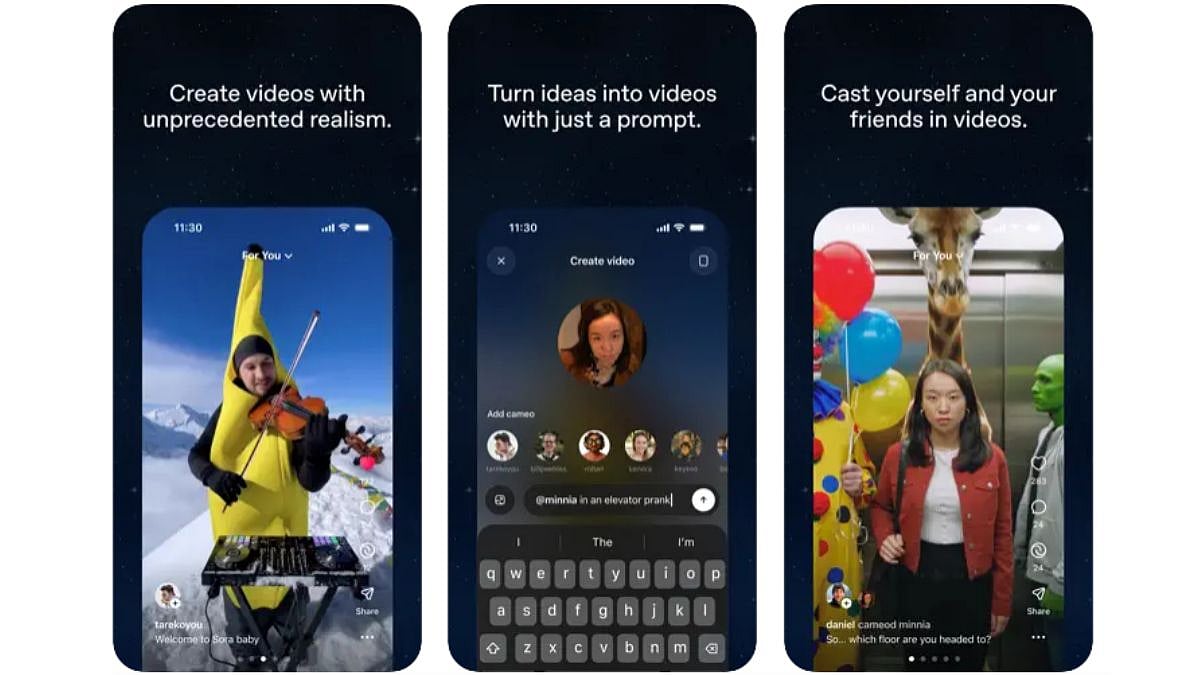
In a significant stride into the social networking sphere, OpenAI has introduced Sora 2, an advanced AI model that generates both video and audio content, accompanied by a dedicated social app reminiscent of TikTok, but with a robotic twist. This invite-only application, also named Sora, allows users to create short clips, insert themselves into AI-generated scenes, and scroll through an algorithmically curated feed of user-generated content, marking OpenAI’s official foray into the world of social networks.
Sora 2: OpenAI Launches New Video Generator App To Take On TikTok And  YouTube

The standout feature of Sora 2 is not its social aspect, but the substantial upgrade in the AI model itself. A sequel to last year’s Sora, the new model respects physical laws, unlike its predecessor, which often produced dreamlike clips with defying physics. In Sora 2, missed shots result in realistic bounces off the backboard, and beach volleyball rallies, skateboard tricks, and cannonball splashes appear more grounded in reality, less like an acid trip.

The app’s headline feature is “cameos.” Users can upload a short verification video of themselves to generate a realistic digital likeness. This likeness can then be inserted into various scenes, from surfing and breakdancing to winning a volleyball game. Users can grant friends access to use their likeness, enabling groups of AI-generated versions of users and their friends to star in clips together. While this feature opens doors to creative expression, it also raises concerns about potential misuse.

OpenAI is initially launching the iOS app for free in the US and Canada, with plans for swift global expansion. Monetization is currently limited to charging for extra video generations during peak demand. Meanwhile, ChatGPT Pro subscribers will gain early access to the Sora 2 Pro model without needing an invite.

Like TikTok or Instagram Reels, the Sora feed is algorithmically tailored, but with a twist. OpenAI considers users’ Sora activity, location, post history, and even ChatGPT conversations (though the latter can be toggled off) to curate the feed. Parents also gain control over their children’s usage through ChatGPT, including limits on scrolling and who can direct message them.

However, the risks are evident. Giving friends permission to use one’s likeness requires trust that they won’t abuse it. While OpenAI promises users can revoke access at any time, the specter of deepfake-style harms and identity theft looms large.

The introduction of Sora 2 raises critical questions. Does this AI-generated content platform with user likenesses represent a creative innovation, or are we opening Pandora’s box for deepfake abuse and identity theft? Should social platforms built around AI-generated content with user likenesses require stricter safeguards than traditional social media, or are OpenAI’s friend permission controls and revocation features sufficient protection?

OpenAI Launches Sora 2 AI Text-To-Video App: 5 Reasons Why It's A Game  Changer In Video Creation

We invite you to share your thoughts in the comments below or reach out to us via our Twitter or Facebook.

Former OpenAI and DeepMind Experts Secure $300M to Develop AI Scientists

A new startup, Periodic Labs, has emerged from stealth mode, making a grand entrance with a colossal $300 million seed round, an amount typically reserved for companies that have already made significant waves in the tech industry. The startup’s backers read like a who’s who of Silicon Valley, including heavy hitters like Andreessen Horowitz, DST, Nvidia, Accel, Elad Gil, Jeff Dean, Eric Schmidt, and even Jeff Bezos himself.

So, what’s all the fuss about? Periodic Labs isn’t just another AI chatbot; it’s aiming to build AI scientists capable of running experiments, testing hypotheses, and iterating like human researchers. Imagine a robot chemist in a lab coat, but faster and less prone to accidental acid spills.

Periodic Labs

At the helm of this ambitious project are Ekin Dogus Cubuk and Liam Fedus. Cubuk, previously a materials and chemistry team lead at Google Brain and DeepMind, played a pivotal role in developing GNoME, an AI that discovered over 2 million new crystals in 2023, materials researchers believe could power futuristic technologies. Meanwhile, Fedus, a former OpenAI VP of Research, was instrumental in creating ChatGPT and led the team that trained the world’s first trillion-parameter neural network.

In essence, if you were to assemble an AI dream team to revolutionize science, these two would be your top picks.

Periodic Labs’ first target is superconductors, the holy grail of materials science. Today’s superconductors work, but they often require freezing temperatures or massive amounts of energy. Crack this nut, and you’ve got the building blocks for faster computers, more efficient power grids, and perhaps even levitating trains that truly feel like the future.

But Periodic isn’t stopping there. The startup plans to build autonomous labs where robots mix, heat, and tweak substances endlessly, generating not just new materials but a steady stream of fresh physical-world data. This is crucial because, as the company notes, today’s AI models have essentially “eaten the internet.” If AI needs new fuel to evolve, Periodic wants to be the one cooking it up.

The question remains: Can Periodic Labs’ AI scientists truly accelerate breakthrough discoveries in materials science, or is this $300 million bet on autonomous research labs overhyped given AI’s current limitations in physical experimentation? Will AI-driven materials discovery represent the future of scientific research, or will human intuition and creativity remain indispensable for making truly revolutionary scientific breakthroughs?

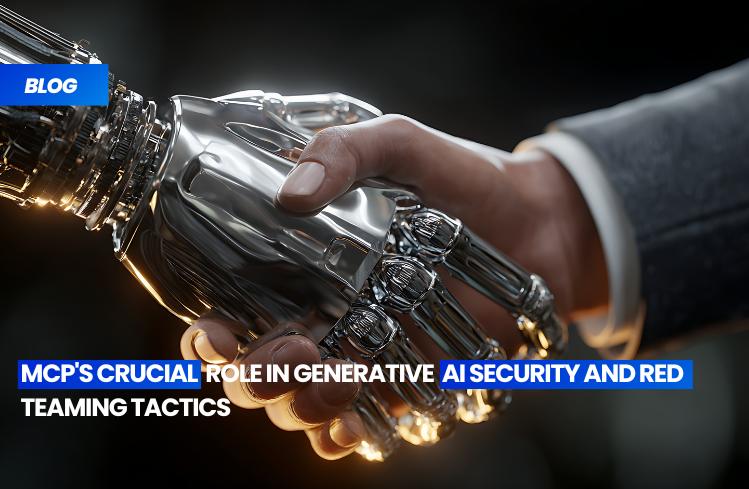
MCP’s Crucial Role in Generative AI Security and Red Teaming Tactics

Table of Contents

1. Overview
2. What MCP Standardizes?
3. Normative Authorization Controls
4. Where MCP Supports Security Engineering in Practice?
5. Case Study: The First Malicious MCP Server
6. Using MCP to Structure Red-Team Exercises
7. Implementation-Focused Security Hardening Checklist
8. Governance Alignment
9. Current Adoption You Can Test Against
10. Summary
11. Resources Used in the Article

1. Overview

Model Context Protocol (MCP) is an open, JSON-RPC-based standard that formalizes how AI clients (assistants, IDEs, web apps) connect to servers, exposing three primitives—tools, resources, and prompts—over defined transports. MCP’s value lies in its explicit and auditable agent/tool interactions, with normative requirements around authorization that teams can verify in code and tests. This enables tight blast-radius control for tool use, repeatable red-team scenarios at clear trust boundaries, and measurable policy enforcement, provided organizations treat MCP servers as privileged connectors subject to supply-chain scrutiny.

2. What MCP Standardizes?

An MCP server publishes three key elements:
(1) Tools(schema-typed actions callable by the model), (2) resources (readable data objects the client can fetch and inject as context), and (3) prompts (reusable, parameterized message templates, typically user-initiated). Distinguishing these surfaces clarifies who’s “in control” at each edge: model-driven for tools, application-driven for resources, and user-driven for prompts. These roles matter in threat modeling, with prompt injection often targeting model-controlled paths and unsafe output handling occurring at application-controlled joins.

MCP defines two standard transports—stdio (Standard Input/Output) and Streamable HTTP—and allows for pluggable alternatives. Local stdio reduces network exposure, while Streamable HTTP fits multi-client or web deployments and supports resumable streams. Treat the transport choice as a security control: constrain network egress for local servers and apply standard web authN/Z and logging for remote ones.

MCP formalizes the client/server lifecycle and discovery, enabling security teams to instrument call flows, capture structured logs, and assert pre/postconditions without bespoke adapters per integration.

3. Normative Authorization Controls

MCP’s authorization approach is unusually prescriptive and should be enforced as follows:

No token passthrough: Servers must not pass through the token they receive from the MCP client. Servers are OAuth 2.1 resource servers, and clients obtain tokens from an authorization server using RFC 8707 resource indicators, ensuring tokens are audience-bound to the intended server. This prevents confused-deputy paths and preserves upstream audit/limit controls.
Audience binding and validation: Servers must validate that the access token’s audience matches themselves before serving a request. This stops a client-minted token for “Service A” from being replayed to “Service B.” Red teams should explicitly probe for this failure mode.

4. Where MCP Supports Security Engineering in Practice?

MCP supports security engineering through clear trust boundaries, containment and least privilege, deterministic attack surfaces for red teaming, and more. It enables tight blast-radius control, repeatable red-team scenarios, and measurable policy enforcement.

5. Case Study: The First

In late September 2025, researchers disclosed a trojanized postmark-mcp npm package that impersonated a Postmark email MCP server. Beginning with v1.0.16, the malicious build silently BCC-exfiltrated every email sent through it to an attacker-controlled address/domain. This incident underscores that MCP servers often run with high trust and should be vetted and version-pinned like any privileged connector.

6. Using MCP to Structure Red-Team Exercises

MCP can be used to structure red-team exercises, including prompt-injection and unsafe-output drills at the tool boundary, confused-deputy probes for token misuse, session/stream resilience tests, supply-chain kill-chain drills, and baselining with trusted public servers.

7. Implementation-Focused Security Hardening Checklist

Client side: Display exact commands, gate startup behind user consent, enumerate tools/resources, log every tool call and resource fetch, maintain an allowlist of servers with pinned versions and checksums, and deny unknown servers by default.
Server side: Implement OAuth 2.1 resource-server behavior, validate tokens and audiences, never forward client-issued tokens upstream, minimize scopes, prefer short-lived credentials, and use appropriate transports with security measures.
Detection & response: Alert on anomalous server egress and sudden capability changes between versions, and prepare break-glass automation to quickly revoke client approvals and rotate upstream secrets when a server is flagged.

8. Governance Alignment

MCP’s separation of concerns aligns directly with NIST’s AI RMF guidance for access control, logging, and red-team evaluation of generative systems, and with OWASP’s LLM Top-10 emphasis on mitigating prompt injection, unsafe output handling, and supply-chain vulnerabilities.

9. Current Adoption You Can Test Against

Anthropic/Claude, Google’s Data Commons MCP, and Delinea MCP are examples of MCP implementations you can test against. They provide ready-made client surfaces for permissioning and logging, stable “truth sources” in red-team tasks, and practical examples of least-privilege tool exposure.

10. Summary

MCP is not a silver-bullet “security product” but a protocol offering security and red-team practitioners stable, enforceable levers to constrain what agents can do, observe what they actually did, and replay adversarial scenarios reliably. Treat MCP servers as privileged connectors, vet, pin, and monitor them, as adversaries already do. With these practices in place, MCP becomes a practical foundation for secure agentic systems and a reliable substrate for red-team evaluation.

11. Resources Used in the Article

– MCP specification & concepts
– MCP ecosystem (official)
– Security frameworks
– Incident: malicious postmark-mcp server
– Example MCP servers referenced

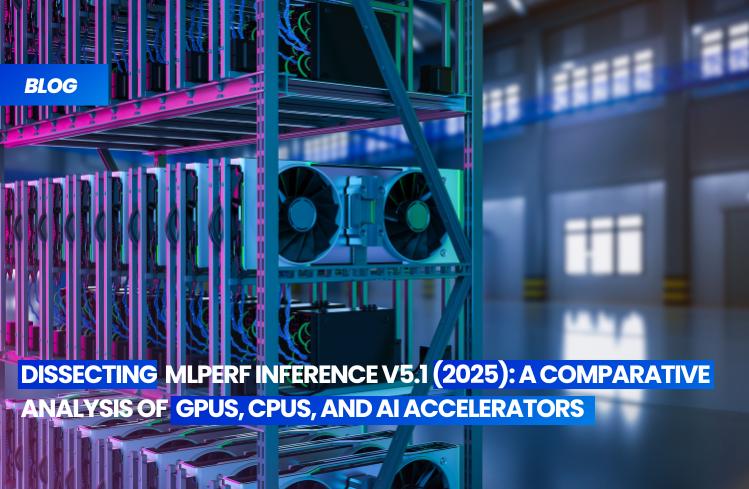
Dissecting MLPerf Inference v5.1 (2025): A Comparative Analysis of GPUs, CPUs, and AI Accelerators

What Does MLPerf Inference Actually Measure?

MLPerf Inference, an industry-standard benchmark suite, quantifies the speed of complete AI systems, including hardware, runtime, and serving stack. It evaluates fixed, pre-trained models under strict latency and accuracy constraints. The benchmark offers two divisions: Closed, which fixes the model and preprocessing for direct comparisons, and Open, which allows model changes but isn’t strictly comparable. Results are reported for Datacenter and Edge suites, with standardized request patterns generated by LoadGen, ensuring architectural neutrality and reproducibility. Availability tags—Available, Preview, RDI (research/development/internal)—indicate whether configurations are shipping or experimental.

The 2025 Update: MLPerf Inference v5.1

The 2025 update, MLPerf Inference v5.1, introduces several changes. It adds three modern workloads: DeepSeek-R1 (the first reasoning benchmark), Llama-3.1-8B (summarization, replacing GPT-J), and Whisper Large V3 (Automatic Speech Recognition, ASR). This round saw 27 submitters, including first-time appearances of AMD Instinct MI355X, Intel Arc Pro B60 48GB Turbo, NVIDIA GB300, RTX 4000 Ada-PCIe-20GB, and RTX Pro 6000 Blackwell Server Edition. Interactive serving scenarios, which capture agent/chat workloads, were expanded to include tight TTFT (time-to-first-token) and TPOT (time-per-output-token) limits.

Scenarios: Mapping to Real Workloads

MLPerf Inference defines four serving patterns to map to real-world workloads:

1. Offline: Maximize throughput with no latency bound, dominated by batching and scheduling.
2. Server: Poisson arrivals with p99 latency bounds, closest to chat/agent backends.
3. Single-Stream / Multi-Stream (Edge emphasis): Strict per-stream tail latency; Multi-Stream stresses concurrency at fixed inter-arrival intervals.
4. Each scenario has a defined metric : such as max Poisson throughput for Server or throughput for Offline.

Latency Metrics for Large Language Models (LLMs)

v5.1 introduces stricter interactive limits for LLMs. For instance, Llama-2-70B has p99 TTFT of 450 ms and TPOT of 40 ms, while the long-context Llama-3.1-405B has higher bounds due to its size and context length.

The 2025 Datacenter Menu: Closed Division Targets

Key v5.1 entries and their quality/latency gates in the Closed division include:

LLM Q&A: Llama-2-70B (OpenOrca) with Conversational (2000 ms/200 ms), Interactive (450 ms/40 ms), and 99%/99.9% accuracy targets.
LLM Summarization: Llama-3.1-8B (CNN/DailyMail) with Conversational (2000 ms/100 ms) and Interactive (500 ms/30 ms) limits.
Reasoning: DeepSeek-R1 with TTFT 2000 ms / TPOT 80 ms and 99% exact-match baseline.
ASR: Whisper Large V3 (LibriSpeech) with WER-based quality for datacenter and edge.
Long-context: Llama-3.1-405B with TTFT 6000 ms and TPOT 175 ms.
Image: SDXL 1.0 with FID/CLIP ranges and a 20 s Server constraint.
– Legacy CV/NLP models (ResNet-50, RetinaNet, BERT-L, DLRM, 3D-UNet) remain for continuity.

Power Results: Reading Energy Claims

MLPerf Power, an optional part of the benchmark, reports system wall-plug energy for the same runs. Only measured runs are valid for energy efficiency comparisons. v5.1 includes datacenter and edge power submissions, encouraging broader participation.

Reading the Tables: Avoiding Pitfalls

To compare results effectively:

Compare Closed vs. Closed only; Open runs may use different models/quantization.
Match accuracy targets (99% vs. 99.9%) as throughput often drops at stricter quality.
Normalize cautiously: MLPerf reports system-level throughput under constraints. Dividing by accelerator count yields a derived “per-chip” number, useful for budgeting sanity checks but not marketing claims.
– Filter by Availability (prefer Available) and include Power columns when efficiency matters.

Interpreting 2025 Results: GPUs, CPUs, and Other Accelerators

GPUs (rack-scale to single-node) show up prominently in Server-Interactive and long-context workloads, where scheduler and KV-cache efficiency matter. Rack-scale systems post the highest aggregate throughput.
CPUs (standalone baselines + host effects) remain useful baselines, highlighting preprocessing and dispatch overheads that can bottleneck accelerators in Server mode. New Xeon 6 results and mixed CPU+GPU stacks appear in v5.1.
– Alternative accelerators
increase architectural diversity. Validate cross-system comparisons by holding constant division, model, dataset, scenario, and accuracy.

Practical Selection Playbook

– Interactive chat/agents → Server-Interactive on Llama-2-70B/Llama-3.1-8B/DeepSeek-R1, matching latency & accuracy and scrutinizing p99 TTFT/TPOT.
– Batch summarization/ETL → Offline on Llama-3.1-8B; throughput per rack is the cost driver.
– ASR front-ends*→ Whisper V3 Server with tail-latency bound; memory bandwidth and audio pre/post-processing matter.
– Long-context analytics → Llama-3.1-405B; evaluate if your UX tolerates 6 s TTFT / 175 ms TPOT.

What the 2025 Cycle Signals

– Interactive LLM serving is table-stakes, with tight TTFT/TPOT in v5.x making scheduling, batching, paged attention, and KV-cache management visible in results.
– Reasoning is now benchmarked, with DeepSeek-R1 stressing control-flow and memory traffic differently from next-token generation.
– Broader modality coverage, with Whisper V3 and SDXL exercising pipelines beyond token decoding, surfacing I/O and bandwidth limits.

In summary, MLPerf Inference v5.1 expands coverage with new workloads and broader silicon participation. To make inference comparisons actionable, align on the Closed division, match scenario and accuracy (including LLM TTFT/TPOT limits for interactive serving), and prefer Available systems with measured Power to reason about efficiency. Procurement should filter results to workloads that mirror production SLAs and validate claims directly in the MLCommons result pages and power methodology

Venmo and PayPal Users Can Now Transact with Each Other

For years, Venmo and PayPal have been like two estranged siblings, each with their own unique appeal but stubbornly refusing to communicate with one another. Both platforms have simplified the process of sending money to friends, family, and even that mysterious Facebook Marketplace seller, but attempting to transfer funds directly between them was akin to trying to teach a cat to fetch – it was simply not done. That is, until now.

In a recent email announcement, Venmo revealed that this long-standing impasse is finally set to change. Starting this November, users of both platforms will be able to send money directly to each other, regardless of whether they’re in the same country or on different continents. No more convoluted workarounds involving bank transfers or pleading with friends to download the other app. PayPal users will soon be able to locate Venmo users by phone number (and later by email), making cross-platform payments as simple as a few taps on the screen.

This development may leave you scratching your head, given that PayPal is, in fact, the parent company of Venmo. So, why the delay in implementing this seemingly obvious feature? The cynical among us might suggest that having users juggle both apps to make payments increased the likelihood of them maintaining accounts on both platforms. However, with the upcoming integration, such speculation may soon be a thing of the past.

For those who prioritize digital privacy, Venmo has included a safety net. Users can opt out of being discoverable by PayPal users by adjusting their settings under ‘Privacy’ and ‘Find Me’. While you’re at it, you might want to switch your default transaction settings to ‘Private’ to avoid broadcasting your late-night Taco Bell splurges to the world.

This update is part of a larger initiative called PayPal World, announced in July. Alongside Venmo, PayPal is aligning with Mercado Pago, India’s NPCI International Payments Limited, and Tenpay Global (WeChat Pay’s cross-border arm) to create a global network for seamless international transfers with minimal fees. With a combined user base of 2 billion, the potential reach of this integration is nothing short of staggering. Once live, the odds of you being able to pay anyone you know, anywhere in the world, will skyrocket.

While this development is undoubtedly convenient, it does raise a question: will Venmo and PayPal start charging us extra once they realize just how useful this integration is? Only time will tell.

So, what’s your take on Venmo and PayPal finally bridging the gap in cross-platform payments? Do you see this as a step in the right direction for users worldwide, or do you have reservations? We’d love to hear your thoughts in the comments below, or via our Twitter or Facebook pages.

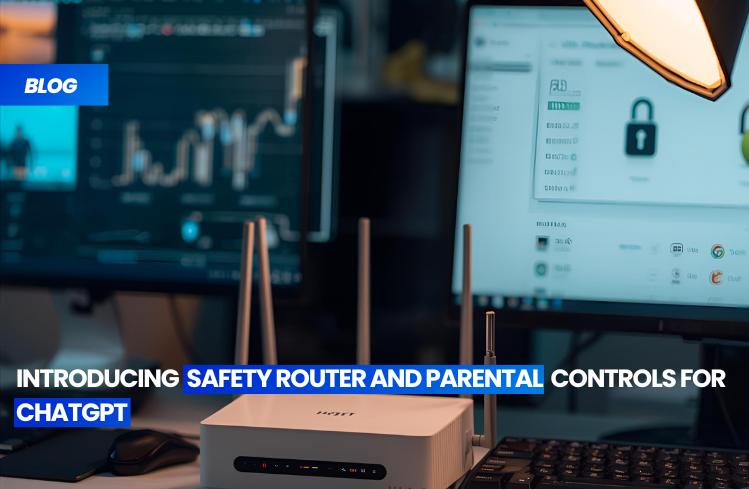
Introducing Safety Router and Parental Controls for ChatGPT

Over the weekend, OpenAI subtly activated new features within ChatGPT, introducing a safety routing system and parental controls. This move sparked a fresh wave of online debate, following a series of concerning incidents where certain ChatGPT models reportedly endorsed users’ harmful thoughts instead of guiding them towards help, including a distressing case involving a teenager whose family is now suing the company.

The standout feature is a ‘safety router’ that detects emotionally charged conversations and can switch mid-chat to GPT-5, which OpenAI claims is the most adept model for high-stakes situations. GPT-5 employs a novel training method called ‘safe completions’, designed to address delicate questions in a calm, constructive manner rather than simply refusing to engage, a departure from GPT-4o’s enthusiastic approach that has both delighted users and raised safety concerns among experts.

This tension between friendliness and caution lies at the core of the controversy. When OpenAI made GPT-5 the default in August, fans of GPT-4o clamored for its return, criticizing the newer model for being too stiff. Now, some users are expressing discontent again, arguing that the new router feels like OpenAI is ‘parenting adults’ and diluting answers.

OpenAI’s Vice President, Nick Turley, attempted to assuage these concerns on X, explaining that routing occurs on a per-message basis, is temporary, and can be checked by simply inquiring which model is active.

Nick Turley (@nickaturley) / X

The parental controls, too, are divisive. Parents can now set quiet hours, disable voice or memory functions, block image generation, and opt out of model training for teen accounts. Teens also receive additional safeguards such as reduced exposure to graphic content or extreme beauty ideals, and an early-warning system for signs of self-harm. If triggered, a trained human team reviews the case and can alert parents via text or email, or, in emergencies, notify law enforcement.

OpenAI acknowledges that the system isn’t foolproof and may occasionally raise false alarms, but maintains that a few awkward notifications are preferable to silence. The AI may not always be right, but it’s now striving harder to care when it matters most.

The question remains: are OpenAI’s new safety router and parental controls necessary protections that could prevent tragedies, or do they represent overreach that treats adult users like children and limits AI’s usefulness? Should AI companies prioritize safety features that might occasionally provide overly cautious responses, or focus on user autonomy even if it means some people might receive unhelpful or potentially harmful advice? We invite you to share your thoughts below in the comments, or reach out to us via our Twitter or Facebook.

Claude Sonnet 4.5 Outperforms Professional Coders, Says Anthropic

Anthropic, a rising star in the AI landscape, has unveiled Claude Sonnet 4.5, a cutting-edge model that’s set to redefine AI’s role in software development. This isn’t just another AI tool for quick coding snippets; Anthropic claims Sonnet 4.5 can build production-ready applications, rivaling the work of seasoned engineers.

Unlike its predecessors, which were great for prototyping but lacked reliability for full-fledged applications, Sonnet 4.5 is ready to ship real software. It’s available through the Claude API or the Claude chatbot at the same price as its predecessor: $3 per million input tokens (roughly three Lord of the Rings trilogies’ worth of words) and $15 per million output tokens. That’s a significant amount of code for a price that’s easy on the budget, akin to buying a decent burrito.

Anthropic’s rise has been meteoric, gaining favor among developers and tech giants like Apple and Meta, who reportedly use Claude behind the scenes. Its models power popular coding apps such as Cursor, Windsurf, and Replit. However, the AI arms race is heating up, with OpenAI’s upcoming GPT-5 already outperforming Claude on several coding benchmarks. In response, Anthropic has swung back with Sonnet 4.5.
From Wandering the Desert to Changing How Developers Code: Michael Truell's  Journey with Cursor

While benchmarks are one thing, Anthropic insists Sonnet 4.5 truly shines in the real world. David Hershey, a researcher at Anthropic, shared that he’s seen the model work autonomously for 30 straight hours, coding an entire application, setting up databases, buying domain names, and even performing a SOC 2 security audit. That’s not just writing code; it’s essentially launching a startup while you’re binge-watching Netflix.

Industry insiders are impressed. Michael Truell, CEO of Cursor, called Sonnet 4.5 “state-of-the-art,” while Jeff Wang of Windsurf described it as marking “a new generation of coding models.” But Anthropic isn’t just about coding prowess; it also claims Sonnet 4.5 is its most aligned model yet, with fewer sycophantic responses and stronger defenses against prompt attacks.

Accompanying the model’s release is a Claude Agent SDK, empowering developers to build their own AI agents. Additionally, Anthropic has unveiled a research preview called Imagine with Claude, which live-generates software in real-time. The timing of Sonnet 4.5’s release, barely two months after Claude Opus 4.1, is a classic example of AI one-upmanship.

But the question remains: does Anthropic’s Claude Sonnet 4.5 represent a genuine breakthrough towards AI replacing junior developers, or are these 30-hour coding marathons still impressive demos that can’t match human judgment on complex projects? Should developers view AI coding assistants like Claude as tools that augment their work, or as competitive threats that will fundamentally reshape the software development job market?

The lines are blurring between what AI can do and what humans do best. As Anthropic and other AI companies continue to push the boundaries, it’s clear that the future of software development is here, and it’s AI-powered. But whether AI will replace developers or augment their work remains to be seen. One thing is certain: the AI arms race is far from over, and Anthropic’s Claude Sonnet 4.5 is a powerful new player in this high-stakes game.

Follow by Email
YouTube
WhatsApp