

-2.6 C
New York
Monday, March 2, 2026

Buy now

spot_img
Home Blog Page 45

“Catch Up: Google’s App Update Infuses Discover Feed with Diverse Social Content”

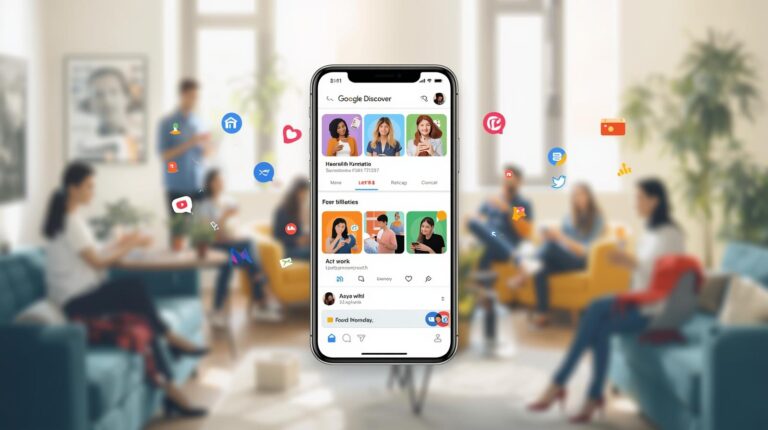
Google is set to significantly enhance its Discover feed within the Google app, offering users a broader spectrum of content from a variety of publishers and creators. This update enables users to access posts from platforms like Twitter, Instagram, and YouTube Shorts, all within a single feed that consolidates diverse formats such as articles, short videos, and social posts. Users can now follow their favorite creators or publishers directly within Discover and preview their recent content before deciding to subscribe, making the feed more personalized and tailored to individual interests.

The feature is designed to cater to users who rely on Google for news aggregation and content discovery, aiming to reduce the need for them to switch between multiple apps or platforms. The rollout has begun and is expected to reach a wider audience in the coming weeks, with access available to anyone signed into their Google Account using the Google app.

In the coming weeks, users can expect to see videos and social posts from platforms like YouTube Shorts, Twitter, and Instagram appearing in their Discover feed. Additionally, users will have the ability to follow creators and publishers directly within the feed, allowing for a more personalized and engaging user experience.

Technically, this update involves the integration of APIs and partnerships with external social and video platforms, enabling real-time updates from various content sources. Unlike previous iterations, this version expands beyond traditional news articles, responding to user demand for a mix of media formats. Early users have reported the convenience of having content from multiple platforms in a single feed, while industry experts are closely watching how Google manages content moderation and platform agreements.

This launch aligns with Google’s ongoing strategy to strengthen user retention within its ecosystem and support publishers and creators by facilitating direct user connections. Google’s previous introductions, such as the ability to select preferred news sources in Top Stories, demonstrate a continued focus on personalizing content delivery and keeping audiences engaged within its search and app environments.

In recent years, there has been a significant shift in how users consume content online. The rise of social media platforms and short-form video content has led to a more diverse and dynamic digital landscape. Google’s Discover feed update reflects this shift, offering users a more comprehensive and varied content experience.

The integration of external platforms like Twitter, Instagram, and YouTube Shorts into the Discover feed allows users to access a wider range of content without having to switch between multiple apps. This not only enhances the user experience but also presents an opportunity for publishers and creators to reach a larger audience.

For publishers and creators, the ability to be followed directly within the Discover feed offers a new avenue for audience engagement and growth. By facilitating direct user connections, Google is providing a platform for creators to build and maintain relationships with their audience, which can translate into increased viewership and engagement.

However, the integration of external platforms also presents challenges for Google. Content moderation is a significant issue that Google will need to address to ensure that the Discover feed remains a safe and respectful space for users. Google will also need to manage its agreements with external platforms to ensure that the content being shared is done so in a way that respects the terms of service of those platforms.

Despite these challenges, Google’s Discover feed update is a significant step forward in content aggregation and discovery. By offering users a more personalized and varied content experience, Google is not only enhancing the user experience but also providing a new platform for publishers and creators to reach and engage with their audience.

In conclusion, Google’s Discover feed update is a reflection of the evolving digital landscape and a response to user demand for a more diverse and dynamic content experience. By integrating external platforms and facilitating direct user connections, Google is providing a more comprehensive and engaging content experience for users, while also offering new opportunities for publishers and creators to reach and engage with their audience. As the rollout continues in the coming weeks, it will be interesting to see how users and industry experts respond to this significant update to the Google app.
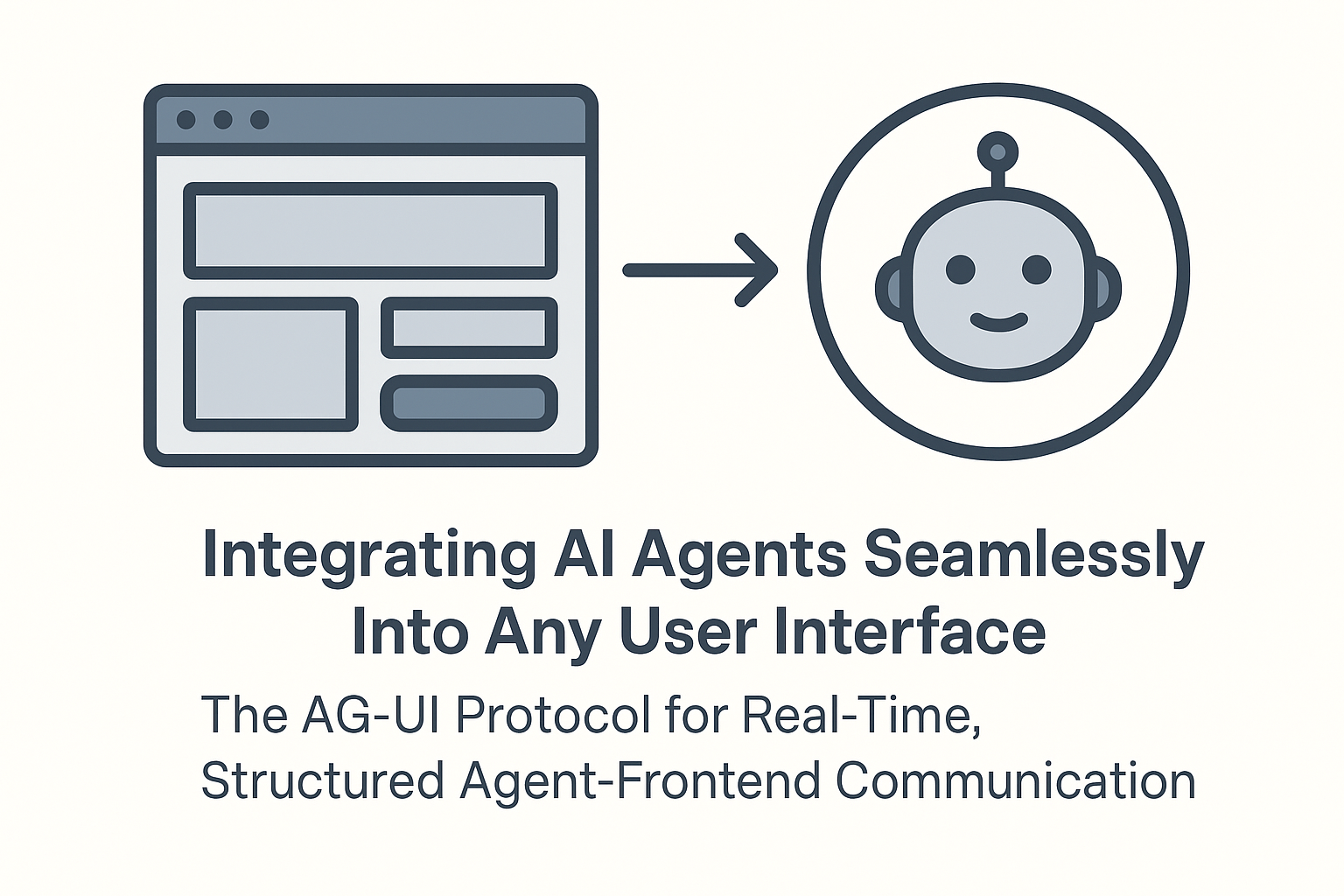

“Integrating AI Agents Seamlessly Into Any User Interface: The AG-UI Protocol for Real-Time, Structured Agent-Frontend Communication”

The realm of AI agents is evolving rapidly, transcending the boundaries of simple chatbots. Today’s agents are sophisticated systems capable of step-by-step reasoning, API calls, dashboard updates, and real-time collaboration with humans. However, a critical question arises: how should these agents communicate with user interfaces (UIs)? Ad-hoc sockets and custom APIs, while workable for prototypes, lack scalability and consistency. This is where the AG-UI (Agent–User Interaction) Protocol steps in to fill the gap.

AG-UI: A Streaming Event Protocol for Agent-to-UI Communication

AG-UI is a streaming event protocol designed to facilitate seamless communication between AI agents and UIs. Instead of returning a single blob of text, agents emit a continuous sequence of JSON events. Here’s what these events entail:

– TEXT_MESSAGE_CONTENT: For streaming responses, token by token.
– TOOL_CALL_START / ARGS / END: For external function calls.
– STATE_SNAPSHOT and STATE_DELTA: To keep UI state in sync with the backend.
– Lifecycle events (RUN_STARTED, RUN_FINISHED): To frame each interaction.

All these events flow over standard transports like HTTP Server-Sent Events (SSE) or WebSockets, ensuring developers don’t have to build custom protocols. The frontend subscribes once and can render partial results, update charts, and even send user corrections mid-run.

AG-UI isn’t just a messaging layer; it’s a contract between agents and UIs. This design ensures that backend frameworks and UIs can evolve independently while maintaining interoperability.

First-Party and Partner Integrations Driving AG-UI Adoption

AG-UI’s traction can be attributed to its wide range of supported integrations. Many agent frameworks now ship with AG-UI support, including:

– Mastra (TypeScript): Offers native AG-UI support with strong typing, ideal for finance and data-driven copilots.

– LangGraph: Integrates AG-UI into orchestration workflows, enabling every node to emit structured events.
– CrewAI: Exposes multi-agent coordination to UIs via AG-UI, allowing users to follow and guide “agent crews.”
– Agno: Provides full-stack multi-agent systems with AG-UI-ready backends for dashboards and ops tools.
– LlamaIndex: Adds interactive data retrieval workflows with live evidence streaming to UIs.
– Pydantic AI: Offers a Python SDK with AG-UI baked in, along with example apps like the AG-UI Dojo.
– CopilotKit: Provides a frontend toolkit with React components that subscribe to AG-UI streams.

Upcoming integrations include AWS Bedrock Agents, Google ADK, and Cloudflare Agents, making AG-UI accessible on major cloud platforms. Language SDKs are also expanding to include Kotlin, .NET, Go, Rust, Nim, and Java.

Real-World Use Cases of AG-UI

AG-UI is transforming critical data streams into live, context-rich interfaces across various industries. Here are a few examples:

– Healthcare: Clinicians see patient vitals update in real-time without page reloads.
– Finance: Stock traders trigger stock-analysis agents and watch results stream inline.
– Analytics: Analysts view LangGraph-powered dashboards that visualize charting plans token by token as the agent reasons.

Beyond data display, AG-UI simplifies workflow automation. Common patterns like data migration, research summarization, and form-filling are reduced to a single event stream. This powers 24/7 customer-support bots that keep users engaged throughout the interaction.

For developers, AG-UI enables code-assistants and multi-agent applications with minimal glue code. Frameworks like LangGraph, CrewAI, and Mastra already emit the spec’s 16 event types, allowing teams to swap backend agents while keeping the frontend unchanged.

AG-UI Dojo: Learning and Validating AG-UI Integrations

CopilotKit has introduced AG-UI Dojo, a “learning-first” suite of minimal, runnable demos that teach and validate AG-UI integrations end-to-end. Each demo includes a live preview, code, and linked docs, covering six primitives needed for production agent UIs.

AG-UI Roadmap and Community Contributions

The public roadmap outlines AG-UI’s future developments and areas where developers can contribute:

– SDK Maturity: Ongoing investment in TypeScript and Python SDKs, with expansion into more languages.
– Debugging and Developer Tools: Improved error handling, observability, and lifecycle event clarity.
– Performance and Transports: Work on large payload handling and alternative streaming transports beyond SSE/WS.
– Sample Apps and Playgrounds: Expansion of the AG-UI Dojo with more UI patterns.

Community contributions have been instrumental in shaping AG-UI. Pull requests across frameworks like Mastra, LangGraph, and Pydantic AI have come from both maintainers and external contributors, ensuring AG-UI is shaped by real developer needs.

Getting Started with AG-UI

You can launch an AG-UI project with a single command and choose your agent framework. For details and patterns, refer to the quickstart blog.

FAQs

1. What problem does AG-UI solve? AG-UI standardizes how agents communicate with UIs, making interactive UIs easier to build and maintain.
2. Which frameworks already support AG-UI? AG-UI has first-party integrations with several frameworks, with more on the way.
3. How does AG-UI differ from REST APIs? AG-UI supports streaming output, incremental updates, tool usage, and user input during a run, which REST cannot handle natively.
4. What transports does AG-UI use? By default, AG-UI runs over HTTP Server-Sent Events (SSE). It also supports WebSockets, with exploration of alternative transports underway.
5. How can developers get started with AG-UI? You can install official SDKs or use supported frameworks. The AG-UI Dojo provides working examples and UI building blocks to experiment with event streams.

AG-UI is emerging as the default interaction protocol for agent UIs, standardizing the messy middle ground between agents and frontends. With first-party integrations, community contributions, and tooling like the AG-UI Dojo, the ecosystem is maturing rapidly. Launch AG-UI with a single command and start prototyping in under five minutes.

“H Company Unveils Holo1.5: An Open-Weight Computer-Use VLM with a Focus on GUI Localization and UI-VQA”

H Company, a trailblazing French AI startup, has announced the release of Holo1.5, a groundbreaking suite of open foundation vision models meticulously crafted to empower computer-use (CU) agents. These agents interact with real user interfaces via screenshots and pointer/keyboard actions, making Holo1.5 a significant leap forward in AI’s ability to navigate and understand complex digital environments.

The Holo1.5 family comprises three models with varying parameters: 3B, 7B, and 72B. Each model boasts a documented 10% accuracy improvement over its predecessor, Holo1, across different sizes. Notably, the 7B model is licensed under Apache-2.0, making it freely available for production use. The 3B and 72B models, while currently research-only, offer valuable insights into the potential of larger models.

Holo1.5 is designed to excel in two core capabilities crucial for CU stacks: precise UI element localization and UI visual question answering (UI-VQA) for state understanding. UI element localization, or coordinate prediction, is the process by which an agent translates an intent into a pixel-level action. For instance, an agent might need to predict the clickable coordinates of the ‘Open Spotify’ control on the current screen. Failures in this process can lead to cascading errors, with a single off-by-one click derailing an entire workflow. To mitigate this, Holo1.5 is trained and evaluated on high-resolution screens (up to 3840×2160) across desktop (macOS, Ubuntu, Windows), web, and mobile interfaces. This ensures robustness on dense professional UIs where iconography and small targets can increase error rates.

Unlike general visual language models (VLMs) that optimize for broad grounding and captioning, Holo1.5 aligns its data and objectives with the specific requirements of CU agents. It undergoes large-scale supervised fine-tuning (SFT) on GUI tasks followed by reinforcement learning with human feedback (RLHF) to tighten coordinate accuracy and decision reliability. The models are delivered as perception components to be embedded in planners/executors, rather than as end-to-end agents.

Holo1.5’s performance on localization benchmarks is highly competitive. It reports state-of-the-art GUI grounding across ScreenSpot-v2, ScreenSpot-Pro, GroundUI-Web, Showdown, and WebClick. For instance, the 7B model achieves an average score of 77.32 on ScreenSpot-v2, compared to 60.73 for Qwen2.5-VL-7B. On the more challenging ScreenSpot-Pro, Holo1.5-7B scores 57.94 versus 29.00 for Qwen2.5-VL-7B, showing significantly better target selection under realistic conditions. The 3B and 72B checkpoints exhibit similar relative gains.

But Holo1.5’s prowess isn’t limited to localization. It also excels in UI understanding (UI-VQA), a crucial aspect of agent reliability. On benchmarks like VisualWebBench, WebSRC, and ScreenQA, Holo1.5 yields consistent accuracy improvements, with reported 7B averages of approximately 88.17 and 72B averages around 90.00. This enables agents to accurately answer queries like “Which tab is active?” or “Is the user signed in?”, reducing ambiguity and enabling verification between actions.

In comparison to specialized and closed systems, Holo1.5 outperforms open baselines and shows advantages versus competitive specialized systems and closed generalist models under the published evaluation setup. However, practitioners should replicate evaluations with their specific harness before drawing deployment-level conclusions, as protocols, prompts, and screen resolutions can influence outcomes.

The integration of Holo1.5 into CU agents brings several benefits. Firstly, it offers higher click reliability at native resolution, as evidenced by improved performance on ScreenSpot-Pro. This suggests reduced misclicks in complex applications like IDEs, design suites, and admin consoles. Secondly, stronger state tracking, facilitated by higher UI-VQA accuracy, improves detection of logged-in state, active tab, modal visibility, and success/failure cues. Lastly, the pragmatic licensing path allows for the use of the 7B model in production, with the 72B checkpoint available for internal experiments or to bound headroom.

In a modern CU stack, Holo1.5 serves as the screen perception layer. It takes full-resolution screenshots (optionally with UI metadata) as input and outputs target coordinates with confidence and short textual answers about screen state. Downstream, action policies convert these predictions into click/keyboard events, while monitoring verifies post-conditions and triggers retries or fallbacks.

Holo1.5 bridges a practical gap in CU systems by pairing strong coordinate grounding with concise interface understanding. For those seeking a commercially usable base today, Holo1.5-7B (Apache-2.0) is an excellent starting point. Benchmark it on your screens and instrument your planner/safety layers around it.

To get started, check out the models on Hugging Face and the technical details. The H Company GitHub page offers tutorials, codes, and notebooks, while their Twitter account and 100k+ ML SubReddit provide community support. Don’t forget to subscribe to their newsletter to stay updated on their latest developments.

In conclusion, H Company’s Holo1.5 is not just a release; it’s a significant step forward in AI’s ability to understand and interact with complex digital environments. By offering an open-source, high-performing model tailored to the needs of CU agents, H Company is democratizing access to advanced AI capabilities and paving the way for more intuitive, reliable, and efficient human-AI interactions.

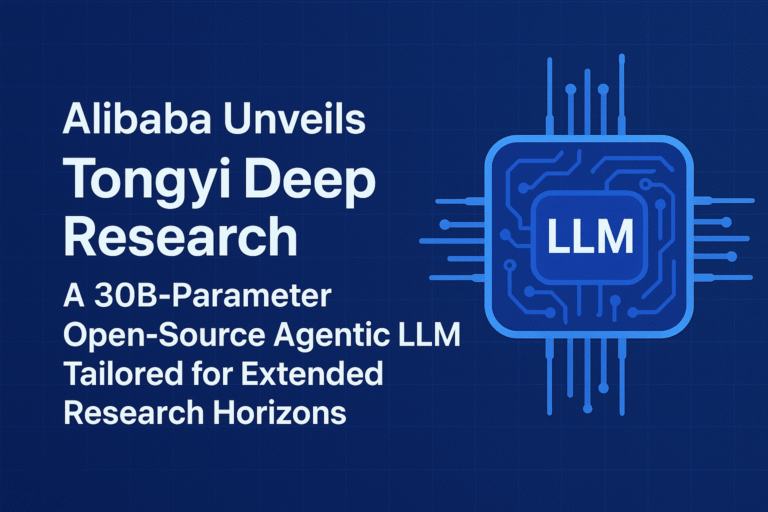
“Alibaba Unveils Tongyi DeepResearch: A 30B-Parameter Open-Source Agentic LLM Tailored for Extended Research Horizons”

Tongyi DeepResearch has demonstrated state-of-the-art results on various agentic search suites designed to evaluate “deep research” agents. These include:

Alibaba’s Tongyi Lab has unveiled Tongyi-DeepResearch-30B-A3B, a groundbreaking large language model tailored for extended, tool-assisted information quests on the web. This model, built with a mixture-of-experts (MoE) design, boasts approximately 30.5 billion total parameters and activates around 3 to 3.3 billion per token, ensuring high throughput while maintaining robust reasoning capabilities. It is designed to handle multi-turn research workflows, including searching, browsing, extracting, cross-verifying, and synthesizing evidence, all under a React-style tool usage paradigm and a heavy test-time scaling mode. The release includes model weights (under Apache-2.0 license), inference scripts, and evaluation utilities.

Benchmark Results: State-of-the-Art Performance

– Humanity’s Last Exam (HLE): 32.9
– BrowseComp: 43.4 (English) and 46.7 (Chinese)
– xbench-DeepSearch: 75

It has also shown strong performance across WebWalkerQA, GAIA, FRAMES, and SimpleQA. The team behind the model finds it on par with OpenAI-style deep research agents and systematically outperforming existing proprietary and open-source agents across these tasks.

Architecture and Inference Profile

The MoE routing in Tongyi DeepResearch, following the Qwen3-MoE lineage, allows it to have the cost envelope of a smaller dense model while retaining specialist capacity. With a context length of 128,000 tokens, it is well-suited for long, tool-augmented browsing sessions and iterative synthesis. The model operates in two inference modes:

1. ReAct (native): For direct evaluation of intrinsic reasoning and tool use.
2. IterResearch “Heavy” mode: For test-time scaling, featuring structured multi-round synthesis and reconstruction of context to minimize noise accumulation.

Training Pipeline: Synthetic Data and On-Policy RL

Tongyi DeepResearch is trained end-to-end as an agent, not just a chat LLM, using a fully automated, scalable data engine. This includes:

– Agentic continual pre-training (CPT): Large-scale synthetic trajectories built from curated corpora, historical tool traces, and graph-structured knowledge to teach retrieval, browsing, and multi-source fusion.
– Agentic SFT cold-start: Trajectories in ReAct and IterResearch formats for schema-consistent planning and tool use.
– On-policy RL with Group Relative Policy Optimization (GRPO): Token-level policy gradients, leave-one-out advantage estimation, and negative-sample filtering to stabilize learning in non-stationary web environments.

Role in Document and Web Research Workflows

Deep-research tasks demand four key capabilities: long-horizon planning, iterative retrieval and verification, low hallucination rates, and synthesis under large contexts. The IterResearch rollout mitigates context bloat and error propagation by restructuring context each “round,” while the ReAct baseline demonstrates that the behaviors are learned rather than prompt-engineered. The reported scores on HLE and BrowseComp suggest improved robustness on multi-hop, tool-mediated queries where prior agents often struggled with overfitting to prompt patterns or saturating at low depths.

Key Features of Tongyi DeepResearch-30B-A3B

– MoE efficiency at scale: Approximately 30.5 billion total parameters with 3.0 to 3.3 billion activated per token, enabling small-model inference cost with large-model capacity.
– Extended context window: 128,000 tokens for long-horizon rollouts with evidence accumulation in multi-step web research.
– Dual inference paradigms: Native ReAct for intrinsic tool-use evaluation and IterResearch “Heavy” for deeper multi-round synthesis.
– Automated agentic data engine: A fully automated synthesis pipeline powering agentic continual pre-training (CPT), supervised fine-tuning (SFT), and RL.
– On-policy RL with GRPO: Group Relative Policy Optimization with token-level policy gradients, leave-one-out advantage estimation, and selective negative-sample filtering for stability.
– Reported SOTA on deep-research suites: HLE 32.9, BrowseComp 43.4 (English) / 46.7 (Chinese), xbench-DeepSearch 75; strong results on WebWalkerQA, GAIA, FRAMES, and SimpleQA.

Summary

Tongyi DeepResearch-30B-A3B offers a comprehensive open-source stack, packaging a MoE architecture, extended context, dual ReAct/IterResearch rollouts, and an automated agentic data + GRPO RL pipeline. For teams developing long-horizon research agents, it provides a practical balance of inference cost and capability, with reported strong performance on deep-research benchmarks. You can explore the models on Hugging Face, visit the GitHub page, and delve into technical details. For tutorials, codes, and notebooks, check out the GitHub page. Additionally, follow the project on Twitter, join the 100k+ ML SubReddit, and subscribe to the newsletter for the latest updates.

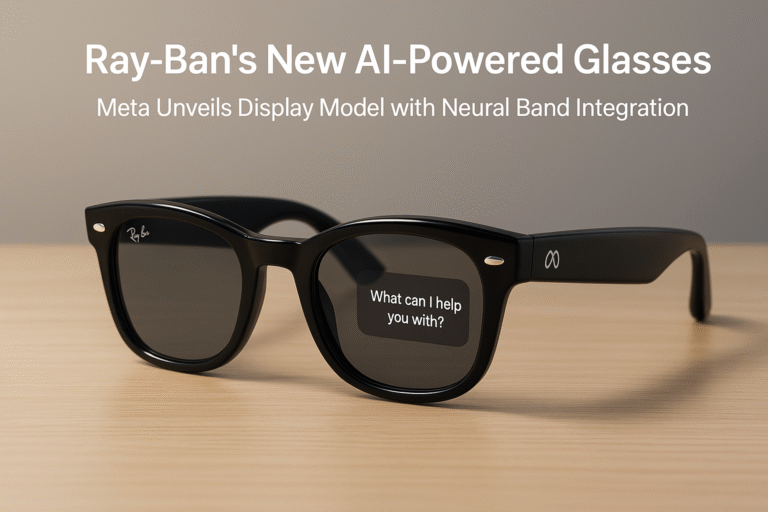
“Ray-Ban’s New AI-Powered Glasses: Meta Unveils Display Model with Neural Band Integration”

Meta, the tech giant, has unveiled two groundbreaking products: the Meta Ray-Ban Display glasses and the Meta Neural Band. These innovations are designed to cater to tech enthusiasts, early adopters, and those seeking more accessible wearable technology. The official release is slated for September 30, initially in select U.S. retailers such as Best Buy, LensCrafters, Sunglass Hut, and Ray-Ban Stores. The global rollout will continue into early 2026, reaching Canada, France, Italy, and the UK. The products will be available in Black and Sand, with three band sizes, and will feature Transitions lenses for versatile wear. A portable charging case is included, providing up to 30 hours of battery life.

In a significant development, Meta has integrated a full-color, high-resolution in-lens display with on-board compute, AI, microphones, speakers, and cameras into a single device. This marks Meta’s first foray into such comprehensive integration. The Meta Neural Band, leveraging years of research on electromyography (EMG), interprets muscle signals, enabling users to control the glasses with subtle hand movements. This feature not only enhances user experience but also significantly improves accessibility.

The Meta Ray-Ban Display glasses offer a suite of innovative features, including:

– Hands-free messaging: Stay connected without having to reach for your phone.
– Live video calling: Seamlessly connect with others through visual calls.
– Camera features: Capture moments and record videos with ease.
– Pedestrian navigation: Never get lost with turn-by-turn directions right before your eyes.
– Real-time captions and translation: Communicate effectively in multiple languages.
– Music playback: Enjoy your favorite tunes hands-free.

These features place the Meta Ray-Ban Display glasses ahead of previous Ray-Ban Meta models and current competitors, many of which lack full display integration or EMG-based control.

Meta’s Reality Labs division is driving the company’s focus on AI-driven wearable platforms. The company’s long-term investment in augmented reality and AI glasses sets it apart in the tech industry. Industry observers note the blend of accessibility, technical sophistication, and real-world usability in these products as a potential game-changer in the wearables market.

The Meta Ray-Ban Display glasses and the Meta Neural Band represent a significant step forward in wearable technology. They offer a glimpse into a future where technology is seamlessly integrated into our daily lives, enhancing communication, navigation, and accessibility. As Meta continues to invest in augmented reality and AI, the wearables market is poised for exciting developments in the coming years.

However, while the potential of these products is undeniable, there are also questions about their quality and practicality. The Meta Neural Band, in particular, relies on EMG technology, which has historically had accuracy and reliability issues. Only time will tell how well these products perform in real-world use.

In conclusion, Meta’s latest offerings are not just new products; they are a statement of intent. They signal the company’s commitment to pushing the boundaries of wearable technology and shaping the future of how we interact with the digital world. As we await their release, one thing is clear: the wearables market is about to get a lot more interesting.

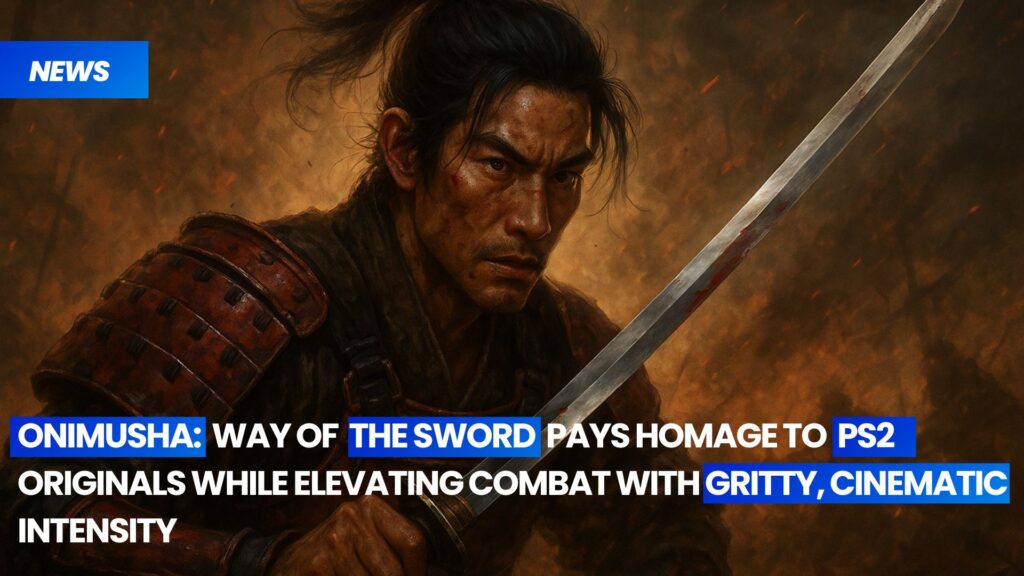
Onimusha: Way of the Sword Pays Homage to PS2 Originals while Elevating Combat with Gritty, Cinematic Intensity

In the realm of gaming, the resurgence of older franchises has been met with both excitement and skepticism. One such franchise that has been quietly anticipated in recent years is Capcom’s Onimusha. This August, at Gamescom 2025, a sneak peek into the upcoming Onimusha: Way of the Sword offered attendees an enticing glimpse into a game that promises to deliver a visceral and atmospheric experience, powered by Capcom’s proprietary RE Engine.

Musashi in a Dark World

The demo of Onimusha: Way of the Sword plunges players into a world that is both darkly beautiful and hauntingly grim. The game opens with a chilling forest scene, where the shrieks of the tormented villagers clash against the eerily serene backdrop. Here, the protagonist, Miyamoto Musashi, a historical figure known for his dual-wielding combat style and undefeated duel streak, struts onto the stage. Capcom’s incarnation of Musashi is a masterclass in character development, swiftly shifting between the roles of a stoic warrior and a sharp-witted comedian. His banter with the mysterious entity housed in the Oni Gauntlet lends a much-needed spark of humor to the oppressive atmosphere.

As Musashi journeys deeper into the heart of darkness, he encounters the demonic Genma, whose relentless assault on the innocent civilians serves as a grim reminder of the stakes at play. The narrative is interspersed with haunting cutscenes, one in particular standing out where Musashi experiences a jarring flashback, depicting villagers seemingly compelled to murder their own kind. This scene effectively builds tension and hints at the Genma’s influence over the populace, leaving the extent of their control open to a terrifying interpretation.

Combat and Gameplay

The combat in Onimusha: Way of the Sword feels organic and satisfying, with a catalogue of light and heavy attacks that can be strung together into devastating combos. Enemies, aggressive and varied, guard attacks and gang up on Musashi, encouraging strategic thinking and precise timing. The Oni Gauntlet, an integral part of the Onimusha franchise, functions as it did in the original PlayStation games, allowing Musashi to absorb the essence of slain Genma to replenish his health and other combat resources.

However, the enemy variety in the demo errs on the side of conservatism, with melee and ranged Genma troops, and the occasional hovering demonic head, being the extent of the opposition. This, however, is to be expected from a mere glimpse into what will presumably be the early stages of the game. As Musashi’s journey progresses deeper into the heart of darkness, one can expect to encounter a wider array of foes.

A Boss Battle Showcase

But perhaps the most captivating moment of the demo comes towards the end – the boss fight against a flamboyant, mentally unstable swordsman, who has been eerily augmented with Genma powers. The fight is a masterclass in action set-pieces, with a perfect blend of scripted and organic elements that immerses players in a seemingly genuine duel. The fierce clashing of swords, the pulsating demonic details, coupled with the haptic feedback of the DualSense Wireless Controller, all culminate in a cinematic extravaganza that leaves a lasting impression.

Why It Matters

Despite the bleak setting and oppressive atmosphere, Onimusha: Way of the Sword finds itself in a sweet spot, balancing grit and levity with remarkable finesse. Capcom has a knack for creating games that embrace grotesque themes but nonetheless possess an undeniable charm. This upcoming title, slated to release in 2026 for PlayStation 5, Xbox Series X and Series S, and PC, is no different. It’s confrontational, visceral, and unapologetically grim, but there’s an undeniable allure to its grimy world and its cast of eclectic characters that makes it one of the most anticipated titles on Capcom’s slate for 2026.

In a gaming landscape littered with sequels and reboots, it’s refreshing to see a game that doesn’t shy away from its roots yet still manages to forge its own path. With its enticing blend of hack-and-slash combat, engaging storytelling, and stunning visuals, Onimusha: Way of the Sword is shaping up to be the sort of game that can captivate both addicted series veterans and cautious newcomers alike. Capcom, once again, has proven that there’s more to gaming than just zombies and fitness trackers.

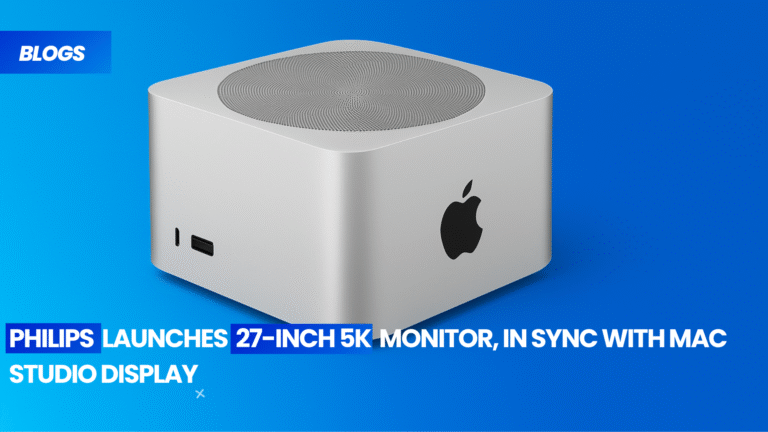
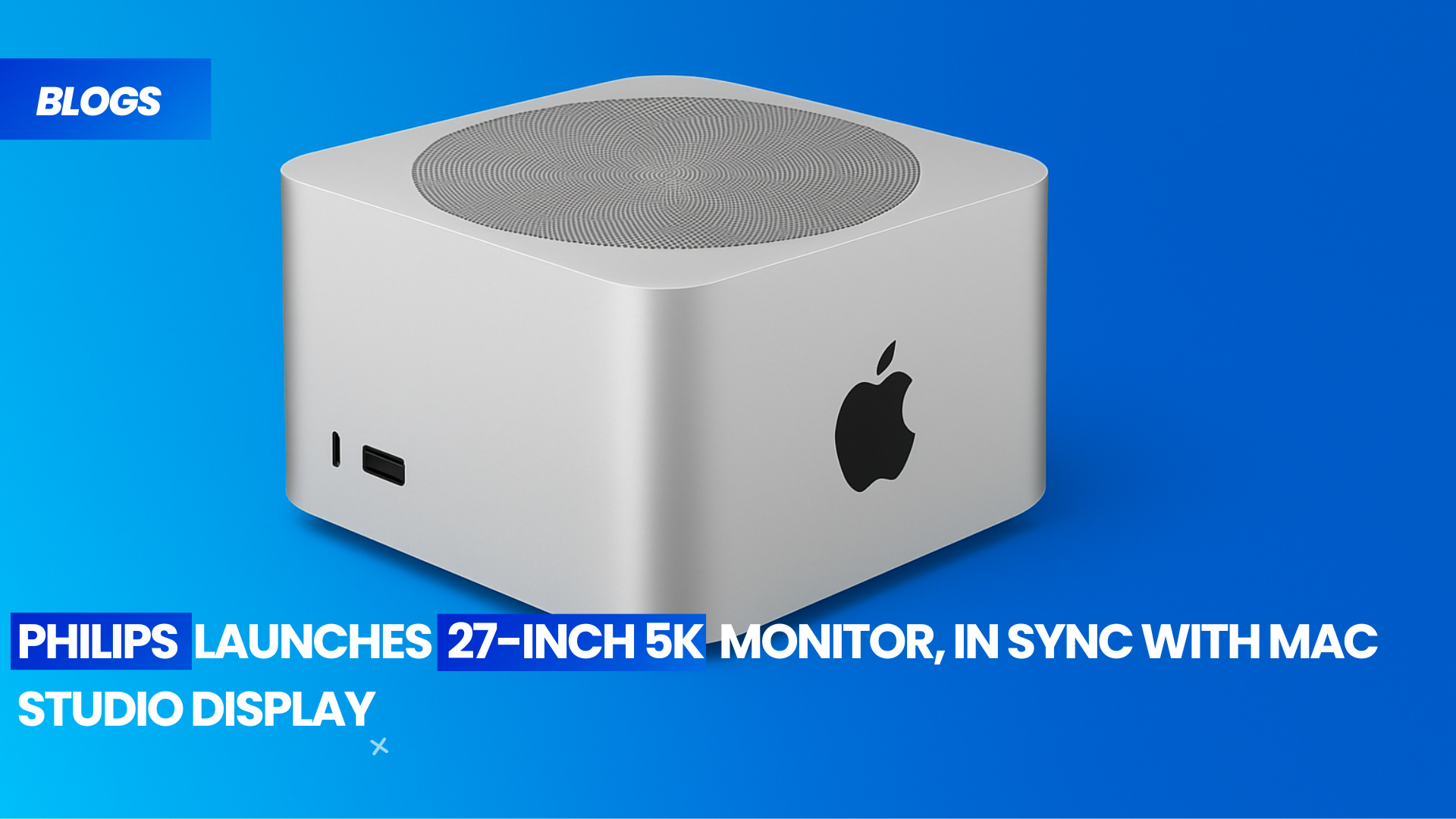
Philips Launches 27-inch 5K Monitor, in Sync with Mac Studio Display: Thunderbolt 4, 600 nits, and an Apple-Inspired Design.

*Philips has introduced a new display tailored to the needs of creative users: the 27-inch 5K monitor, Brilliance 27E3U7903. Packed with high-end features, this monitor combines stunning visuals, versatile connectivity, and ergonomic design, all at an attractive price point.

Professional-Grade Color Accuracy

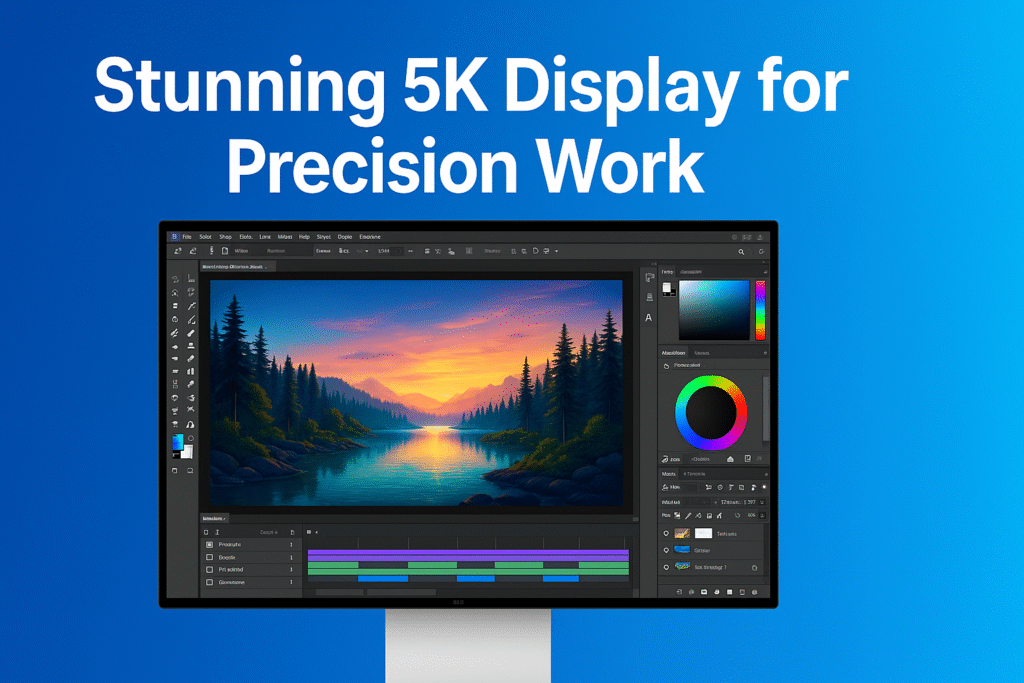
The standout feature of the Brilliance 27E3U7903 is its 27-inch 5K (5120×2880) IPS panel, delivering an impressive pixel density of 218 PPI. Certified for DisplayHDR 600, it boasts wide color gamut coverage, encompassing 99.5% AdobeRGB and 99% DCI-P3, with full sRGB support for consistent color accuracy across different applications. With its 1.07 billion color capability, this monitor ensures vibrant, lifelike imagery.

Connectivity with Thunderbolt 4 Power

Philips has equipped this monitor with Calman Ready certification, enabling hardware calibration through automated workflows. This ensures reliable color output, crucial for editing, design, and production tasks. The monitor’s connectivity is troupe-led by two Thunderbolt 4 ports, which facilitate high-speed data transfer, up to 96W power delivery for connected devices, and daisy-chaining of multiple peripherals.

Comfort and Ergonomics for Long Sessions

The front panel’s anti-reflective glass with a 7H hardness rating reduces glare, and LowBlue Mode and Flicker-Free technology help minimize eye strain during prolonged use. The SmartErgoBase stand offers extensive adjustability, with height, tilt, swivel, and pivot movements, ensuring optimal viewing comfort.

Built-in Webcam and Productivity Features

An integrated 5MP webcam with Windows Hello support and AI-based auto-framing feature enhances the user experience, keeping you centered during video calls. MultiView, a feature allowing the display of two sources side by side, further boosts productivity.

“Our aim with the Brilliance 27E3U7903 is straightforward,” explains Ilkan Reyhanoglu, Product Manager EU. “We want to provide creators with a top-tier 5K monitor that offers precision, performance, and efficient workflows at a competitive price.”

Pricing and Market Position

The Brilliance 27E3U7903 is set to hit European shelves soon, with a retail price of £849/€1,090. With its combination of 5K resolution, dual Thunderbolt 4 ports, and extensive calibration options, it presents a compelling alternative for users seeking a more affordable option than Apple’s Studio Display.

Final Thoughts: A Creative-Friendly Alternative

For those in the market for a portable monitor, the best options currently available can be found in our buyer’s guide. Additionally, LG has recently launched a 5K monitor with a Thunderbolt 5 port, noteworthy for its curved screen.

Sharenting: Protect Your Kids and Family from Online Danger

In today’s increasingly connected world, sharenting has become a common practice among parents. This term refers to the trend of posting photos, videos, and personal information about your children on social media. While sharing special moments of your children’s growth may seem harmless, this habit can pose serious risks to your children’s safety and privacy. 

This article, designed for parents, educators, and anyone interested in protecting children online, will provide you with all the information you need on what sharenting is, why it is risky, and how to avoid being involved in potentially dangerous situations. You will also learn what to do if you are a victim of this phenomenon.

What is Sharenting?

The term sharenting comes from the words “share” and “parenting” and refers to the practice of parents sharing photos, videos, and personal information about their children online. While sharing may be done with good intentions, such as celebrating special moments or sharing successes, the habit can have unintended consequences.

Risks and Implications of Sharenting

  1. Violation of Children’s Privacy : When parents share personal information and images of their children, they expose minors to digital identity risks and unauthorized surveillance.
  2. Identity Theft and Cyberbullying : The information you post can be collected and used by malicious people to create fake profiles or carry out targeted attacks, such as cyberbullying .
  3. Digital Future Compromised : Information shared at an early age can have long-term repercussions, impacting children’s online reputations as they grow up.

Why Sharenting is Risky

When you post photos or personal details about your children, you risk compromising their privacy in often overlooked ways. Many images can be used by strangers for malicious purposes, including identity theft or creating fake social media profiles. What’s more, the information shared today can impact children’s digital futures, influencing their reputations as they grow up.

Another important risk is cyberbullying . Data or images published by parents can be targeted by digital bullies or used for manipulation, putting minors in potentially harmful situations.

See: Cyberbullying: How to Defend Yourself and Fight It

How to Avoid the Dangers of Sharenting

Addressing the problem requires a conscious and responsible approach. Before sharing any content online, it is important to think carefully. Asking yourself, for example, whether an image could be embarrassing for the child in the future, is a first step to limiting the risks.

Social media privacy settings also play a crucial role. Configuring your profiles so that your content is visible only to a small group of trusted people is a good practice. However, this does not completely eliminate the risks, as even people who consider themselves trustworthy could unwittingly spread the information you share.

Educating children about digital safety from a young age is crucial. Involving them in the decision-making process about what to share, once they reach an appropriate age, helps them develop digital awareness that will be useful throughout their lives.

What to Do if You Are a Victim of Sharenting

If you discover that your children’s information or images have been shared without your consent or in a harmful way, acting quickly is essential. First, contact the platforms where the content was posted and request immediate removal. Most social media sites offer tools to report privacy violations.

If the content was shared by people you know, address the situation directly, explaining the risks and asking for the material to be removed. If the problem persists or is serious, it is advisable to consult a cybersecurity expert or a lawyer specializing in digital law.

Finally, consider raising awareness about the issue. Sharing your experience can help other parents avoid the same mistakes and help create a more safe online community.

Conclusions

Sharenting may seem like a harmless practice, but the risks associated with it are real and often overlooked. Protecting children’s privacy and safety online is a responsibility all parents should take seriously. Thinking before sharing, setting up social media privacy settings appropriately, and educating your children about digital awareness are the first steps to navigating the online world more safely.

Remember: online safety is not just about technology, it’s about conscious choices. Sharing less today means protecting your children’s future more.

How Backtracking Algorithms Work: A Complete Guide for Beginners and Experts

Introduction

Backtracking is a programming technique used in combinatorial search and artificial intelligence problems. Backtracking algorithms allow one to explore possible solutions efficiently, backtracking when one choice does not yield a valid solution. This approach is ideal for problems involving combinations and permutations, such as Sudoku , the N queens problem , and the knight problem .

In this comprehensive guide, we will look at how backtracking works, practical examples, and strategies to optimize performance. If you are a developer looking for advanced techniques, read on to learn everything there is to know about backtracking algorithms! 

How Backtracking Works

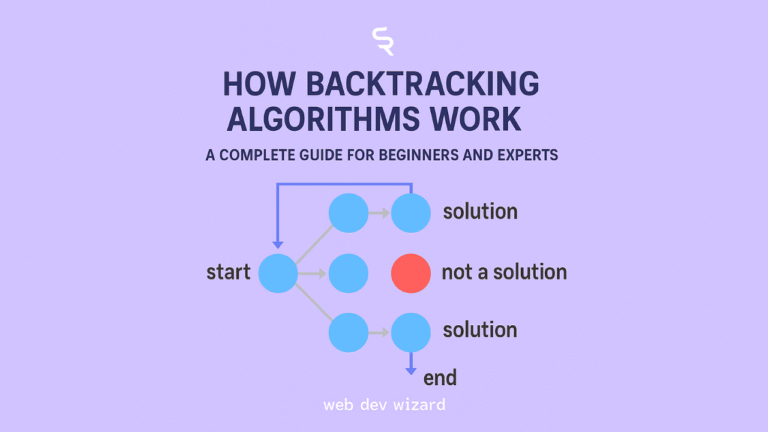
Backtracking follows a recursive logic. It works by progressively building a solution and, if at some point you realize that the solution is not valid, you go back to explore other alternatives.

Key Steps:

  1. If the current solution satisfies the problem, return it.
  2. Otherwise, explore all possible options based on the current situation.
  3. If a choice is valid, it applies it and proceeds recursively.
  4. If no choice leads to a solution, go back and try another alternative.

The algorithm can be represented in pseudocode as follows:

function backtrack(partial_solution):
    if partial_solution is complete:
        return partial_solution
    for each valid choice:
        apply choice
        result = backtrack(updated partial_solution)
        if result is valid:
            return result
        cancel choice
    return failure

Practical Example: N Queens Problem

A classic example of backtracking is the N queens problem , where one must place N queens on an NxN board such that none of them attack each other.

Implementation in Python

def is_safe(board, row, col, N):
    for i in range(row):
        if board[i] == col or \
           board[i] - i == col - row or \
           board[i] + i == col + row:
            return False
    return True

def solve_n_queens(board, row, N):
    if row == N:
        print(board)  # Soluzione trovata
        return
    for col in range(N):
        if is_safe(board, row, col, N):
            board[row] = col
            solve_n_queens(board, row + 1, N)
            board[row] = -1  # Backtrack

def n_queens(N):
    board = [-1] * N
    solve_n_queens(board, 0, N)

n_queens(4)  # Esegue l'algoritmo per N=4

Explanation:

  1. The function is_safechecks whether the queen can be placed in a given column without conflict.
  2. solve_n_queenstry placing the queens row by row.
  3. If all queens are placed, a solution is printed.
  4. If a choice doesn’t lead to a solution, you go back and try another position.

Backtracking Optimization Strategies

Although backtracking is a powerful method, it can become inefficient for large problems. Some optimization techniques include:

  • Heuristics for ordering choices : Try the most promising choices first to reduce the number of recursive calls.
  • Pruning : Eliminating some unpromising choices in advance to save computational time.
  • Memorizing partial solutions : Use techniques such as memoization to avoid repeating unnecessary calculations.

Conclusion

Backtracking algorithms are an elegant solution to many search and optimization problems. Although they can be slow in some cases, with the right optimizations they can solve complex problems efficiently.

Introduction to JavaScript

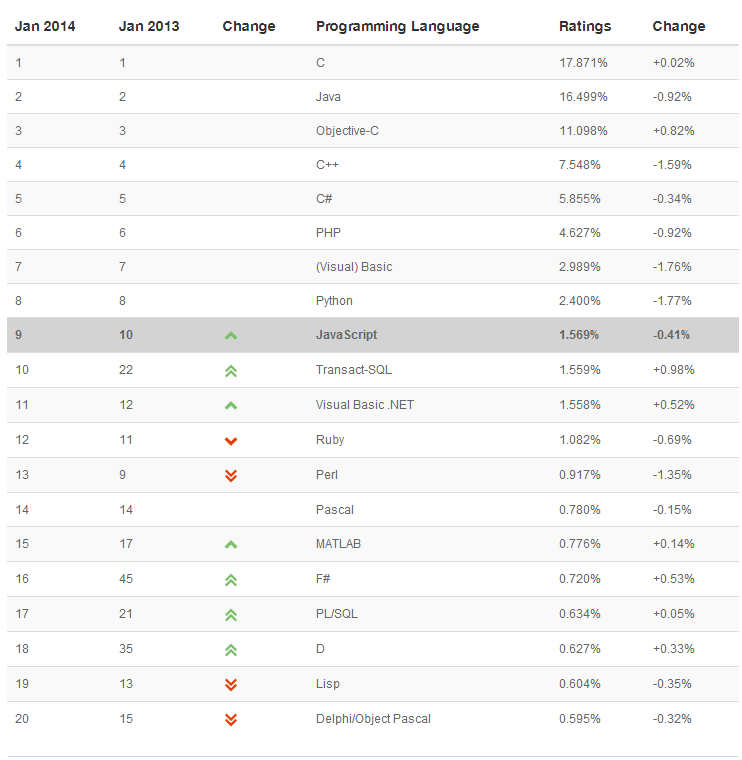
JavaScript is one of the most used programming languages ​​in the world, although with a history of ups and downs, its consolidated presence in the Olympus of great languages ​​such as C, C++ and Java is certain. The following table, taken from the TIOBE Index , testifies to the growth in popularity of this language:

Figure 1. TIOBE Index Statistics

A similar trend is also recorded by another indicator of popularity of programming languages: PYPL

The huge diffusion of JavaScript is mainly due to the flourishing of numerous libraries created with the aim of simplifying programming on the browser, but also to the birth of server-side frameworks and in the mobile world that support it as the main language.

Many JavaScript developers first learned about various libraries like jQuery, MooTools, Prototype and others and their actual knowledge of the language often remained very limited.

Other JavaScript users come from development experiences in other programming languages ​​and very often this generates confusion or underestimation of the potential of the scripting language. For example, many Java, C++ or C# developers , more or less unconsciously transfer the characteristics of their language to JavaScript, given the syntactic similarity, but this sometimes causes errors and an incorrect evaluation of its actual capabilities.

Finally, it should be noted that not all JavaScript users are real developers. Many are users who in one way or another have found themselves having to integrate Web pages with JavaScript, often starting with a copy and paste of blocks of code found around the Internet.

The widespread use of JavaScript does not necessarily indicate actual knowledge of it.

However, given the growing importance of this tool, even outside the Web, it is appropriate on the one hand to rediscover its basic syntactic notions and on the other to explore more advanced concepts that have been added to the language standard over time, in constant transformation. There is no doubt that focusing on JavaScript guarantees the acquisition of skills that are also valid for the future.

In this guide we will explore the basic elements of the language, from variable declarations to data types, from statements to functions. We will analyze its “historical” relationship with HTML and the browser and we will see the support for objects and the relationship with the OOP model , up to the use of regular expressions , Ajax and give a vision of the technologies that are moving around the language. All updated of course to the current state of technology.

History and evolution of language

JavaScript was created in 1995 by Netscape and released with version 2.0 of its browser, Netscape Navigator , initially under the name LiveScript and soon after with its current name, initially creating no small amount of confusion with Java, which was making its debut that very year to great attention from the software world.

JavaScript immediately added to HTML pages the ability to be modified dynamically, based on the user’s interaction with the browser (client side). This was thanks to the calculation and document manipulation functions that could be performed even without involving the server. This feature was emphasized during the 90s with the name that was given to the HTML-JavaScript pair: Dynamic HTML (DHTML) .

In 1997, based on the Netscape language, the ECMA-262 standard was born , defined by the industry standardization organization ECMA International , which represented the specifications of the ECMAScript language . The language defined by ECMA, in the versions that followed, is the point of reference not only for JavaScript, but also for other languages ​​such as ActionScript, WMLScript and QtScript.

The need to make the Web increasingly interactive and dynamic led to the emergence of competing technologies: Flash, ActiveX, and Java Applets. These technologies provided the ability to create more impactful features and graphic effects than JavaScript could, but they required specific runtimes or, like ActiveX controls, only ran on a specific browser.

The competition between external components and JavaScript lasted for several years and saw Flash dominate in user interaction and advertising formats, to the detriment of JavaScript, which seemed destined for a slow decline.

Flash, a Macromedia technology later acquired by Adobe, became popular thanks to the simplicity of creating content and interfaces, but also thanks to the lack of a univocal implementation of the HTML and JavaScript standards, mainly due to the so-called Browser War , or the competition between vendors, started by Microsoft and Netscape and ended only in the second half of the 2000s with the advent of a more careful adherence to the W3C standards.

It was the advent of Ajax technology, the ability to communicate asynchronously with the server via script, that brought JavaScript back to the forefront.

The renewed interest in the language with new application potential has given birth to the so-called Web 2.0 and has caused numerous libraries to flourish with the aim of simplifying some of the most common activities and bypassing the differences that still existed between Browsers, favoring unified and faster programming.

We have in our hands a mature language that can be used in different contexts no longer necessarily linked to the Web.

The evolution of the language on one hand and the advent of HTML5 on the other have further amplified the application possibilities of the language, even outside of the simple Web browser. JavaScript can also be used server-side, in desktop and mobile applications. It is therefore no longer a simple glue between HTML code and the user.

As of now, the latest official version of ECMAScript is version 6, released in June 2015. This version of the specification, generally referred to as ES6 or ECMAScript 2015, adds some interesting new features to the scripting language, and these will be highlighted throughout this guide. However, their support by the latest browsers is not entirely complete. We will see how, despite everything, the new JavaScript features derived from ES6 can be used right now.

Follow by Email
YouTube
WhatsApp