Servings
Join Our Free Facebook Group
Ready, set, go! Get delicious new recipes, time-saving tips and reader favorites in your feed — completely free.
Join the Group
×
4 servings
Total Time
Join Our Free Facebook Group
Ready, set, go! Get delicious new recipes, time-saving tips and reader favorites in your feed — completely free.
Join the Group
×
30–35 minutes
Prep: 10–15 minutes
Baking: 12–18 minutes
Ingredients
Join Our Free Facebook Group
Ready, set, go! Get delicious new recipes, time-saving tips and reader favorites in your feed — completely free.
Join the Group
×
Salmon
Join Our Free Facebook Group
Ready, set, go! Get delicious new recipes, time-saving tips and reader favorites in your feed — completely free.
Join the Group
×
4 salmon fillets (150–200 g each)
Salt, to taste
Black pepper, to taste
Honey Mustard Sauce
Join Our Free Facebook Group
Ready, set, go! Get delicious new recipes, time-saving tips and reader favorites in your feed — completely free.
Join the Group
×
3 tablespoons Dijon mustard
2 tablespoons honey
1 tablespoon whole grain mustard (optional for texture)
2 tablespoons olive oil or melted butter
2–3 garlic cloves, minced
1 tablespoon lemon juice
½ teaspoon paprika
½ teaspoon dried parsley or thyme
Pinch of chili flakes (optional)
For garnish
Join Our Free Facebook Group
Ready, set, go! Get delicious new recipes, time-saving tips and reader favorites in your feed — completely free.
Join the Group
×
Fresh parsley or dill
Lemon slices
Step 1: Prepare the salmon
Join Our Free Facebook Group
Ready, set, go! Get delicious new recipes, time-saving tips and reader favorites in your feed — completely free.
Join the Group
×
Remove the salmon from the refrigerator 15–20 minutes before cooking.
Why:
Join Our Free Facebook Group
Ready, set, go! Get delicious new recipes, time-saving tips and reader favorites in your feed — completely free.
Join the Group
×
Room-temperature fish cooks more evenly.
Pat the fillets dry thoroughly with paper towels.
Important:
Join Our Free Facebook Group
Ready, set, go! Get delicious new recipes, time-saving tips and reader favorites in your feed — completely free.
Join the Group
×
Dry surface helps the glaze stick properly and improves texture.
Check for pin bones by running your fingers along the fillet.
Remove any bones with tweezers if needed.
Season lightly with:
Do not over-salt because mustard already adds strong flavor.
Step 2: Make the honey mustard sauce
Join Our Free Facebook Group
Ready, set, go! Get delicious new recipes, time-saving tips and reader favorites in your feed — completely free.
Join the Group
×
In a bowl, combine:
Dijon mustard
honey
olive oil or melted butter
garlic
lemon juice
paprika
herbs
optional chili flakes
Whisk until smooth and glossy.
Sauce consistency goal
Join Our Free Facebook Group
Ready, set, go! Get delicious new recipes, time-saving tips and reader favorites in your feed — completely free.
Join the Group
×
The sauce should be:
thick enough to coat a spoon
pourable but not watery
If too thick:
Join Our Free Facebook Group
Ready, set, go! Get delicious new recipes, time-saving tips and reader favorites in your feed — completely free.
Join the Group
×
Add 1 teaspoon water or lemon juice.
If too thin:
Join Our Free Facebook Group
Ready, set, go! Get delicious new recipes, time-saving tips and reader favorites in your feed — completely free.
Join the Group
×
Add a little more mustard.
Step 3: Prepare baking tray
Join Our Free Facebook Group
Ready, set, go! Get delicious new recipes, time-saving tips and reader favorites in your feed — completely free.
Join the Group
×
Preheat oven to 200°C (400°F).
Line a baking tray or dish with parchment paper or lightly grease it.
Place salmon fillets skin-side down.
Spacing:
Join Our Free Facebook Group
Ready, set, go! Get delicious new recipes, time-saving tips and reader favorites in your feed — completely free.
Join the Group
×
Leave a little space between fillets for even heat circulation.
Step 4: Apply the glaze
Join Our Free Facebook Group
Ready, set, go! Get delicious new recipes, time-saving tips and reader favorites in your feed — completely free.
Join the Group
×
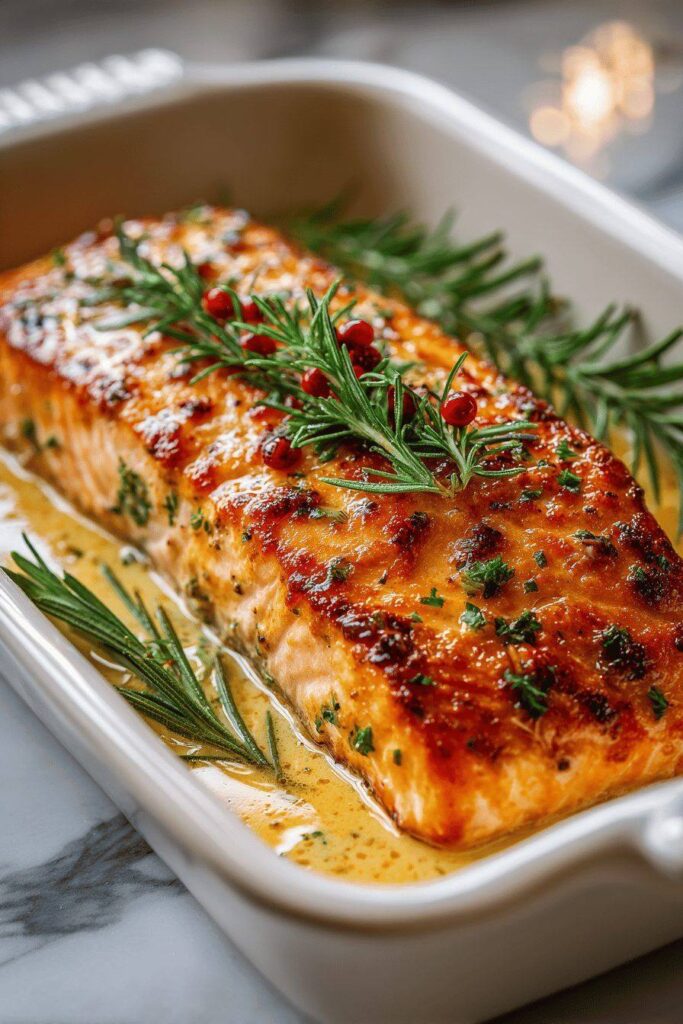
Spoon honey mustard sauce generously over each fillet.
Spread evenly using the back of a spoon or brush.
Important:
Join Our Free Facebook Group
Ready, set, go! Get delicious new recipes, time-saving tips and reader favorites in your feed — completely free.
Join the Group
×
Coat the top well because this becomes the flavorful crust.
Avoid excessive sauce pooling underneath.
Optional:
Add lemon slices around or on top of salmon.
Step 5: Bake
Join Our Free Facebook Group
Ready, set, go! Get delicious new recipes, time-saving tips and reader favorites in your feed — completely free.
Join the Group
×
Bake uncovered at 200°C (400°F).
Cooking time guide
Join Our Free Facebook Group
Ready, set, go! Get delicious new recipes, time-saving tips and reader favorites in your feed — completely free.
Join the Group
×
Thin fillets:
Join Our Free Facebook Group
Ready, set, go! Get delicious new recipes, time-saving tips and reader favorites in your feed — completely free.
Join the Group
×
Medium fillets:
Join Our Free Facebook Group
Ready, set, go! Get delicious new recipes, time-saving tips and reader favorites in your feed — completely free.
Join the Group
×
Thick fillets:
Join Our Free Facebook Group
Ready, set, go! Get delicious new recipes, time-saving tips and reader favorites in your feed — completely free.
Join the Group
×
How to know salmon is done
Join Our Free Facebook Group
Ready, set, go! Get delicious new recipes, time-saving tips and reader favorites in your feed — completely free.
Join the Group
×
Properly cooked salmon should:
flake easily with a fork
look opaque pink inside
still remain moist in the center
Internal temperature
Join Our Free Facebook Group
Ready, set, go! Get delicious new recipes, time-saving tips and reader favorites in your feed — completely free.
Join the Group
×
Avoid overcooking
Join Our Free Facebook Group
Ready, set, go! Get delicious new recipes, time-saving tips and reader favorites in your feed — completely free.
Join the Group
×
Overcooked salmon becomes:
Optional finishing step
Join Our Free Facebook Group
Ready, set, go! Get delicious new recipes, time-saving tips and reader favorites in your feed — completely free.
Join the Group
×
For caramelization:
Switch oven to broil/grill mode.
Broil for 1–2 minutes.
Watch carefully because honey burns quickly.
Step 6: Rest and serve
Join Our Free Facebook Group
Ready, set, go! Get delicious new recipes, time-saving tips and reader favorites in your feed — completely free.
Join the Group
×
Remove from oven.
Let salmon rest 3–5 minutes.
Why:
Join Our Free Facebook Group
Ready, set, go! Get delicious new recipes, time-saving tips and reader favorites in your feed — completely free.
Join the Group
×
Juices redistribute
Texture becomes more tender
Garnish with:
chopped parsley or dill
fresh lemon juice
Recommended side dishes
Join Our Free Facebook Group
Ready, set, go! Get delicious new recipes, time-saving tips and reader favorites in your feed — completely free.
Join the Group
×
Low-carb options:
roasted broccoli
asparagus
cauliflower mash
green beans
Mediterranean salad
Regular options:
rice
mashed potatoes
roasted baby potatoes
Storage and reheating
Join Our Free Facebook Group
Ready, set, go! Get delicious new recipes, time-saving tips and reader favorites in your feed — completely free.
Join the Group
×
Refrigerator
Join Our Free Facebook Group
Ready, set, go! Get delicious new recipes, time-saving tips and reader favorites in your feed — completely free.
Join the Group
×
Store in airtight container for up to 3 days.
Reheating
Join Our Free Facebook Group
Ready, set, go! Get delicious new recipes, time-saving tips and reader favorites in your feed — completely free.
Join the Group
×
Best method:
Oven at 160°C for 8–10 minutes
Microwave:
Use low power to avoid drying
Common mistakes and fixes
Join Our Free Facebook Group
Ready, set, go! Get delicious new recipes, time-saving tips and reader favorites in your feed — completely free.
Join the Group
×
Sauce burns
Join Our Free Facebook Group
Ready, set, go! Get delicious new recipes, time-saving tips and reader favorites in your feed — completely free.
Join the Group
×
Cause:
Too much honey under broiler
Fix:
Salmon dry inside
Join Our Free Facebook Group
Ready, set, go! Get delicious new recipes, time-saving tips and reader favorites in your feed — completely free.
Join the Group
×
Cause:
Fix:
Remove earlier; salmon continues cooking after removal
Watery tray
Join Our Free Facebook Group
Ready, set, go! Get delicious new recipes, time-saving tips and reader favorites in your feed — completely free.
Join the Group
×
Cause:
Salmon not dried before baking
Fix:
Pat dry thoroughly before seasoning
Flavor variations
Join Our Free Facebook Group
Ready, set, go! Get delicious new recipes, time-saving tips and reader favorites in your feed — completely free.
Join the Group
×
Garlic Herb Version
Join Our Free Facebook Group
Ready, set, go! Get delicious new recipes, time-saving tips and reader favorites in your feed — completely free.
Join the Group
×
Add extra parsley, thyme, and garlic.
Spicy Honey Mustard
Join Our Free Facebook Group
Ready, set, go! Get delicious new recipes, time-saving tips and reader favorites in your feed — completely free.
Join the Group
×
Add cayenne or extra chili flakes.
Creamy Version
Join Our Free Facebook Group
Ready, set, go! Get delicious new recipes, time-saving tips and reader favorites in your feed — completely free.
Join the Group
×
Serve with garlic yogurt sauce or a light cream drizzle.
Approximate nutrition (per serving)
Join Our Free Facebook Group
Ready, set, go! Get delicious new recipes, time-saving tips and reader favorites in your feed — completely free.
Join the Group
×
Depends on salmon size and sauce amount, but approximately:
Protein: 30–35 g
Carbs: 8–12 g
Fat: 18–25 g