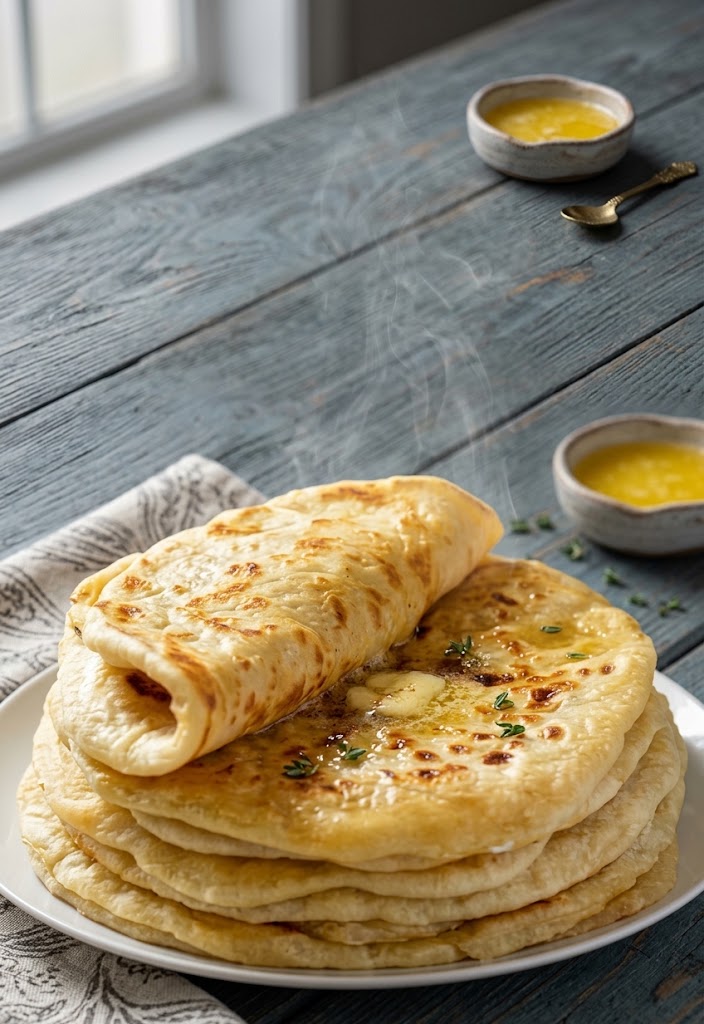

Soft, airy, and wonderfully chewy, this fluffy Turkish flatbread is a simple homemade bread with a beautifully tender center and lightly golden surface. Made with basic ingredients and a little resting time, it puffs up beautifully on a hot skillet and is perfect for wraps, dips, soups, or serving alongside your favorite vegan dishes.
Can This Recipe Support Weight Loss Goals?
This flatbread can fit into a balanced eating plan when enjoyed in a sensible portion. Pairing it with vegetables, beans, lentils, or other protein-rich foods can create a more satisfying meal.
Does This Recipe Fit a High-Protein Lifestyle?
The flatbread itself provides moderate protein from wheat flour but is not a high-protein food. For a more protein-conscious meal, serve it with hummus, lentil soup, chickpea dishes, or tofu-based fillings.
Why This Recipe is Special
- Soft and fluffy — A gentle dough and proper resting create a light texture.
- Easy skillet method — No special bread oven is required.
- Vegan-friendly — Made without eggs or dairy.
- Versatile — Perfect for wraps, dipping, and sandwiches.
- Fresh homemade flavor — Much softer and more fragrant than packaged flatbread.
My Personal Experience
- The texture is what makes this bread special.
It stays soft inside while developing beautiful golden spots on the outside. - A hot skillet creates the perfect puff.
Cooking the bread over strong heat helps it expand and develop those characteristic toasted patches. - It pairs with almost everything.
I love serving it with hummus, roasted vegetables, lentils, and creamy dips. - Fresh from the skillet is unbeatable.
Brushing the warm bread lightly with olive oil keeps it tender and flavorful.
Perfect For
This Turkish flatbread is perfect for breakfast, brunch, lunch, dinner, wraps, sandwiches, dips, soups, mezze platters, family meals, and weekend baking.
Why You’ll Love This Recipe
- Soft and airy The dough produces a fluffy center with a lightly chewy texture.
- No oven required Everything cooks quickly on a hot skillet.
- Simple ingredients Flour, yeast, water, salt, and a little oil are all you need.
- Easy to customize Add herbs, sesame seeds, nigella seeds, or garlic for extra flavor.
Common Mistakes to Avoid
- Adding too much flour — A stiff dough won’t produce a soft, fluffy flatbread.
- Skipping the resting time — The dough needs time to relax and develop.
- Using a cool skillet — Insufficient heat prevents proper puffing.
- Rolling too thin — Keep enough thickness for the bread to become fluffy.
Required Equipment
- Large mixing bowl — Provides enough room for kneading and rising.
- Rolling pin — Makes shaping the flatbreads quick and even.
- Heavy skillet or cast-iron pan — Retains heat for excellent browning.
- Clean kitchen towel — Keeps the dough covered while resting.
- Pastry brush — Makes brushing the finished bread with oil easy.
Storage Instructions
Allow the flatbreads to cool completely before storing.
Keep them in an airtight container or reusable food bag at room temperature for up to 2 days.
For longer storage, freeze them with parchment paper between each flatbread for up to 2 months.
Reheat on a dry skillet over medium heat for 30–60 seconds per side, or microwave for about 15–20 seconds.
Recipe Details
Preparation Time: 20 minutes
Resting Time: 1 hour 15 minutes
Cooking Time: 15 minutes
Total Time: 1 hour 50 minutes
Servings: 6 flatbreads
Best Season: All-season
Total Calories (Per Serving): Approximately 220 calories
Short Introduction
This fluffy Turkish flatbread is soft, airy, and beautifully chewy.
A simple yeast dough cooks quickly on a hot skillet until golden and puffed.
Serve it warm with hummus, vegetables, soups, or your favorite vegan dishes.
📝 Ingredients
- 3 cups all-purpose flour
- 1 teaspoon instant yeast
- 1 teaspoon sugar
- 1 teaspoon salt
- 1¼ cups warm water, approximately 105–110°F (40–43°C)
- 2 tablespoons olive oil
- 1 tablespoon olive oil, for brushing
- 1 tablespoon sesame seeds, optional
- 1 tablespoon nigella seeds, optional
Note: The dough should be soft and slightly tacky, but not excessively sticky. Add flour gradually only if necessary.
Directions
- Activate the yeast.
Add warm water, yeast, and sugar to a bowl. Stir gently and let it stand for 5 minutes until slightly foamy.
If using instant yeast, this step can also be skipped and the yeast added directly to the flour. - Make the dough.
Add flour and salt to a large bowl. Pour in the yeast mixture and 2 tablespoons olive oil. - Mix.
Stir until a rough dough forms. - Knead the dough.
Transfer to a lightly floured surface and knead for 7–9 minutes until smooth, soft, and elastic. - First rise.
Place the dough in a lightly oiled bowl, cover with a clean towel, and let it rise in a warm place for 45–60 minutes, or until approximately doubled in size. - Divide the dough.
Gently deflate the dough and divide it into 6 equal pieces. - Shape the portions.
Roll each piece into a smooth ball. Cover and let them rest for 10–15 minutes. - Roll the flatbreads.
Roll each ball into a round approximately ¼-inch thick. Don’t press the dough completely flat. - Heat the skillet.
Place a heavy skillet over medium-high heat for about 3–5 minutes. It should be properly hot before cooking. - Cook the first side.
Place one flatbread on the dry skillet. Cook for 1–2 minutes until bubbles begin forming and golden spots appear underneath. - Flip.
Turn the flatbread and cook for another 1–2 minutes. It should puff slightly with scattered golden-brown spots. - Finish the bread.
Remove from the skillet and lightly brush with olive oil. Sprinkle with sesame or nigella seeds if desired. - Keep soft.
Stack the cooked flatbreads and cover them with a clean kitchen towel. - Repeat.
Continue cooking the remaining flatbreads. - Serve warm.
Serve immediately with hummus, dips, soups, roasted vegetables, or your favorite vegan filling.
Vegan Cooking Tips
- Keep the dough soft rather than stiff for fluffy flatbreads.
- Don’t use excessive flour while rolling.
- Make sure the skillet is properly hot before adding the dough.
- Stack cooked flatbreads under a towel to trap steam and keep them soft.
- For extra flavor, mix 1 teaspoon dried oregano or za’atar into the dough.
Nutrition Facts
Per Flatbread — Approximate
- Calories: ~220
- Fat: ~5 g
- Cholesterol: 0 mg
- Sodium: ~390 mg
- Potassium: ~75 mg
- Total Carbohydrates: ~38 g
- Fiber: ~2 g
- Net Carbs: ~36 g
- Sugars: ~1 g
- Protein: ~7 g
- Calcium: ~15 mg
Nutrition values are approximate and depend on the flour and exact size of each flatbread.
Notes
- Extra fluffy: Let the dough rise until clearly doubled before shaping.
- More flavor: Add za’atar, oregano, garlic, or fresh herbs.
- Soft texture: Keep cooked flatbreads covered while preparing the rest.
- Crispier version: Cook slightly longer on each side.
- Storage: Keep airtight at room temperature for up to 2 days.
- Freezing: Freeze for up to 2 months with parchment between pieces.
- Reheating: Warm briefly on a skillet for the best texture.
- Allergy: Contains wheat/gluten.
- Vegan: Naturally vegan when prepared with plant-based ingredients.
Frequently Asked Questions
1. Why isn’t my flatbread fluffy?
The dough may not have rested enough or the skillet may not have been hot enough.
2. Can I make the dough ahead of time?
Yes, refrigerate the covered dough overnight and let it come toward room temperature before shaping.
3. Can I use whole-wheat flour?
Yes, but replacing only part of the all-purpose flour helps maintain a softer texture.
4. Can I cook these without oil?
Yes, they can be cooked on a dry skillet, although a light brushing of olive oil adds flavor and softness.
5. How do I keep the flatbread soft?
Stack the cooked pieces and cover them with a clean towel immediately after cooking.
6. Can I freeze Turkish flatbread?
Yes, freeze completely cooled flatbreads with parchment between them for up to 2 months.