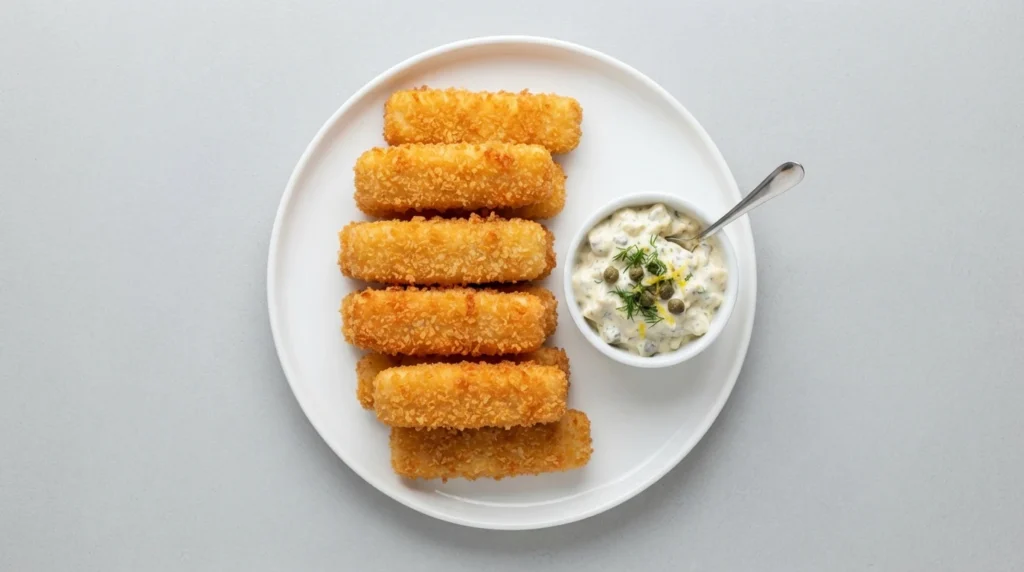

Preparing fish fingers at home often presents a challenge: achieving consistent size and texture while avoiding the rubbery or undercooked edges common with frozen breaded products. Pollock is an excellent choice for this task due to its mild flavor and firm yet flaky texture, but it requires specific preparation to mimic the quality of restaurant-style frying.
This recipe focuses on a practical technique to create evenly sized strips from raw pollock fillets, ensuring they cook uniformly in an air fryer. By trimming the fat line, patting the fish dry, and using a light breadcrumb coating with minimal oil, you achieve a golden exterior and tender interior without the heavy grease of deep frying.
Recipe Overview
This recipe yields approximately 12 to 15 individual fish fingers, suitable for two generous servings. The entire process, including preparation and cooking, takes about 20 minutes.
- Total Time: 20 minutes (5 minutes prep, 15 minutes air frying)
- Servings: 2
- Air Fryer Capacity: One large basket or two smaller baskets; do not overcrowd.
Equipment and Preparation
Success with this recipe relies on proper equipment setup. Use a standard air fryer basket that allows for airflow around the food. If your model requires preheating, set it to 375°F (190°C) for two minutes before loading the fish; however, many modern units cook efficiently without preheat, so this step is optional.
Ensure you have a sharp chef’s knife and a clean cutting board. The key to even cooking is selecting fillets of similar thickness. If your pollock fillets vary significantly in size, trim them to create uniform strips that are approximately ¼-inch (0.6 cm) thick.
Ingredients
All ingredients listed below are measured by weight for accuracy. Ensure you use raw ingredients unless otherwise noted.
- Pollock fillets: 450 grams, raw, skin removed, trimmed of visible fat lines
- Panko breadcrumbs: 85 grams, dry and uncooked
- All-purpose flour: 30 grams, uncooked
- Egg: 1 large egg (approx. 50 grams), raw, lightly beaten
- Paprika: 2 grams, ground, dry spice
- Dried oregano: 1 gram, dry herb
- Vegetable oil spray: as needed for coating
Instructions
- Cut the Fish: On a clean cutting board, cut the 450 grams of raw pollock fillets into strips. Aim for uniform thickness of about ¼-inch (0.6 cm). Consistent thickness is critical for even cooking in an air fryer.
- Dry the Surface: Use paper towels to pat the fish strips thoroughly dry. Removing surface moisture helps the breadcrumbs adhere better and promotes a crispier exterior rather than steaming.
- Set Up the Station: Prepare three shallow dishes or plates: one with the 30 grams of uncooked flour, one with the beaten raw egg, and one with the 85 grams of dry panko breadcrumbs mixed with 2 grams paprika and 1 gram dried oregano.
- Cleanse and Coat: Take a strip of fish and dredge it in the flour, shaking off excess. Dip it into the beaten raw egg, allowing any excess to drip off. Finally, press the strip firmly into the breadcrumb mixture, ensuring full coverage. Place the coated strips in a single layer on a wire rack or parchment-lined plate.
- Cooking Setup: Preheat your air fryer to 375°F (190°C). Lightly spray the basket with vegetable oil spray if your model requires it, though many do not need additional oil for this coating.
- Air Fry: Arrange the fish fingers in a single layer in the basket, ensuring they are not touching. Overcrowding traps steam and leads to uneven cooking. Cook at 375°F (190°C) for 12 to 14 minutes. Flip the strips halfway through the cooking time using tongs.
- Check Doneness: Use a food thermometer to verify safety. The internal temperature of fish should reach 145°F (63°C). If you prefer a deeper golden color, you can cook for an additional 2 minutes, but monitor closely to avoid drying out the flesh.
Troubleshooting Tips
- Sticky Breadcrumbs: If breadcrumbs fall off easily, the fish may not be dry enough. Ensure you pat the strips very dry before dredging in flour.
- Uneven Cooking: If some pieces are raw while others are burnt, your cut thickness is inconsistent or the basket was too full. Always aim for uniform ¼-inch strips and leave space between pieces.
- Soggy Exterior: This usually happens if the fish is not dry before coating or if it was cooked in a crowded basket that trapped steam.
Substitutions
If you do not have panko, regular dry breadcrumbs can be used but may result in a slightly denser crust. For a dairy-free option, ensure your egg is vegan and consider using a plant-based milk wash instead of raw egg if preferred, though the latter requires careful handling to avoid cross-contamination concerns.
Serving and Storage
These fish fingers are best served immediately while hot and crispy. They pair well with a simple lemon-butter sauce or tartar sauce. Leftovers can be stored in an airtight container in the refrigerator for up to 3 days.
To reheat, place the leftovers in the air fryer at 350°F (175°C) for 3 to 4 minutes to restore crispness. Alternatively, microwave for 1 minute and finish in a hot oven or air fryer for texture.
Frequently Asked Questions
Can I use frozen pollock fillets?
While some frozen breaded products are designed for air frying, raw frozen pollock requires thawing first to ensure even cooking. Thaw in the refrigerator overnight or under cold running water, then proceed with the preparation steps.
How do I know if the fish is fully cooked?
The most reliable method is using a food thermometer set to 145°F (63°C). Visually, the flesh should be opaque throughout and flake easily when tested with a fork.
Is this recipe suitable for children?
Yes, pollock has a mild flavor that most children accept. You can adjust the spice levels by adding more paprika or omitting it for a milder taste.