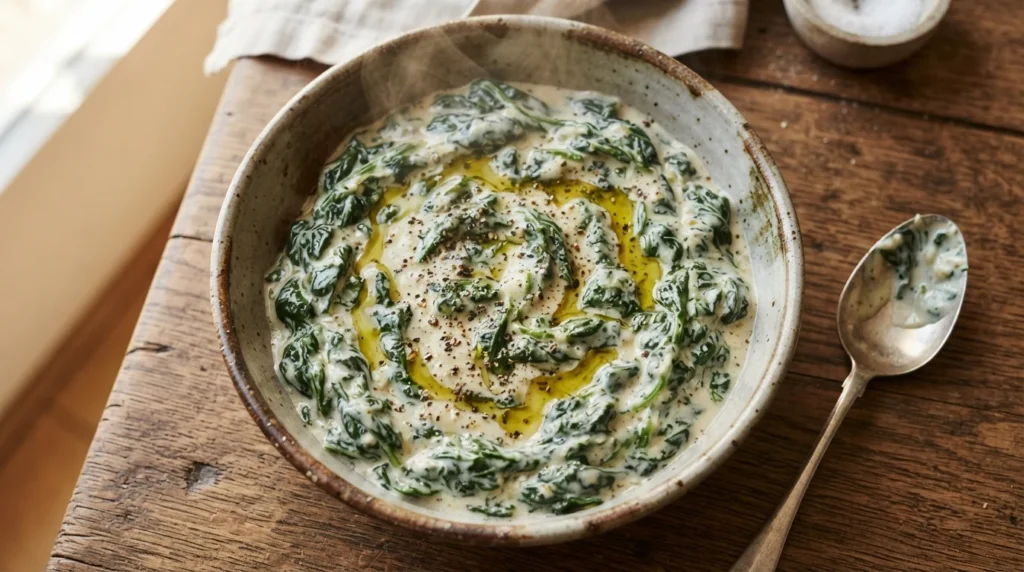

Looking for a way to add richness and creaminess to your roasted vegetables without the starch? Creamed spinach is a classic comfort food, but traditional recipes often rely on flour or heavy cream. This guide explains how to make a satisfying, low-carb version that thickens naturally with egg yolks and butter.
Why Make Keto Spinach Without Flour?
For those following a ketogenic diet or simply seeking lower-carbohydrate options, traditional creamed spinach can be difficult to execute. The starch in flour creates a thick sauce but adds significant carbs, while heavy cream contributes fat and sugar. By using egg yolks as an emulsifier and high-quality butter for richness, you can achieve a dish that is creamy, savory, and much closer to your carb limits.
Recipe: Creamy Keto Spinach (No Flour)
This recipe yields approximately 4 servings. It requires about 10 minutes of active cooking time plus the roasting time for the spinach.
Ingredients
- Spinach: 500g, fresh or frozen (thawed and drained)
- Butter: 50g, unsalted
- Egg Yolks: 2 large (approx. 60g total), room temperature
- Garlic: 1 clove, minced
- Salt: To taste
- Black Pepper: To taste
Equipment
- Microwave-safe bowl or pot
- Small saucepan (if roasting on stove)
Method
The key to success is gentle heat and proper mixing. If using fresh spinach, you can roast it first to concentrate flavor; frozen spinach works directly as well.
- Prepare the Spinach: Place the spinach in a microwave-safe bowl. Cover loosely with a lid or plate. Microwave on high for 2–3 minutes until wilted and soft. If using fresh spinach, you may also sauté it briefly in a pan with a splash of water to release moisture.
- Melt the Butter: In a small saucepan over medium-low heat, melt the butter. Add the minced garlic and cook for about 30 seconds until fragrant but not browned.
- Combine Ingredients: Transfer the cooked spinach to the saucepan with the butter mixture. Stir gently to coat the leaves in the fat.
- Thicken with Egg Yolks: Remove the pan from heat immediately. Add the egg yolks one at a time, whisking constantly with a wooden spoon or silicone spatula. This prevents scrambling while creating a thick, creamy emulsion.
- Season and Serve: Taste and add salt and pepper as needed. Serve warm immediately.
Troubleshooting Common Issues
When making this dish at home, texture is the primary concern.
- Sauce too thin: If the mixture lacks body after adding the yolks, continue whisking gently for another 30 seconds. The residual heat will continue to emulsify the fat and egg. Alternatively, add a small amount of grated Parmesan cheese (check carb content) or coconut cream for extra thickness.
- Spinach too watery: Frozen spinach often releases excess water when thawed. Ensure you drain the liquid thoroughly before cooking. If necessary, cook the spinach in a colander over simmering water for 1–2 minutes to evaporate moisture.
- Egg curdled: This usually happens if the pan gets too hot. Always remove the pan from heat before adding the eggs and whisk continuously.
Genuine Substitutions
You can adjust this recipe slightly based on your pantry, but keep in mind that swaps will alter texture and carbohydrate content.
- Cheese: Adding 30g of full-fat Parmesan or Gruyère enhances flavor and adds creaminess. Note that cheese contains carbohydrates, so this increases the net carb count slightly.
- Milk Alternative: You may use a splash of heavy cream (10ml) for extra richness, but be aware it adds fat and sugar. Do not substitute with low-fat milk or water, as they will result in a watery sauce.
Storage and Reheating
Creamed spinach is best consumed immediately after preparation for peak texture. If you need to store leftovers:
- Fridge: Store in an airtight container for up to 3 days. The dish may separate slightly upon refrigeration.
- Freezer: While spinach freezes well, the egg-based sauce may curdle or become grainy after freezing and thawing. Best used fresh.
To reheat, warm gently in a saucepan over low heat while stirring frequently to prevent sticking.