
Air Fryer Cajun Salmon with a Dry Spice Crust
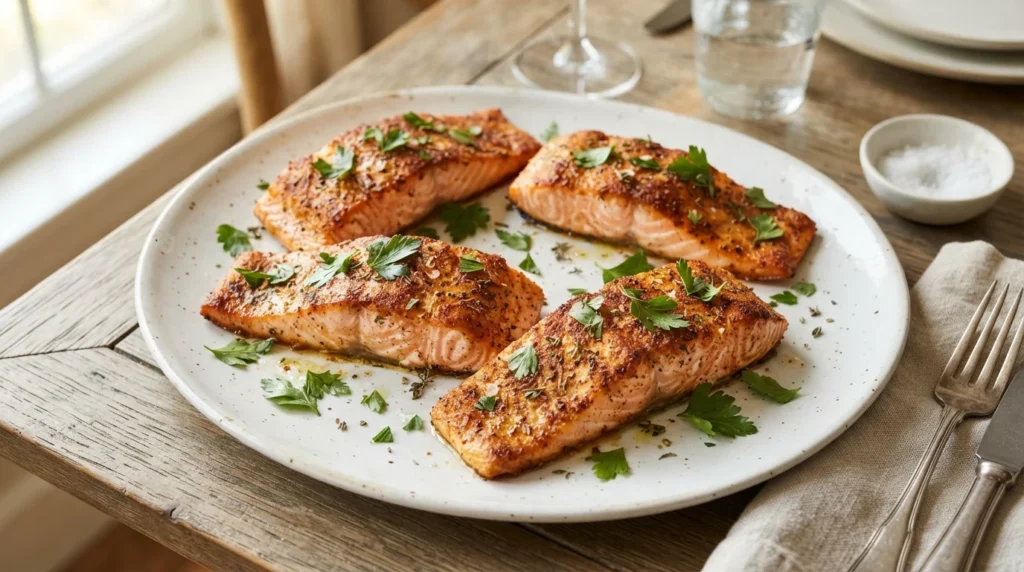
Preparing Cajun-flavored salmon in an air fryer is a straightforward way to enjoy the dish with a satisfyingly crispy crust while keeping the fish tender. The key to success lies in drying the surface of the salmon before applying the spice blend and using the rapid hot air circulation to create browning rather than steaming.
Recipe Overview
- Servings: 4
- Prep time: 10 minutes (including seasoning)
- Air fry time: 12–15 minutes per batch
- Total time: Approx. 25 minutes
Equipment Notes
This recipe is designed for a standard countertop air fryer with a basket capacity of at least 6 quarts (approx. 5.7 liters). For best results, arrange the fillets in a single layer without overlapping. If your air fryer has a rack that sits above the heating element, ensure there is adequate clearance to prevent the fan from hitting accessories. Do not preheat unless your specific manual advises it; the rapid air circulation cooks efficiently at room temperature.
Ingredients
- 4 salmon fillets (skin-on or boneless), approx. 6–8 oz each, cut into uniform thickness of about 1 inch
- 2 tbsp olive oil, divided
- 1 tsp paprika
- 1 tsp garlic powder
- 1 tsp onion powder
- 1 tsp dried thyme
- 1 tsp dried oregano
- 1/2 tsp cayenne pepper (adjust for heat preference)
- 1/2 tsp salt
- 1/4 tsp black pepper
- 1 tbsp lemon juice
Method
- Preparation: Pat the salmon fillets completely dry with paper towels. Moisture on the surface is the enemy of a crispy crust; dry skin or flesh will brown better.
- Seasoning: In a small bowl, whisk together the olive oil, paprika, garlic powder, onion powder, thyme, oregano, cayenne, salt, and black pepper. Rub this mixture generously over all sides of the salmon fillets, pressing it into the flesh slightly.
- Air Frying: Place the seasoned fillets in the air fryer basket in a single layer, skin-side down if they have skin. Do not overcrowd; cooking them in batches ensures even heat distribution.
- Cooking Process: Set the temperature to 375°F (190°C). Cook for 12 minutes. Open the basket and flip the fillets over carefully using tongs. Continue cooking for another 4–6 minutes, depending on thickness.
- Doneness Check: Use a food thermometer to check the internal temperature. For whole-cut salmon, the minimum safe internal temperature is 145°F (63°C). The flesh should be opaque and flake easily when gently pressed with a fork. If using larger fillets, add up to 2 more minutes if not yet reached.
- Resting: Remove the salmon from the air fryer and let it rest on a cutting board for 3–5 minutes before serving. This allows the juices to redistribute within the meat.
Troubleshooting
- Meat is still pink inside: Ensure the fillets were cooked to the correct thickness and that you have not undercooked them. Salmon can remain slightly translucent near the center even at safe temperatures, but it should be fully opaque throughout.
- Crust is soggy or pale: The salmon may have been too moist before seasoning, or overcrowded in the basket. Ensure fillets are completely dry and spaced apart to allow air circulation.
- Skin burns before flesh is done: If using skin-on fillets, you can reduce the temperature to 350°F (175°C) for the first 8 minutes, then flip and increase to 375°F (190°C) to finish cooking the flesh.
Substitutions
- Sauces: A squeeze of fresh lemon juice or a drizzle of hot honey can be added after cooking for brightness. Avoid adding liquid sauces directly into the basket while cooking, as this creates steam and prevents crisping.
- Fresh Herbs: Fresh parsley or chives can be sprinkled on top immediately before serving if desired.
Serving and Storage
Serve the salmon with steamed vegetables or a simple green salad. The fish is best enjoyed within 24 hours of cooking. To store, place leftovers in an airtight container and refrigerate for up to 3 days. Reheat in the air fryer at 350°F (175°C) for 3–5 minutes until warmed through; do not microwave as this will make the crust rubbery.
Frequently Asked Questions
Can I cook frozen salmon fillets in an air fryer?
Yes, but ensure they are thawed completely for even cooking. Frozen pieces may require longer cooking times and a higher temperature (400°F/200°C) to crisp the exterior before the center reaches 145°F.How do I know when the salmon is done without a thermometer?
Look for the flesh turning from translucent to opaque pink. You should be able to flake it easily with a fork at the thickest part of the fillet.Does the skin need to be removed before cooking?
No, keeping the skin on helps protect the delicate flesh and aids in crisping the exterior without needing excessive oil.