
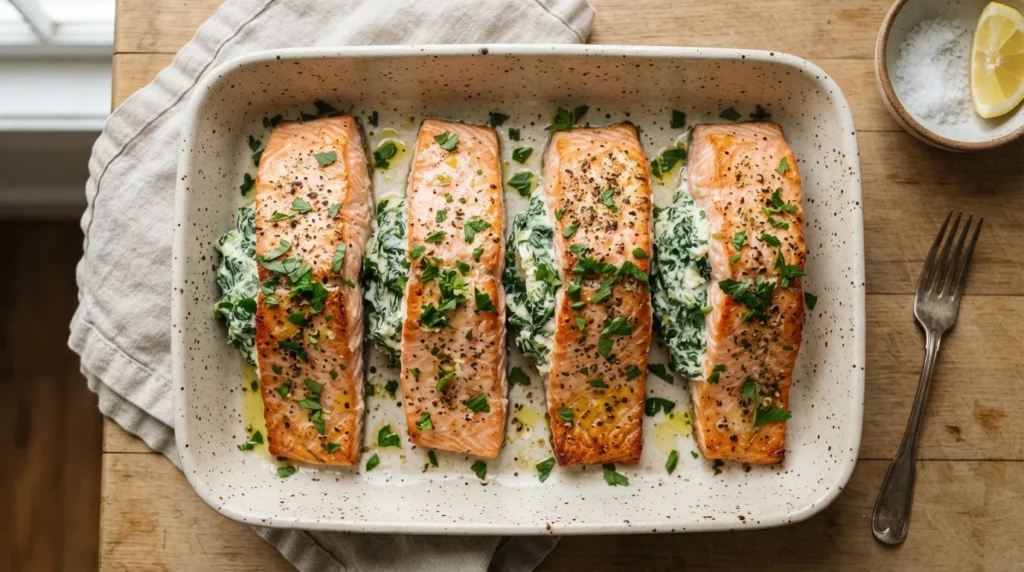

Looking for a satisfying, lower-carbohydrate dinner that feels like comfort food but delivers high protein? Try this Keto Salmon Stuffed with Spinach and Cream Cheese. This dish combines the flaky texture of baked salmon with a rich, savory filling made from sautéed spinach and cream cheese, all held together by a light binder.
The main technique that matters here is managing moisture. Both spinach and cream cheese release water when heated, which can make the filling runny or cause the salmon to steam rather than bake. By pre-treating the spinach and using a specific binding ratio, you ensure a cohesive bite every time.
Recipe Overview
This recipe yields four generous servings. The total active preparation and baking time is approximately 35 minutes, with an optional chilling step of 15 minutes if serving cold.
Ingredients
- Salmon fillets: 4 pieces, approx 180g each (boneless, skin-on preferred for moisture)
- Fresh spinach: 250g, washed and thoroughly dried
- Cream cheese: 200g, full-fat, at room temperature
- Garlic: 2 cloves, minced
- Lemon zest: 1 tsp
- Heavy cream (optional): 30ml, for binding if filling is dry
- Parsley: 1 tbsp, chopped
- Salt and black pepper: to taste
Method
Preheat your oven to 180°C (350°F). Line a baking tray with parchment paper or lightly grease it.
Prepare the filling: In a small saucepan over medium heat, sauté the minced garlic until fragrant (about 1 minute) without browning. Add the spinach and cook for 2 minutes until wilted. Remove from heat and let it cool slightly to prevent cooking the cream cheese prematurely.
In a mixing bowl, beat the room-temperature cream cheese until smooth. Fold in the cooled spinach mixture, lemon zest, parsley, salt, and pepper. If the mixture feels too thick or dry after folding in 30ml of heavy cream, add it gradually until you reach a creamy but holdable consistency.
Assemble: Place the salmon fillets skin-side down on the prepared tray. Spoon approximately 60g of the filling onto each fillet and spread it evenly, leaving a small gap at the top edge to prevent overflow during baking.
Bake for 12–15 minutes until the salmon is opaque and flakes easily with a fork. The internal temperature should reach 63°C (145°F) for optimal tenderness.
Troubleshooting Common Issues
Problem: Watery or runny filling.
Cause: Spinach releases significant water when heated, and cream cheese can separate if overworked. If the filling leaks out during baking, it may steam the salmon, leading to a rubbery texture.
Fix: Squeeze the spinach gently in a clean kitchen towel before adding it to the cream cheese. Alternatively, reduce the amount of spinach by 50g or use frozen spinach that has been thawed and drained thoroughly.
Problem: Dry crumb texture.
Cause: Overcooking the salmon or using low-fat dairy products which lose moisture quickly.
Fix: Remove the fillets 2 minutes before the timer ends and let them rest for 5 minutes. The residual heat will finish cooking gently without drying out the flesh. Ensure you are using full-fat cream cheese, as lower fat versions can result in a grainy texture.
Problem: Leaking filling during baking.
Cause: Overfilling the fillets or not leaving space for expansion.
Fix: Only fill about 70% of the surface area. Leaving a gap allows the filling to expand slightly without spilling into the oven, keeping the presentation neat and preventing grease splatter.
Substitutions
- Cream Cheese Substitute: Full-fat Greek yogurt (100g) can replace cream cheese for a tangier flavor, but it requires more mixing time to incorporate air. Note that this changes the texture slightly and may require adding 5g of heavy cream to maintain richness.
- Saltiness Adjustment: If using store-bought spinach, it is often pre-salted. Taste the filling mixture before adding extra salt to avoid over-seasoning.
Storage and Reheating
This dish can be stored in an airtight container in the refrigerator for up to 3 days. To reheat, place individual portions in the microwave for 45–60 seconds on medium power (50%) to gently warm without overcooking. Alternatively, bake at 160°C (325°F) for 10 minutes.
For best quality, consume within one day of cooking. If you plan to serve this cold, chill the baked fillets in the refrigerator for at least 30 minutes before serving to set the filling firmly.