
Perfect Air Fryer Asparagus Every Time
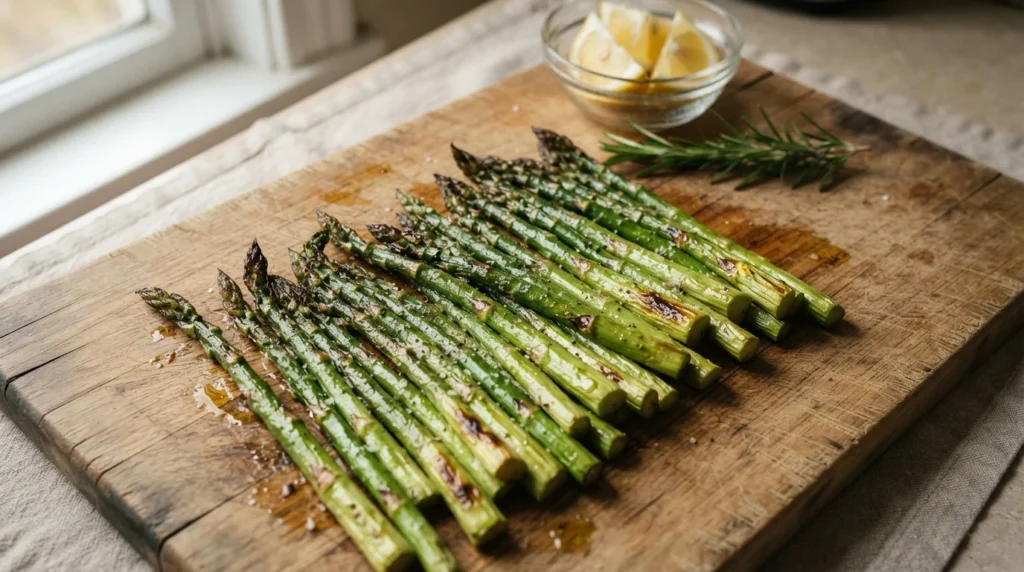
Cooking asparagus in an air fryer is one of the most efficient ways to achieve a crisp-tender texture with minimal effort. The primary challenge when cooking this vegetable in an air fryer is that spears vary significantly in thickness, leading to uneven results if cooked at a fixed time for the entire bunch. By adopting a thickness-based timing approach, you can ensure that thinner spears are not overcooked and mushy while thicker ones remain tender-crisp rather than tough.
Recipe Overview
- Yield: 2 to 3 servings (serves 4 if halved)
- Preparation Time: 5 minutes (peeling, trimming, tossing)
- Air Frying Time: 6 to 9 minutes per batch
- Total Elapsed Time: Approximately 12 minutes (including prep and cooling)
This recipe assumes you have a standard air fryer basket with a capacity of about 4 to 5 cups. For best results, cook in batches if your bunch is large enough that the spears do not lie flat against the bottom of the basket. Overcrowding traps steam and steams the asparagus instead of roasting it.
Equipment Requirements
- Air fryer (standard model)
- Chef’s knife or vegetable peeler
- Measuring spoon for oil
If your air fryer has a specific accessory like a perforated tray, ensure it is designed to allow airflow underneath the food. Do not use loose paper towels or foil directly in contact with the heating element; line the basket only if it does not block the fan vents.
Ingredients
Asparagus: 1 lb (450g), fresh, trimmed of woody ends. Cut to uniform thickness for even cooking.
Olive Oil: 1 tablespoon (approx. 15g)
Salt: 1/2 teaspoon (approx. 3g)
Black Pepper: 1/4 teaspoon (approx. 1g)
Paprika (optional): 1 teaspoon (approx. 5g) for color and slight smokiness.
Method
- Preparation: Preheat the air fryer to 375°F (190°C). While it heats, inspect your asparagus bunch. Identify spears that are thin (approx. 1/4 inch or 0.6 cm) and those that are thick (approx. 1/2 inch or 1.3 cm).
- Trimming: Snap off the woody ends of the spears by bending them until they break naturally. This is a reliable test for edibility. Peel the lower half of any large, thick spears to remove fibrous skin, though this is optional depending on preference.
- Tossing: Place the asparagus in a bowl. Drizzle with 15g olive oil, ensuring every spear is lightly coated. Add salt (3g) and pepper (1g). Toss gently to distribute seasoning evenly without bruising the spears.
- Batching Strategy: Divide the asparagus into two batches based on thickness: Batch A contains the thin spears; Batch B contains the thick spears. Spread them in a single layer in the air fryer basket. Do not stack them.
- Cooking Thin Spears (Batch A): Air fry at 375°F (190°C) for 6 minutes. At the 4-minute mark, shake the basket to redistribute heat exposure and turn spears if they have flat sides.
- Cooking Thick Spears (Batch B): Air fry at 375°F (190°C) for 8 to 9 minutes. Check at the 6-minute mark; thick spears need more time to penetrate the center without burning the exterior.
- Doneness Check: Use a food thermometer if available. The ideal internal temperature for asparagus is not strictly defined like meat but should be firm when pressed, with bright green color and no gray browning. If using a thermometer, ensure it reads at least 120°F (49°C) to confirm raw state, though visual cues are primary.
- Final Touch: Once cooked, transfer the asparagus to a serving dish immediately. Let cool for 2 minutes before serving to prevent steaming in their own juices.
Troubleshooting
- Symptom: Mushy or limp spears.
Likely Cause: Overcooking or overcrowding the basket.
Correction: Ensure spears are in a single layer with space between them. Reduce cooking time by 1 minute and check earlier. - Symptom: Burnt tips, raw center.
Likely Cause: Uneven thickness within the batch or blocked airflow.
Correction: Separate thin and thick spears into different batches. Do not cover the basket with foil that blocks vents. - Symptom: Gray or dull color.
Likely Cause: Excessive moisture or steaming rather than roasting.
Correction: Dry the asparagus thoroughly before cooking. Ensure the basket is clean and oil is applied correctly.
Substitutions
You can substitute olive oil with avocado oil (same quantity) for a higher smoke point, suitable if you prefer to cook at 400°F (200°C). If you do not have paprika, omit it; the flavor will rely solely on salt and pepper. Do not substitute frozen asparagus for fresh without adjusting time, as frozen varieties often require longer cooking and may release excess water.
Serving and Storage
Asparagus pairs well with lemon wedges, garlic butter, or a simple vinaigrette. It can be served as a side dish with grilled fish, pasta, or roasted chicken.
For storage, allow the asparagus to cool completely (within 2 hours of cooking) and place it in an airtight container. Consume within 3 days for best quality. Do not leave cooked asparagus out at room temperature for extended periods.
To reheat leftovers, place them in the air fryer at 350°F (175°C) for 2 to 3 minutes until warmed through. Avoid microwaving as it can make the texture rubbery.
Frequently Asked Questions
Can I cook the whole bunch at once?
It is possible if the bunch is very small, but for standard bunches, separating by thickness yields better results. Cooking together often leads to thin spears being overcooked while thick ones remain undercooked.
How do I know when it is done without cutting into it?
The best indicator is visual: the tips should be bright green and slightly charred, and the stems should snap cleanly rather than bend. Pressing a spear should feel firm but not hard.
Is there a specific internal temperature for asparagus?
Unlike poultry or beef, asparagus does not have a strict USDA minimum internal temperature like 165°F. However, it is considered safe and palatable when cooked thoroughly to an internal temperature of at least 120°F (49°C) with no raw green center visible.