
How to Make Air Fryer Cinnamon Sugar Donut Holes from Yeast Dough
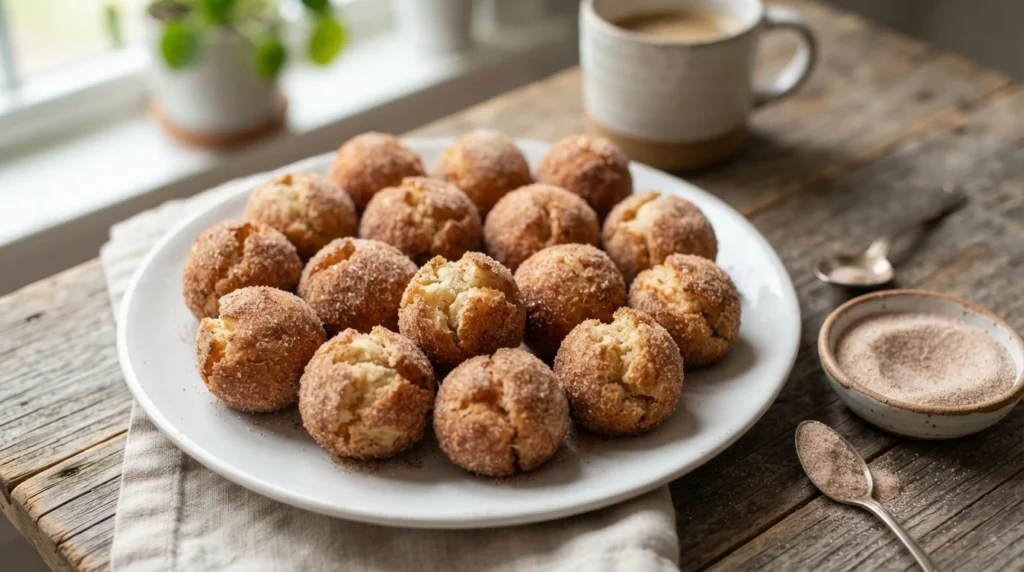
Transform standard yeast dough into golden, cinnamon-sugar donut holes using an air fryer. While traditional deep frying creates a distinct crunch, the air fryer method offers a healthier alternative with significantly less oil and reduced cleanup. The key to success lies in managing moisture content during proofing and ensuring the basket is not overcrowded, which allows hot air to circulate evenly around each piece.
Recipe Overview
Total Yield: Approximately 18–24 donut holes (depending on size preference).
Preparation Time: 30 minutes (includes dough mixing and initial rise).
Proofing Time: 60–90 minutes (until doubled in size).
Air Frying Time: 5–7 minutes per batch.
Total Elapsed Time: Approximately 2 hours.
This recipe yields a single batch of dough. The dough is divided into uniform portions, proofed until puffy, and then fried in small batches to ensure even cooking and a crisp texture.
Essential Equipment
- Air Fryer with a standard perforated basket (approx. 6–8 cup capacity).
- Mixing bowl and dough scraper.
- Large baking sheet or parchment-lined tray for proofing.
- Foil or silicone liner for the air fryer basket.
Note: Do not use loose paper towels directly in the air fryer basket as they can catch fire near the heating element. Always line the basket with foil or a heat-safe silicone mat if using parchment paper.
Ingredients
All measurements are by weight for accuracy.
- Yeast Dough Base:
- Bread Flour: 300g
- Active Dry Yeast (or Instant): 5g
- Sugar: 40g
- Salt: 6g
- Milk (whole, warm to 110°F/43°C): 200ml (approx. 200g)
- Unsalted Butter, softened but not melted: 80g
- Egg Large: 50g
- Cinnamon Sugar Coating:
- Granulated Sugar: 120g
- Pure Ground Cinnamon: 15g
Step-by-Step Instructions
1. Prepare the Dough Ingredients
In a large mixing bowl, combine the yeast and 10ml of the warm milk. Allow this mixture to sit for 5–10 minutes until foamy, indicating the yeast is active. Add the remaining milk, bread flour, sugar, salt, egg, and softened butter. Mix by hand or with a stand mixer on low speed (approx. 3 minutes) until a shaggy dough forms.
2. Knead and Rest
Knead the dough for 5–7 minutes until it is smooth, elastic, and no longer sticks aggressively to your hands or the bowl. This develops gluten structure, which provides the chewiness essential for donut holes. Lightly grease a large baking sheet with oil or butter.
3. First Proof
Place the dough ball on the greased baking sheet. Cover loosely with a damp cloth or plastic wrap to prevent a skin from forming. Let the dough rise at room temperature for 60–90 minutes, or until it has roughly doubled in size and looks puffy.
4. Shape the Donut Holes
Gently punch down the dough to release excess air. Turn it out onto a lightly floured surface. Divide the dough into 18–24 equal portions (approx. 30g each). Roll each portion into a smooth ball and place them on the baking sheet, spaced apart so they do not touch. Cover again and let them proof for an additional 30–45 minutes until they are visibly puffed.
5. Prepare the Air Fryer
Preheat your air fryer to 160°C (325°F). Line the basket with foil or a silicone mat. Lightly grease the surface of the liner with a small amount of oil to prevent sticking.
6. Arrange and Cook
Place the proofed dough balls into the air fryer basket in a single layer. Do not overcrowd; cook in batches if necessary to ensure hot air reaches all surfaces. Spray the tops of the donut holes lightly with oil using an atomizer bottle to promote browning.
Set the air fryer to 175°C (350°F) for 5 minutes. Open the basket and check the color. If they are pale, cook for an additional 2–3 minutes. The donut holes are done when they are golden brown on top and the interiors are cooked through.
Food Safety and Doneness
While yeast dough does not require a specific internal temperature like meat, it is crucial to ensure the center is fully set. Using a food thermometer inserted into the center of a donut hole should read at least 180°F (82°C). This confirms the gluten structure has fully set and any remaining moisture has evaporated.
Avoid undercooking, as this can lead to a gummy texture and potential spoilage if left at room temperature for extended periods.
Serving and Storage
Transfer the cooked donut holes to a wire cooling rack. Do not stack them while warm, or the bottom pieces will become soggy from steam. Serve immediately while warm and crisp. They pair well with coffee, tea, or a dusting of powdered sugar.
Storage Guidelines
Room Temperature: Store in an airtight container for up to 2 days. Reheat in the air fryer at 175°C (350°F) for 2–3 minutes to restore crispness.
Fridge: Can be stored for up to 4 days. Bring to room temperature before serving.
Freezer: Individual portions can be frozen uncooked after shaping, or cooked holes can be frozen for up to 3 months. Thaw in the fridge overnight or reheat directly from frozen.
Troubleshooting
- Soggy Bottoms: Caused by overcrowding the basket or insufficient airflow. Ensure pieces are spaced and cooked in batches.
- Pale Color: Indicates cooking time was too short or temperature too low. Increase time by 1–2 minutes per batch.
- Dense Texture: May result from under-proofing the dough or over-kneading, which can push out too much air. Allow adequate rising time (at least 60 minutes).
Frequently Asked Questions
Can I use instant yeast instead of active dry yeast?
Yes, but reduce the water slightly by about 15ml as instant yeast absorbs moisture faster. The rest of the recipe remains the same.
How do I know when to stop cooking?
Check at the 5-minute mark. If they are golden brown and a thermometer reads 180°F (82°C) in the center, remove them immediately. Overcooking can dry out the interior.
Is it safe to eat donut holes straight from the air fryer basket?
No. They must be transferred to a cooling rack to allow steam to escape. Eating them while stacked retains moisture and creates a soggy texture.