
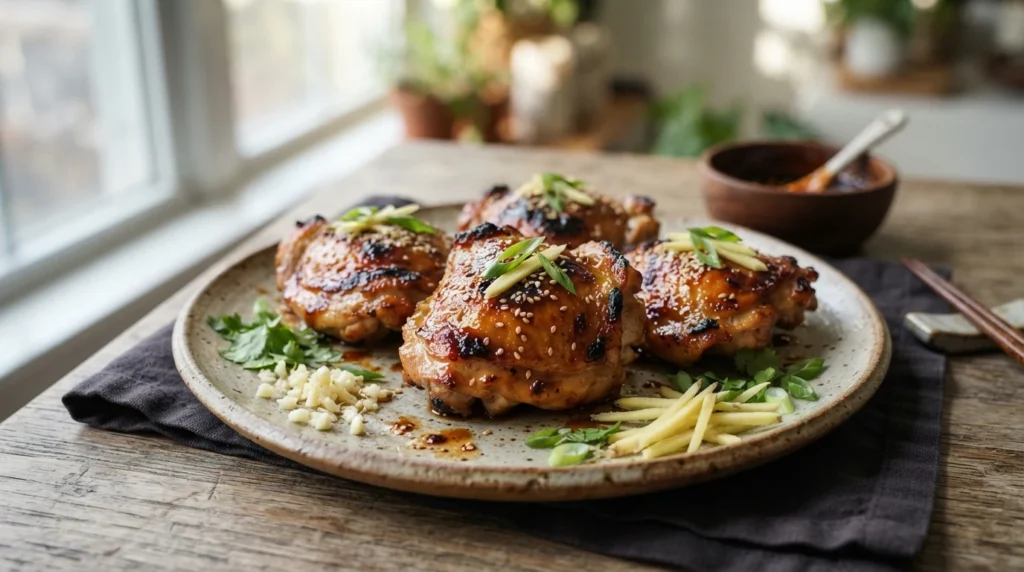

Teriyaki chicken thighs are a crowd-pleaser when they balance smoky skin with sweet-savory sauce. In an air fryer, the challenge is preventing the sugar in the glaze from burning before the meat cooks through. The solution is a two-stage process: sear the chicken first to develop texture and color, then apply the teriyaki sauce near the end of cooking.
Why This Method Works
Cooking raw chicken directly in teriyaki sauce often results in a burnt exterior and undercooked interior. By searing the meat without sugar initially, you create a golden crust. Adding the sauce later allows it to caramelize gently rather than scorch, while ensuring the poultry reaches a safe internal temperature.
Recipe Overview
- Servings: 4
- Preparation time: 10 minutes (includes marinating)
- Air frying time: 18–22 minutes total
- Total elapsed time: Approximately 30 minutes
Equipment and Basket Capacity
This recipe assumes a standard air fryer basket with a capacity of about 600g (1.3 lbs) for this batch size. Do not overcrowd the basket; cook in a single layer to ensure even airflow. If your appliance has a larger basket, you may fit two batches sequentially.
Ingredients
- Chicken thighs: 800g (bone-in, skin-on, cut into uniform 3–4cm pieces)
- Soy sauce: 120ml
- Sugar: 60g (granulated or light brown)
- Ginger paste: 15g
- Garlic paste: 10g
- Vegetable oil: 30ml
- Sesame seeds: 10g (for garnish)
Preparation Instructions
- Patry dry the chicken. Remove the thighs from the refrigerator 15 minutes before cooking. Pat them thoroughly dry with paper towels to remove surface moisture. This step is critical for achieving crisp skin rather than steaming.
- Prepare the teriyaki mixture. In a small bowl, combine 90ml of soy sauce, 45g sugar, ginger paste, and garlic paste. Stir until the sugar begins to dissolve. Set aside half of this mixture (approx. 60ml) for the final glaze step.
- Sear the chicken. Place the chicken thighs in the air fryer basket in a single layer, ensuring they do not touch. Lightly brush each piece with vegetable oil using a silicone brush to prevent sticking and aid browning. Air fry at 200°C (400°F) for 8–10 minutes. Do not apply any sauce yet.
- Check internal temperature. After the first 8 minutes, use a food thermometer to check the thickest part of the meat. If it has reached 74°C (165°F), remove immediately. Otherwise, continue cooking until safe.
- Apply the glaze. Remove the basket and carefully brush the reserved teriyaki mixture over all pieces. Avoid adding more oil at this stage to prevent burning the sugar.
- Finish cooking. Return the basket to the air fryer. Cook at 180°C (350°F) for an additional 6–8 minutes, or until the sauce has thickened slightly and the internal temperature reaches 74°C (165°F). Open the door carefully during this phase to allow steam to escape.
Troubleshooting
- Sauce burns too quickly: If the glaze darkens excessively before the meat is done, lower the temperature to 170°C (340°F) and extend the time by a few minutes.
- Chicken remains dry: Ensure you are not overcooking. Thighs contain more fat than breasts but can still dry out if exposed to high heat for too long after the initial sear.
- Skin is soft: If the skin does not crisp, ensure the basket is not overcrowded and that you patted the meat dry before starting.
Substitutions
If you prefer a less sweet glaze, reduce the sugar by 20g. For a dairy-free option, this recipe is naturally suitable as it contains no animal-derived fats or milk solids beyond the soy sauce and honey (if substituted for sugar).
Serving and Storage
Serve immediately over steamed white rice or with jasmine rice to absorb the sauce. Store leftovers in an airtight container in the refrigerator for up to 3 days. Reheat in the air fryer at 180°C (350°F) for 4–5 minutes until heated through to 74°C (165°F).
Frequently Asked Questions
Can I use boneless chicken?
You can, but bone-in thighs provide more flavor and structural integrity in the air fryer. Boneless pieces may cook faster; check temperature at 7 minutes.
How do I know if it is done?
Rely on a food thermometer rather than visual cues alone. The internal temperature must reach 74°C (165°F) for poultry safety.