
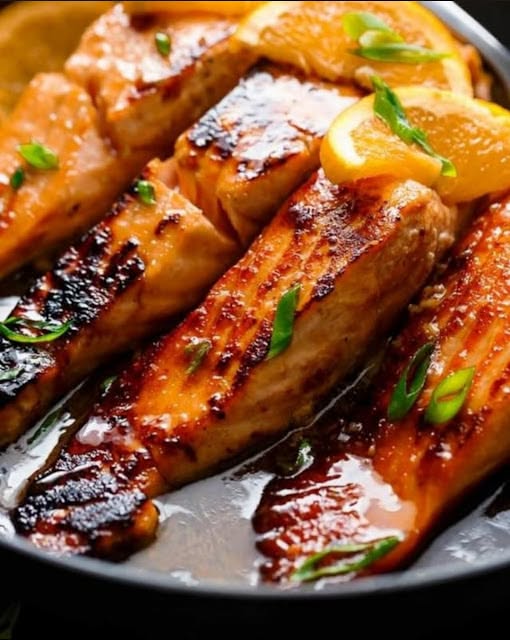

These Crispy Honey Orange Glazed Salmon Fillets combine flaky, tender salmon with a beautifully caramelized exterior and a glossy sweet-and-citrusy glaze. Fresh orange juice and zest brighten the rich salmon, while honey adds just enough sweetness to create irresistible golden edges.
It’s an easy high-protein salmon recipe that comes together quickly and works beautifully for weeknight dinners, meal prep, or an elegant weekend meal. The contrast between the crisp surface and buttery, flaky center makes every bite satisfying.
Short Description
Tender salmon fillets are pan-seared until golden and finished with a sticky honey-orange glaze.
Fresh orange, garlic, and a touch of soy sauce create a sweet-savory flavor.
A quick, protein-rich dinner that’s elegant enough for entertaining.
Can This Crispy Honey Orange Glazed Salmon Support Weight Loss Goals?
Yes, it can fit into a balanced, calorie-conscious eating pattern. Salmon provides substantial protein along with naturally occurring fats, while the orange and honey glaze adds flavor and carbohydrates. Pairing one fillet with plenty of vegetables and a moderate portion of a whole-grain or starchy side can create a balanced meal.
Does Crispy Honey Orange Glazed Salmon Fit a High-Protein Lifestyle?
Absolutely. Salmon is naturally rich in protein, making this recipe a strong choice for a high-protein lifestyle. The glaze contains honey and orange juice, so it contributes some carbohydrates, but the overall meal can remain protein-forward. Serve it with roasted vegetables, salad, or cauliflower rice if you’d like to keep the carbohydrate contribution lower.
Why This Recipe Is Special
- Crispy and flaky: A hot skillet creates beautifully browned edges while the center stays tender.
- Sweet and savory: Honey balances the citrus, garlic, and soy sauce.
- High-protein: Salmon provides an excellent protein base for the meal.
- Fresh citrus flavor: Orange juice and zest give the glaze a bright, aromatic finish.
- Quick enough for weeknights: The entire dish can be ready in around 25 minutes.
My Personal Experience
- The orange glaze is the star of the dish.
Fresh orange juice gives the sauce a bright citrus flavor without overpowering the salmon.
The zest makes the orange aroma even more noticeable. - Getting the salmon crispy makes a huge difference.
Patting the fillets dry before cooking helps the surface brown properly.
I like letting the salmon sit undisturbed for several minutes before flipping. - The honey creates beautiful caramelized edges.
Adding the glaze toward the end prevents the honey from burning too quickly.
A short final cook gives the salmon that glossy, sticky finish. - It’s surprisingly easy for something that looks fancy.
The glaze takes only a few minutes to mix together.
Once the salmon is cooked, dinner comes together almost effortlessly.
Perfect For
- Weeknight dinners: A quick meal with impressive flavor.
- Meal prep: Salmon can be portioned with vegetables for ready-to-go lunches.
- Date nights: The glossy orange glaze gives the dish a restaurant-style appearance.
- Dinner parties: Elegant enough to serve guests without complicated preparation.
- High-protein meal plans: Salmon makes the dish naturally protein-rich.
- Summer and spring meals: Bright citrus pairs especially well with lighter vegetable sides.
Why You’ll Love This Recipe
- Crispy outside, tender inside.
Proper pan-searing creates a delicious contrast in texture.
The salmon remains moist and flaky in the center. - A five-minute glaze.
Orange juice, honey, garlic, and soy sauce quickly become a flavorful finishing sauce.
There’s no need for a complicated marinade. - Naturally high in protein.
A salmon fillet provides a substantial protein serving.
It’s a great foundation for a satisfying dinner. - Sweet, tangy, and savory.
Honey adds sweetness while citrus brings acidity and freshness.
Soy sauce adds savory depth that balances the glaze. - Easy to customize.
Add chili flakes for heat or ginger for a more aromatic finish.
You can also swap orange for a mixture of orange and lime.
Common Mistakes to Avoid
- Not drying the salmon — Moisture on the surface prevents proper browning and can make the fillets steam rather than crisp.
- Adding honey too early — Honey can burn over high heat, so add the glaze near the end of cooking.
- Flipping the salmon too frequently — Let it sear undisturbed so a golden crust can develop.
- Overcooking the fillets — Salmon continues cooking slightly after leaving the pan, so avoid leaving it on high heat too long.
Required Equipment
- Large non-stick or cast-iron skillet — Provides even heat for a crisp, golden crust.
- Fish spatula — Makes flipping delicate salmon fillets easier without breaking them.
- Small saucepan or bowl — Makes mixing and reducing the orange glaze simple.
- Microplane zester — Produces fine orange zest that distributes evenly through the glaze.
- Instant-read thermometer — Helps you monitor the salmon’s internal temperature precisely.
Storage Instructions
Allow leftover salmon to cool before transferring it to an airtight container. Refrigerate within about two hours and use within 3–4 days.
For freezing, wrap individual fillets tightly in plastic wrap or foil and place them in a freezer-safe container or bag. Freeze for up to 2 months for best quality.
Thaw frozen salmon overnight in the refrigerator. Reheat gently in a covered skillet over low heat with a teaspoon or two of water, or microwave in short intervals. Avoid high heat because it can dry out the salmon and make the glaze sticky or burnt.
Recipe Details
- Preparation Time: 10 minutes
- Cooking Time: 15 minutes
- Total Time: 25 minutes
- Servings: 4
- Best Season for This Recipe: All-season
- Total Calories (Per Serving): Approximately 390 calories
📝 Ingredients
For the Salmon
- 4 salmon fillets, about 6 oz (170 g) each, skin-on or skinless
- 1 tsp salt
- ½ tsp black pepper
- ½ tsp garlic powder
- 1 tbsp olive oil
- 1 tbsp unsalted butter
For the Honey Orange Glaze
- ½ cup (120 ml) fresh orange juice
- 1 tbsp orange zest
- 3 tbsp honey
- 2 tbsp low-sodium soy sauce
- 3 cloves garlic, minced
- 1 tsp fresh ginger, grated
- 1 tsp rice vinegar
- 1 tsp cornstarch
- 1 tbsp cold water
- ¼ tsp red pepper flakes, optional
For Garnish
- 1 tbsp chopped fresh parsley
- Orange slices or wedges, optional
- 1 tsp sesame seeds, optional
Ingredient notes: Fresh orange juice and zest give the brightest flavor. If your salmon fillets are very thick, allow a few extra minutes of cooking time. For a gluten-free version, use certified gluten-free tamari instead of soy sauce.
Directions
- Pat the salmon dry.
Use paper towels to thoroughly dry both sides of each fillet. This is important for achieving a crisp exterior. - Season the salmon.
Sprinkle both sides with salt, black pepper, and garlic powder. Let the seasoned fillets rest for 5 minutes while you prepare the glaze. - Prepare the glaze.
In a small bowl, whisk together orange juice, orange zest, honey, soy sauce, minced garlic, ginger, rice vinegar, and red pepper flakes if using. - Prepare the thickener.
In a separate small bowl, mix cornstarch with cold water until completely smooth. Set aside. - Heat the skillet.
Place a large skillet over medium-high heat for about 2 minutes. Add olive oil and butter. - Sear the salmon.
Once the butter is foamy, place the salmon in the skillet. If using skin-on fillets, place them skin-side down. Cook for 4–5 minutes without moving.
Texture cue: The bottom should develop a deep golden-brown crust. - Flip carefully.
Use a fish spatula to turn the fillets. Cook the second side for approximately 2–4 minutes, depending on thickness. - Add the glaze.
Reduce the heat to medium-low and pour the orange-honey mixture around the salmon. Cook for 2 minutes, spooning the sauce over the fillets. - Thicken the sauce.
Stir the cornstarch slurry once more and add it gradually to the skillet. Cook for 1–2 minutes, gently spooning the thickening glaze over the salmon.
Visual cue: The glaze should become glossy and cling lightly to the salmon. - Check the salmon.
For a reliably cooked fillet, check the thickest portion with an instant-read thermometer. A food-safe target is 145°F (63°C). The flesh should appear opaque and flake easily. - Finish the glaze.
Remove the skillet from the heat once the glaze is thick and shiny. Avoid prolonged cooking because the honey can darken quickly. - Garnish and serve.
Sprinkle with fresh parsley and sesame seeds if desired. Add orange wedges for an extra burst of citrus.
High-Protein Cooking Tips
- Choose salmon fillets that are similar in thickness so they finish cooking at approximately the same time.
- Pat the salmon completely dry before searing for better browning.
- Avoid pressing down on the fillets with a spatula because this can force out the natural juices.
- Serve with vegetables or a protein-friendly side to keep the overall meal balanced.
- Add extra salmon rather than extra glaze if you’re trying to increase the protein content without significantly increasing added sugar.
Nutrition Facts — Per Serving (Approximate)
Nutrition values are estimates and can vary according to salmon size, honey, butter, and specific brands.
- Calories: ~390 kcal
- Fat: ~21 g
- Cholesterol: ~95 mg
- Sodium: ~620 mg
- Potassium: ~850 mg
- Total Carbohydrates: ~18 g
- Fiber: ~1 g
- Net Carbs: ~17 g
- Sugars: ~15 g
- Protein: ~38 g
- Calcium: ~25 mg
Notes
- Storage: Refrigerate cooked salmon in an airtight container for 3–4 days.
- Freezing: Freeze cooked fillets for up to 2 months for best quality.
- Reheating: Warm gently over low heat to preserve the salmon’s moisture.
- Allergy notes: Contains fish, soy, and potentially sesame if sesame seeds are used.
- Gluten-free: Replace soy sauce with certified gluten-free tamari.
- Flavor boost: Add extra orange zest, grated ginger, chili flakes, or a small squeeze of lime.
- Lower-sugar option: Reduce the honey slightly and increase the orange zest and vinegar to maintain a balanced glaze.
- Serving ideas: Pair with roasted broccoli, asparagus, green beans, cauliflower rice, quinoa, or a fresh citrus salad.
Frequently Asked Questions
1. Can I use frozen salmon fillets?
Yes, thaw them completely in the refrigerator and pat them very dry before seasoning and cooking.
2. Can I use another type of fish?
Yes, firm fish such as cod, halibut, or trout can work, although cooking times will vary.
3. Can I make the orange glaze ahead of time?
Yes, prepare the glaze up to 2 days ahead and refrigerate it in an airtight container.
4. How do I make the salmon extra crispy?
Dry the fillets thoroughly, preheat the skillet well, and avoid moving the salmon while the first side sears.
5. Can I make this recipe without honey?
Yes, you can use a suitable alternative sweetener, although the caramelized flavor and texture of the glaze will be slightly different.
6. What should I serve with honey orange salmon?
Roasted vegetables, asparagus, broccoli, green beans, cauliflower rice, or a simple green salad all pair especially well with the sweet-citrusy glaze.