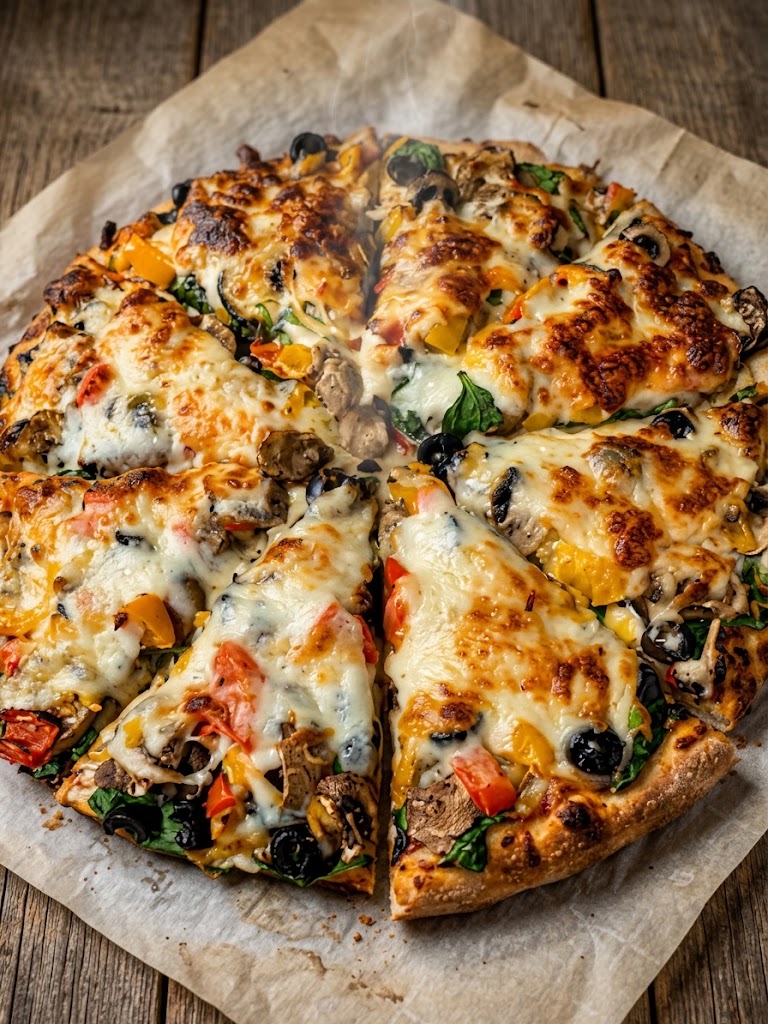

If you love pizza but want a lighter alternative to traditional dough, this Healthy Cauliflower Crust Pizza is a delicious option to try. The crust is made with finely processed cauliflower, cheese, egg, and simple seasonings, then baked until firm and golden around the edges.
Once topped with rich tomato sauce, melty mozzarella, and your favorite vegetables or lean protein, it becomes a satisfying homemade pizza with plenty of flavor. It is naturally low-carb-friendly, easy to customize, and a great way to add more vegetables to pizza night.
The secret to a successful cauliflower crust is simple: remove as much moisture as possible from the cooked cauliflower. This helps create a crust that holds together instead of becoming soft or soggy.
Why You’ll Love This Recipe
- Vegetable-based crust: Cauliflower replaces most of the traditional flour.
- Low-carb-friendly: It can contain considerably fewer carbohydrates than a conventional flour crust.
- Cheesy and flavorful: Parmesan, mozzarella, garlic, and Italian herbs make the crust delicious on its own.
- Customizable: Add vegetables, chicken, turkey pepperoni, or other favorite toppings.
- Highprotein-friendly: Protein-rich toppings can easily turn this into a more substantial meal.
Ingredients
For the Cauliflower Crust
- 1 large head cauliflower, or about 4 cups cauliflower florets
- 1 large egg
- 1 cup shredded mozzarella cheese
- 1/4 cup grated Parmesan cheese
- 1 teaspoon Italian seasoning
- 1/2 teaspoon garlic powder
- 1/2 teaspoon onion powder
- 1/4 teaspoon salt
- 1/4 teaspoon black pepper
For the Toppings
- 1/2 cup low-sugar pizza sauce
- 1 cup shredded mozzarella cheese
- 1/2 cup sliced bell peppers
- 1/4 cup sliced mushrooms
- 1/4 cup sliced red onion
- 1/4 cup sliced olives, optional
- Fresh basil, optional
Optional Protein Toppings
- 1/2 cup cooked grilled chicken
- Turkey pepperoni
- Lean ground turkey
- Cooked shrimp
- Sliced chicken sausage
How to Make Healthy Cauliflower Crust Pizza
1. Prepare the Cauliflower
Preheat your oven to 425°F (220°C).
Cut the cauliflower into florets and wash thoroughly.
Process the florets in a food processor until they resemble fine rice. Avoid turning them into a completely smooth purée.
If you don’t have a food processor, grate the cauliflower using the coarse side of a box grater.
2. Cook the Cauliflower
Transfer the riced cauliflower to a microwave-safe bowl.
Microwave for approximately 5–7 minutes, stirring once halfway through, until softened.
Alternatively, steam the cauliflower until tender.
Allow it to cool enough to handle.
3. Remove Excess Moisture
Place the cooked cauliflower in a clean kitchen towel or cheesecloth.
Wrap it tightly and squeeze firmly over a bowl or sink to remove as much liquid as possible.
This is one of the most important steps in the recipe.
The drier the cauliflower, the firmer your crust will be.
4. Make the Crust Mixture
Place the squeezed cauliflower in a mixing bowl.
Add the egg, mozzarella, Parmesan, Italian seasoning, garlic powder, onion powder, salt, and black pepper.
Mix until everything is evenly combined.
5. Shape the Crust
Line a baking sheet or pizza pan with parchment paper.
Transfer the mixture to the center and press it into a round pizza crust approximately 1/4 inch thick.
Keep the thickness relatively even so the crust cooks uniformly.
6. Bake the Crust
Bake for approximately 15–20 minutes, or until the edges become golden and the surface feels firm.
For an even firmer crust, carefully flip it using a second piece of parchment paper and bake for another 5 minutes.
7. Add the Toppings
Remove the crust from the oven.
Spread a thin layer of pizza sauce over the surface.
Add mozzarella cheese followed by your vegetables and preferred protein toppings.
Avoid piling on too many wet ingredients because excess moisture can soften the crust.
8. Bake Again
Return the pizza to the oven.
Bake for another 8–12 minutes, until the cheese is melted, bubbling, and lightly golden.
9. Rest Before Slicing
Let the pizza rest for approximately 5 minutes before slicing.
This allows the cheese and crust to firm up slightly, making it easier to serve.
Garnish with fresh basil if desired.
Can Healthy Cauliflower Crust Pizza Support Weight Loss Goals?
This pizza can fit into a balanced, calorie-conscious eating pattern, particularly when you control the amount of cheese, sauce, and toppings. Cauliflower adds vegetables and volume while replacing much of the flour found in traditional pizza crust. Choosing lean protein and plenty of vegetables as toppings can make the meal more balanced and satisfying.
However, cauliflower crust does not automatically make pizza a weight-loss food. Cheese, oils, sauces, and toppings can still contribute substantial calories, so portions and overall meal balance remain important.
Does Healthy Cauliflower Crust Pizza Fit a highprotein Lifestyle?
Yes, this pizza can be very highprotein-friendly, especially when topped with grilled chicken, lean turkey, shrimp, or turkey pepperoni. The egg and cheese in the cauliflower crust also contribute protein. The crust itself is generally lower in carbohydrates than a traditional wheat crust, making it a useful low-carb alternative. However, cauliflower still contains some carbohydrates, and toppings and sauces can add more, so calculate net carbs using your exact ingredients and portion size.
Why This Recipe Is Special
- No traditional flour crust: Cauliflower provides the foundation for a vegetable-forward pizza.
- Crispy edges: Properly squeezing the cauliflower helps create a firmer crust.
- Protein adaptable: Add lean meat or other protein-rich toppings.
- Family-friendly: Everyone can customize their own toppings.
- Big pizza flavor: Garlic, herbs, tomato sauce, and melted cheese keep it satisfying.
My Personal Experience
- Removing the moisture makes all the difference: If the cauliflower is too wet, the crust tends to become soft, so squeezing it thoroughly is absolutely worth the extra few minutes.
- A thinner crust works better: Keeping the mixture relatively thin helps the edges become golden while the center sets properly.
- Less sauce is better: A thin layer gives you plenty of tomato flavor without making the crust soggy.
- Fresh toppings make it feel like real pizza night: Bell peppers, mushrooms, basil, and lean protein add color and texture without overwhelming the crust.
Perfect For
This cauliflower pizza is perfect for family pizza nights, healthy lunches, weeknight dinners, meal prep, vegetable-forward meals, low-carb meal plans, and highprotein-friendly dinners. It’s also a fun recipe for kids because everyone can choose their favorite toppings.
Common Mistakes to Avoid
- Not squeezing out enough moisture: This is the biggest reason cauliflower crusts become soft and difficult to handle.
- Making the crust too thick: A thick crust can remain wet in the center. Spread it into an even, relatively thin layer.
- Using too much sauce: Excess liquid can prevent the crust from becoming firm.
- Overloading with toppings: Heavy or watery toppings can make the pizza difficult to slice.
- Skipping the resting time: Give the pizza several minutes to cool before cutting so the crust has time to set.
Required Equipment
- Food processor: Quickly turns cauliflower into rice-sized pieces.
- Kitchen towel or cheesecloth: Helps remove excess moisture.
- Large mixing bowl: Provides enough room to combine the crust ingredients.
- Baking sheet or pizza pan: Gives the crust a stable baking surface.
- Parchment paper: Helps prevent sticking and makes handling the crust easier.
- Pizza cutter: Creates clean slices after the pizza has rested.
Highprotein Topping Ideas
If you’re aiming for a more protein-focused pizza, try:
Chicken Parmesan Pizza
Add grilled chicken, mozzarella, Parmesan, and fresh basil.
Buffalo Chicken Pizza
Top with cooked chicken, a small amount of buffalo sauce, mozzarella, and green onions.
Turkey Pepperoni Pizza
Use turkey pepperoni with mozzarella, mushrooms, and bell peppers.
Garlic Shrimp Pizza
Add cooked shrimp, mozzarella, garlic, spinach, and a light sprinkle of Parmesan.
Mediterranean Chicken Pizza
Use grilled chicken, spinach, red onion, olives, feta, and a small amount of tomato sauce.
Low-Carb Tips
To keep the pizza more low-carb-friendly:
- Use unsweetened or low-sugar pizza sauce.
- Choose lean protein toppings.
- Add non-starchy vegetables.
- Avoid sugary sauces.
- Keep the crust relatively thin.
- Limit high-carb toppings such as sweet corn or pineapple if you’re strictly tracking carbohydrates.
- Check labels on packaged meats and sauces for added sugars.
Remember that net carbs vary based on the amount of cauliflower, cheese, sauce, and toppings used.
Flavor Variations
Margherita Cauliflower Pizza
Use tomato sauce, fresh mozzarella, fresh basil, and a drizzle of olive oil.
BBQ Chicken
Replace traditional pizza sauce with a small amount of low-sugar BBQ sauce and add grilled chicken, red onion, and mozzarella.
Spinach and Feta
Top with spinach, mozzarella, feta, garlic, and a sprinkle of Italian seasoning.
Mushroom Garlic
Use sautéed mushrooms, mozzarella, Parmesan, garlic, and fresh herbs.
Spicy Chicken
Add seasoned grilled chicken, jalapeños, mozzarella, and red pepper flakes.
Make-Ahead Instructions
The cauliflower crust can be prepared ahead of time.
Bake the crust completely, allow it to cool, then refrigerate it in an airtight container for up to 3 days.
When ready to eat, add your toppings and bake until hot and the cheese is melted.
For meal prep, pre-bake individual crusts and refrigerate them separately.
Freezing Instructions
For best results, freeze the crust before adding toppings.
Allow the baked crust to cool completely, wrap it tightly, and place it in a freezer-safe container or bag.
Freeze for up to approximately 2 months.
Bake from thawed or slightly frozen according to your oven, adding toppings before the final baking stage.
Storage
Store leftover fully assembled pizza in an airtight container in the refrigerator for up to 3 days.
Reheat in a skillet, toaster oven, or conventional oven for a firmer crust.
Microwaving is convenient but can make cauliflower crust softer.
Serving Suggestions
Serve your cauliflower pizza with:
- Green salad
- Cucumber and tomato salad
- Roasted vegetables
- Steamed broccoli
- Greek-yogurt dip
- Fresh fruit
- Protein-rich side salad
For a highprotein-friendly meal, pair the pizza with grilled chicken, Greek yogurt-based dip, or another protein-rich side.
Approximate Nutrition
Nutrition varies considerably depending on the size of the cauliflower, cheese quantities, sauce, and toppings.
For one slice of a pizza divided into 8 slices, a rough estimate for the basic cheese-and-vegetable version is:
- Calories: 140–180
- Protein: 8–11 g
- Fat: 9–12 g
- Total carbohydrates: 7–10 g
- Fiber: 2–3 g
- Net carbs: approximately 5–8 g
Adding chicken, turkey, or other protein toppings will increase the protein content.
These are approximate estimates and should be recalculated according to your exact ingredients and portion size.
Frequently Asked Questions
Does cauliflower crust taste like regular pizza dough?
Not exactly. Cauliflower crust has a softer, more vegetable-forward texture and a slightly different flavor. However, cheese, herbs, sauce, and toppings make it feel very much like pizza.
Why is my cauliflower crust soggy?
The most common reason is excess moisture in the cauliflower. Squeeze it very thoroughly before mixing the crust.
Can I use frozen cauliflower?
Yes. Cook it until tender and squeeze out as much moisture as possible after thawing.
Can I make the crust without cheese?
Yes, but cheese helps bind the crust and gives it flavor. A cheese-free version may require a different binder and will have a different texture.
Can I make this pizza dairy-free?
Yes, but you’ll need dairy-free cheese and an alternative binding strategy because the cheese plays an important role in the crust.
Is cauliflower pizza keto-friendly?
It can be adapted for a keto-style meal plan, but the exact carbohydrate content depends on the crust, sauce, toppings, and portion size. Always calculate the net carbs from your specific ingredients.
How do I make the crust extra crispy?
Squeeze out as much moisture as possible, spread the crust thinly, bake it thoroughly before adding toppings, and avoid using watery toppings.
Final Thoughts
Healthy Cauliflower Crust Pizza is a fun way to rethink traditional pizza without giving up the cheesy, saucy flavors that make pizza so comforting. The cauliflower crust provides a vegetable-forward base, while mozzarella, tomato sauce, herbs, colorful vegetables, and protein-rich toppings transform it into a satisfying meal.
The key is to remove excess moisture and avoid overloading the crust. Once you’ve mastered that step, you can create endless combinations—from classic Margherita to spicy chicken or garlic shrimp.
For a lighter pizza night, a low-carb-friendly option, or a customizable highprotein meal, this cauliflower crust pizza is a delicious recipe to keep on hand.