
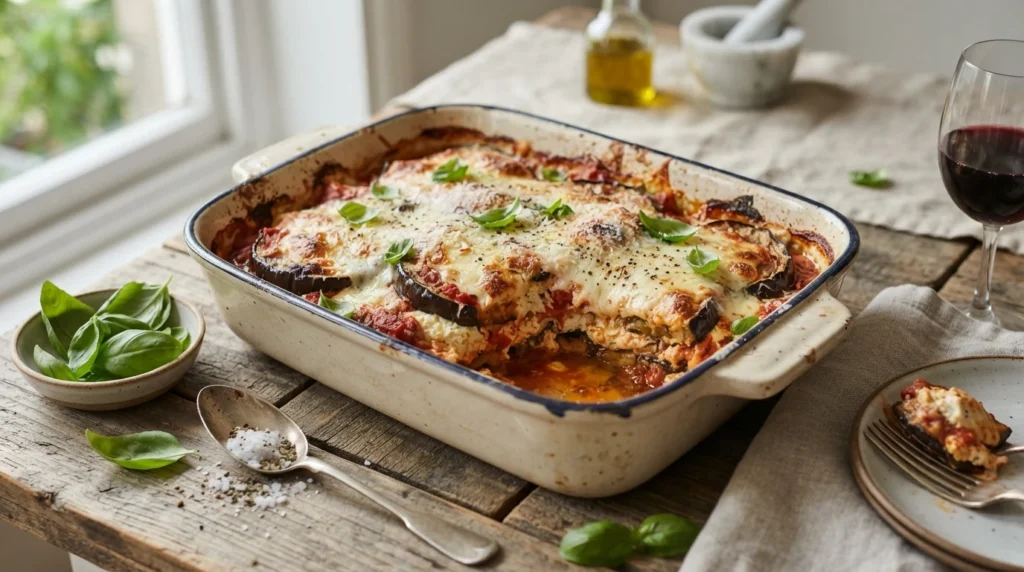

Transforming aubergines into a creamy, low-carbohydrate lasagna is one of the most satisfying challenges for keto enthusiasts. Unlike traditional pasta dishes that rely on soaking noodles in sauce, this recipe uses roasted eggplant slices as the structural base, layered with rich ricotta and melted cheese. The key to success lies in pre-roasting the vegetables to remove excess moisture, which prevents the final dish from becoming watery or mushy upon reheating.
The Keto Lasagna Overview
This recipe yields approximately 8 servings, ready for preparation in about 45 minutes of active cooking time. The total hands-on process includes a resting period after baking to allow the layers to set slightly before slicing. By utilizing whole-milk ricotta and heavy cream, the dish achieves a creamy texture without relying on breadcrumbs or pasta, keeping net carbohydrates well below 10 grams per serving.
Ingredients
Main Components:
- Aubergine (Eggplant): 3 large aubergines, roughly 600g each (about 1800g total), sliced into 4mm thick rounds.
- Ricotta Cheese: 750g full-fat ricotta, drained if necessary to remove excess whey.
- Mozzarella Cheese: 400g low-moisture mozzarella, shredded or finely grated.
- Cheddar Cheese: 150g sharp cheddar, grated (optional but recommended for flavor depth).
- Bacon or Pancetta: 200g diced, cooked until crisp and rendered fat.
- Greek Yogurt: 200g full-fat, unsweetened (used to thicken the ricotta mixture).
- Garlic: 4 cloves, minced.
- Onion: 1 medium yellow onion, finely diced.
- Heavy Cream: 200ml (full-fat preferred for richness).
- Parmesan Cheese: 50g, freshly grated.
- Eggs: 3 large eggs, room temperature (acts as a binder to replace pasta starch).
Flavorings:
- Seasoning Blend: Salt and black pepper to taste.
- Herbs: 1 tbsp dried oregano, 1 tsp dried basil.
- Oil: 2 tbsp olive oil for roasting the aubergines.
Method
Follow these steps to ensure your lasagna is moist but not soggy, with distinct layers that hold together when served.
Preparation of the Aubergine Base
Begin by preheating your oven to 200°C (400°F). Slice the aubergines into uniform rounds, approximately 4mm thick. Place them in a single layer on two large baking trays lined with parchment paper. Drizzle generously with olive oil and season well with salt and pepper. The high heat will help evaporate surface moisture quickly.
Roast for 20–25 minutes until the edges are slightly browned and the flesh is soft. Remove from the oven and let them cool completely on a wire rack. This cooling step is crucial; warm slices will release steam into the dish, causing sogginess during baking.
Preparing the Ricotta Mixture
In a large mixing bowl, combine the cooled ricotta cheese with the Greek yogurt. Whisk in the minced garlic and diced onion until fully incorporated. Season generously with salt, pepper, oregano, and basil. Gently fold in the 3 eggs one at a time to avoid over-beating, which can make the mixture grainy. This egg-rich mixture acts as a binding agent, replacing the starch found in traditional pasta.
Assembly
Preheat your oven to 180°C (350°F) for the baking stage. Grease a large rectangular baking dish (approx. 23cm x 30cm). Spread half of the cooked bacon or pancetta evenly across the bottom to create a savory base.
Lay a layer of cooled, roasted aubergine slices over the bacon. Spoon about 1 cup of the ricotta mixture over the eggplant, spreading it thinly and evenly. Sprinkle with half of the mozzarella and half of the cheddar.
Repeat the layers: another layer of bacon (if remaining), followed by more aubergine slices, then another layer of ricotta mixture, topped with the remaining cheeses. Finish with a final layer of ricotta, ensuring no gaps between slices so the sauce distributes evenly.
Baking and Resting
Pour the heavy cream over the top of the assembled lasagna to create a creamy sauce effect as it bakes. Sprinkle the parmesan cheese over the very top for a golden crust. Bake for 35–40 minutes until the edges are bubbling and the top is lightly browned.
Remove from the oven and let the dish rest for at least 15 minutes. This allows the layers to firm up slightly, making it much easier to slice without breaking apart.
Troubleshooting Common Issues
Problem: Watery Filling
Cause: Insufficient moisture evaporation from the aubergines before baking.
Fix: Always cool the roasted vegetables completely on a rack before layering. If you find excess liquid in the dish after 30 minutes of baking, cover with foil and bake for another 10 minutes to evaporate the steam.
Problem: Soggy Base
Cause: Overcrowded layers or insufficient time for evaporation.
Fix: Ensure you have enough space between slices of aubergine. Do not pack the slices too tightly; they need room to breathe and release moisture during the initial roast.
Problem: Dry Ricotta
Cause: Over-baking or lack of liquid in the mixture.
Fix: If the ricotta looks dry before the end of baking, add a splash more heavy cream during the last 10 minutes of cooking. The Greek yogurt also helps retain moisture.
Substitutions and Variations
Cheese Alternatives: While mozzarella is ideal for meltability, part-skim mozzarella works if you prefer less fat. Ensure any substitute is low-moisture to prevent weeping.
Eggplant Swap: Zucchini can be used as a lower-carb alternative, but it requires salting and draining more aggressively than aubergine to remove water content.
Protein Boost: For extra protein, add cooked ground beef or chicken mince into the ricotta mixture before baking. This increases the carbohydrate count slightly but adds substantial flavor.
Storage and Reheating
This lasagna stores well in the refrigerator for up to 4 days. Cover tightly with plastic wrap or foil to prevent drying out.
For freezing, wrap the cooled dish in foil and freeze for up to 3 months. Thaw overnight in the fridge before reheating.
Reheating: To serve cold or room temperature, simply slice and enjoy as is. For a hot meal, reheat in a preheated oven at 180°C (350°F) for 20–25 minutes, covered with foil to prevent burning the top crust. Adding a splash of water or broth when reheating helps restore moisture.
Frequently Asked Questions
Can I make this keto-friendly without eggs?
Eggs are essential in this recipe because they act as a binder to replace the starch that holds traditional lasagna together. Without them, the layers will slide apart when sliced. Alternative thickeners like xanthan gum exist but may alter the texture significantly.
Is this suitable for strict ketogenic diets?
Yes, this dish is generally low-carbohydrate, provided you avoid high-carb breads or sugary sauces. However, individual tolerance varies. Always check labels on packaged cheeses and dairy products for hidden sugars or additives.