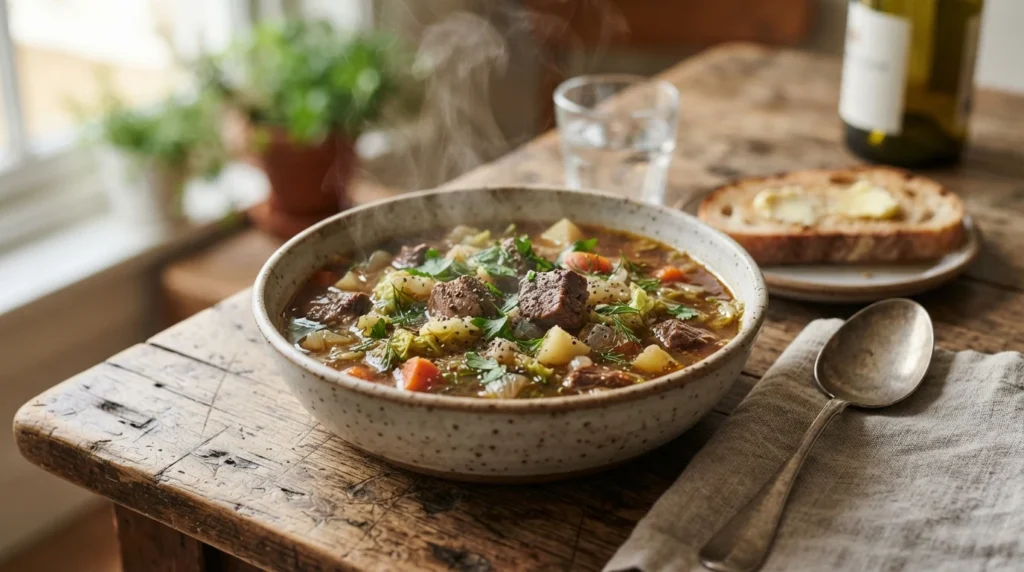

Warm, Hearty Keto Beef and Cabbage Soup
When you are cooking on the ketogenic diet, avoiding rice is essential, but it can sometimes lead to soups feeling thin or lacking body. This Keto cabbage and beef soup without rice offers a solution by relying on the natural richness of slow-cooked beef and the umami depth of aromatics. The result is a warming dish that satisfies hunger with minimal carbohydrates, perfect for US and UK home cooks seeking satisfying lower-carb meals.
Recipe Overview
- Total Time: 60 minutes (mostly hands-off simmering)
- Servings: 4 to 5
- Yield: Approximately 2 liters of broth
- Dietary Focus: High protein, sugar-free, low-carb
Ingredients
This recipe requires no pantry staples beyond basics. All quantities are measured in grams for precision.
- Beef Brisket or Chuck Roast (bone-in preferred): 500g. Cut into large chunks to allow even cooking and collagen breakdown.
- Yellow or Green Cabbage: 400g, roughly chopped into wedges or strips.
- Onions: 200g (about one medium bulb), quartered but not sliced thin.
- Garlic cloves: 60g, smashed and peeled.
- Carrots: 150g, roughly chopped into coins or chunks.
- Tomato paste: 40g.
- Vegetable stock cube (or liquid): One standard 7.5g cube per liter of water, or 2 liters of high-quality vegetable stock.
- Heavy cream or coconut milk: 100ml, optional for richness.
- Olive oil: 30ml for sautéing.
- Salt and black pepper: To taste (approx. 5g salt total).
Method
The goal here is to create a concentrated, flavorful broth where the beef becomes tender and the cabbage absorbs the savory notes without becoming mushy.
Preparation Steps
- Sauté the Aromatics: In a large pot or Dutch oven (capacity of at least 4 liters), heat the olive oil over medium heat. Add the onions and carrots. Sauté for about 5 minutes until they begin to soften and sweat slightly.
- Add Garlic and Tomato Paste: Stir in the smashed garlic and tomato paste. Cook for another minute to cook off any raw flavor from the paste, ensuring it doesn’t burn.
- Build the Broth Base: Add the beef chunks to the pot in a single layer if possible. If the meat is very large, you may need to work in batches or use a larger pot. Pour in the vegetable stock (or dissolve the cube into hot water and add). Bring to a gentle boil.
- Simmer: Once boiling, reduce the heat to low. Cover the pot partially with a lid to trap steam but allow some release of excess liquid if needed. Simmer gently for 45 to 60 minutes. The beef should pull easily off the bone or become very tender.
- Incorporate Cabbage: After the meat has cooked down, add the cabbage wedges and any remaining vegetables directly into the pot. Let this simmer together for another 10 to 15 minutes until the cabbage is wilted but still holds its structure.
- Finish with Cream: If using heavy cream or coconut milk, stir it in now during the last few minutes of cooking. This prevents separation and adds a silky texture.
- Serve: Taste for seasoning. Add more salt or pepper if necessary. Serve hot directly from the pot.
Troubleshooting Common Issues
Even with simple ingredients, soups can go wrong. Here is how to handle the most common failures.
- Soggy Base: If the cabbage turns into mush too quickly, it may be overcooked or cut too small. To prevent this in future batches, ensure the cabbage wedges are roughly 3cm thick so they cook evenly without disintegrating.
- Dry Meat: Beef can dry out if cooked at high heat for too long. Always maintain a low simmer (small bubbles breaking the surface) rather than a rolling boil to keep juices intact.
- Thin Broth: If the soup lacks body, you can increase the simmer time further to allow more collagen from the bone-in meat to break down into gelatin, naturally thickening the liquid.
Substitutions and Variations
You can adapt this recipe based on what you have available, keeping carbohydrate counts low.
- Cabbage Swap: Napa cabbage or Savoy cabbage are excellent alternatives. They cook slightly faster than standard green cabbage but offer a similar texture.
- Meat Choice: While brisket is ideal for flavor and fat content, you may substitute with beef stew meat, short ribs, or even ground beef (added in smaller quantities to avoid overcooking).
- Dairy-Free Option: Coconut milk provides a similar richness without dairy. For those avoiding coconut, omit the cream entirely; the broth will still be flavorful thanks to the tomato paste and stock.
Storage and Reheating
This soup stores exceptionally well due to the high fat content in the beef and broth.
- Fridge: Store leftovers in an airtight container for up to 3 days. The cabbage may continue to soften slightly over time, which is normal.
- Freezer: This dish freezes well for up to 3 months. Cool completely before sealing. Note that the texture of the cabbage may become softer upon thawing, but it remains edible and flavorful.
- Reheating: Reheat in a pot over medium-low heat until steaming hot. If the soup has thickened too much during storage, add a splash of water or stock to reach your desired consistency.
Frequently Asked Questions
Is this keto-friendly?
Yes, this recipe contains negligible carbohydrates from the vegetables used (approximately 4–6g net carbs per serving depending on cabbage variety), making it suitable for a ketogenic diet when prepared without added sugars.
Can I make this ahead of time?
Absolutely. The flavors often improve after sitting in the refrigerator overnight, allowing the beef and vegetables to meld together more deeply.