
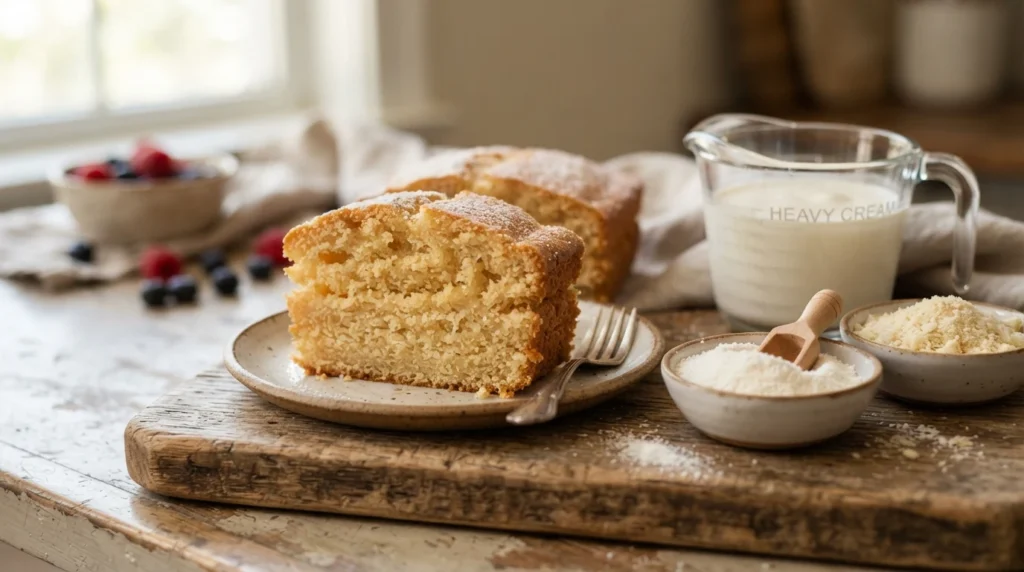

Coconut flour is a popular low-carb staple, but it behaves very differently from wheat or almond flours. Its ability to absorb moisture can turn a simple cake into a rock-hard brick if not handled correctly. This guide explains exactly how much liquid your batter needs and provides a reliable ratio to ensure your keto baked goods stay soft.
Why Coconut Flour Dries Out Your Batter
The primary reason coconut flour produces dry results is its composition. Unlike ground nuts, which retain some oil, coconut flour is almost entirely starch and fiber. A single cup of coconut flour can absorb up to two cups of liquid. If you substitute it 1:1 with almond flour or white flour, your batter will be too thick, leading to overbaked, crumbly food.
When baking, the lack of gluten means the structure relies entirely on eggs and fat for lift. Without enough liquid to hydrate that starch, the proteins tighten up, squeezing out moisture instead of holding it in place.
The Golden Ratio: A Simple Starting Point
To avoid dry baking, you must treat coconut flour as a heavy absorber. Here is a standard starting ratio for most cakes, quick breads, and muffins:
- 1 cup coconut flour : 3 large eggs
- 1 cup coconut flour : 1/2 to 3/4 cup liquid (milk, oil, yogurt)
If your recipe calls for almond flour, you can often replace it with coconut flour at a ratio of 1:4 by volume. For example, 1 cup of almond flour becomes 1/4 cup of coconut flour. This keeps the liquid-to-flour balance intact.
Adjusting Your Batter
Even with the correct ratios, batter consistency varies by brand and humidity. Follow these steps to ensure success:
- Measure accurately: Use a kitchen scale for flour. Scoop the flour into your measuring cup and level it off; do not pack it down.
- Start with less flour: It is easier to add more liquid than to fix dryness after baking. Begin with 1/4 cup of coconut flour per egg if you are unsure.
- Check hydration: Your batter should be thick but pourable, similar to heavy cream or a drop of pudding. If it looks like wet sand, add more liquid (usually milk or oil) gradually until it flows smoothly.
Preventing Dryness in Specific Recipes
Cakes and Muffins:
These are the most common failures. Coconut flour cakes often collapse because they lack structure. To fix this, increase the egg count or add a binding agent like xanthan gum (if you do not already have it) to help hold the starch together.
Cookies and Bars:
Coconut flour makes chewy cookies impossible without enough sugar and fat. If making bars, ensure your butter is soft but not melted before mixing. Over-baking is a common cause of dryness; remove them when the edges just set and the centers look slightly underdone.
Troubleshooting Common Issues
Problem: The baked good is crumbly and falls apart.
Cause: Too much flour or insufficient liquid relative to the starch content.
Fix: In future batches, increase your liquid by 10–20% or reduce the flour by 10%. You may also need more eggs for structure.
Problem: The batter is too runny.
Cause: Too much liquid or not enough binding fat.
Fix: Add the flour in increments of 1 tablespoon at a time until the texture thickens. Do not add all the flour at once.
Substitutions and Alternatives
If you do not have coconut flour, here are safe alternatives for specific situations:
- Almond Flour: Best for cakes and cookies. Use 4 parts almond to 1 part coconut flour by volume.
- Monk Fruit or Erythritol Blend: These are sugar substitutes, not flours. They do not absorb moisture like coconut flour. You can use them in place of sugar in your recipes without changing the flour ratio.
- Oat Flour (Blended): If you need a gluten-free option that is not nut-based, blend rolled oats with a little water until it forms a powder. Note that oat flour has higher carbs than coconut flour and may affect ketosis depending on strictness.
Storage and Reheating
Baked goods made with coconut flour can dry out faster than wheat-based items due to the high starch content. To maintain moisture:
- Cooling: Allow them to cool completely on a wire rack before wrapping. Trapping steam while warm can make them soggy, but cooling them fully prevents condensation from making them stale.
- Storage: Store at room temperature in an airtight container for up to 3 days. For longer storage, freeze individual portions wrapped tightly in foil or plastic wrap, then place them in a freezer bag.
- Reheating: Warm in the oven at 300°F (150°C) for 10–15 minutes or microwave for 20–30 seconds. Avoid microwaving for too long, as coconut flour can become gummy if reheated excessively.
By respecting the unique absorption rate of coconut flour and adjusting your liquid ratios, you can achieve delicious, moist keto baked goods every time.