
Easy Keto Coconut Shrimp with a Sugar-Free Dipping Sauce
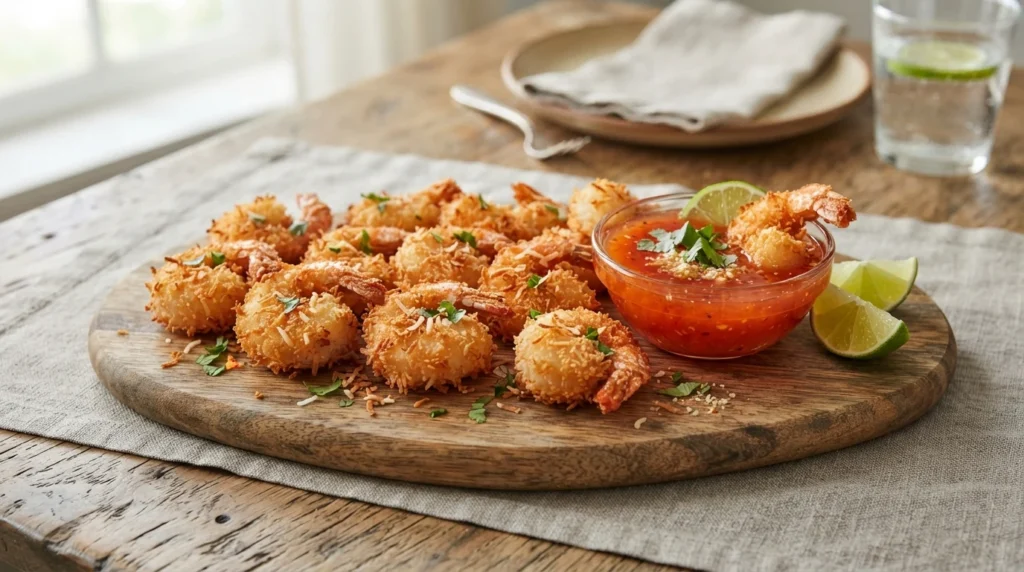
Looking for a quick, crowd-pleasing appetizer or side dish that fits your lower-carbohydrate goals? This recipe delivers crispy, golden coconut-crusted shrimp paired with a refreshing sugar-free dipping sauce. The method focuses on achieving a perfect crunch without relying on heavy breading, ensuring the shrimp remain tender inside while the exterior gets that satisfying texture.
Overview
- Yield: 4 servings (approx. 12 pieces per serving)
- Prep time: 15 minutes
- Cooking time: 8–10 minutes
- Total time: 23 minutes
Ingredients
To make this dish, you will need the following items. All measurements are in grams unless otherwise noted.
- Shrimp: 500g peeled and deveined medium shrimp (tails on optional)
- Panko-style breadcrumbs substitute: 100g crushed unsweetened coconut flakes (fine texture preferred for crunch)
- Egg whites: 3 large egg whites (approx. 60g total), room temperature
- Shrimp cocktail sauce base: 200g sugar-free shrimp cocktail sauce (check label for <1g net carbs per serving; use a brand like Sugar Free Shrimp Cocktail Sauce if available)
- Lemon juice: 30ml fresh lemon juice
- Sugar substitute: 20g erythritol or allulose (for sweetening the sauce, avoid sucralose as it can crystallize when heated)
- Vinegar: 15ml white wine vinegar
- Garnish: Fresh cilantro and lime wedges
Method
- Prep the Shrimp: Pat the 500g of shrimp completely dry with paper towels. Moisture is the enemy of crispiness; any surface water will steam the coating instead of frying it.
- Mix the Coating: In a shallow bowl, combine the 100g of coconut flakes and a pinch of salt. The fine texture helps adhere better than large flakes.
- Set up the Station: Place three bowls in front of you: one with the egg whites, one with the coated coconut mixture, and your frying pan or oven setup.
- Coin Coat: Dip each shrimp into the egg whites to ensure full coverage. Then roll it in the coconut flakes, pressing gently to adhere. Place on a wire rack set over a baking sheet (do not stack, or they will stick together).
- Cooking Options:
Oven Method: Preheat your oven to 200°C (400°F). Line the baking sheet with parchment paper. Bake for 10–12 minutes, flipping halfway through, until golden brown.
Fryer Method: Heat oil in a deep skillet or Dutch oven to 175°C (350°F). Fry shrimp in batches for 3–4 minutes per side until crispy. Drain on paper towels immediately.
Preparing the Sugar-Free Dipping Sauce
The sauce provides a tangy, slightly sweet contrast that cuts through the richness of the coconut crust. Here is how to make 200g of sauce quickly.
- Combine Base: In a small mixing bowl, pour in the 200g of sugar-free shrimp cocktail sauce.
- Add Acid and Sweetener: Stir in the 30ml of fresh lemon juice and 15ml of white wine vinegar to brighten the flavor. Add the 20g of erythritol or allulose.
- Adjust Consistency: If the sauce is too thick, whisk in a teaspoon of water. Taste and adjust salt if needed (the shrimp cocktail base usually contains enough).
- Serve: Serve warm alongside the shrimp, garnished with fresh cilantro and lime wedges.
Troubleshooting Common Issues
Even experienced cooks face hurdles when making this dish. Here is how to handle them.
- Problem: The coconut coating falls off.
Cause: Moisture on the shrimp or egg whites that are too cold.
Fix: Ensure shrimp are bone-dry before dipping. Let egg whites sit at room temperature; cold eggs create a rubbery, non-adherent layer. - Problem: The shrimp is rubbery or overcooked.
Cause: Overcooking time or starting with frozen shrimp without thawing.
Fix: Always use fresh or fully thawed shrimp. For oven baking, remove them from the oven at 190°C (375°F) to allow carryover cooking; they finish in the residual heat. - Problem: The sauce is too sweet or sticky.
Cause: Using sucralose instead of erythritol/allulose, or adding too much sugar substitute.
Fix: Sucralose does not dissolve well when heated and can leave a gritty texture. Use erythritol or allulose for a smooth mouthfeel. Add sweetener gradually.
Substitutions and Adaptations
While the original recipe is straightforward, you may have pantry items that differ slightly.
- Cauliflower Rice: If you prefer to replace the traditional rice side with cauliflower rice (approx. 300g cooked), rinse it well to remove excess starch which can make the plate soggy.
- Protein Swap: You can substitute the shrimp with 500g of chicken breast, sliced thin and pounded flat. Cook similarly but monitor time closely as chicken dries out faster than shrimp.
- Crust Variation: For a nutty flavor, mix 50g of crushed pecans into the coconut coating. Use less coconut (40g) to balance the fat content.
Storage and Reheating
This dish is best enjoyed fresh, but it can be stored for later use with some preparation.
- Room Temperature: Store leftovers in an airtight container for up to 2 days. The coconut coating may soften slightly upon standing.
- Freezing: You can freeze shrimp without the sauce (approx. 100g per portion). Freeze on a tray, then transfer to a bag. Thaw overnight in the fridge and reheat briefly before dipping.
- Reheating: To retain crispiness, reheat in an oven at 200°C (400°F) for 5–7 minutes or in an air fryer at 180°C (350°F) for 3–4 minutes. Avoid microwaving the shrimp directly as it will steam the coating.
Final Thoughts
This recipe offers a satisfying, low-carb alternative to traditional appetizers. By focusing on dry shrimp and precise heat control, you achieve that coveted crunch without compromising flavor or dietary goals. Enjoy your Keto Coconut Shrimp with a side of fresh vegetables for a balanced meal.